Japan–China Diplomatic Crisis Ahead of APEC
Takaichi's threat to expel a Chinese consul general triggered a 2-for-1 retaliation warning from Beijing. With the APEC summit approaching, the personal rhetoric has locked both capitals into a face-saving standoff that threatens regional stability.
The Expulsion That Didn’t Happen (Yet)
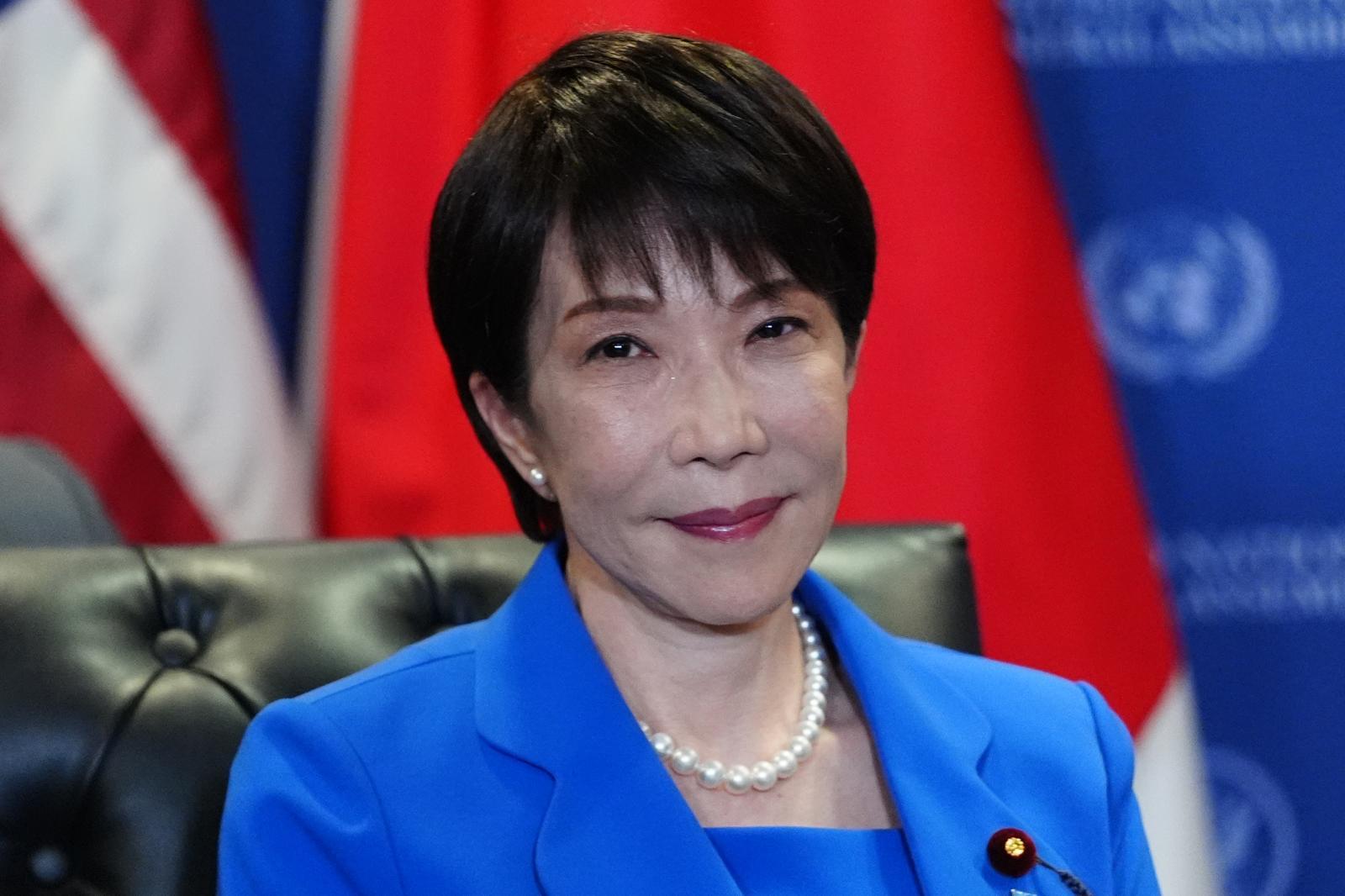
In mid-November last year, Japanese Prime Minister Sanae Takaichi instructed her foreign ministry to demand the early recall of Xue Jian, China’s consul general in Osaka. His crime was posting on social media that her head would be “severed without a moment’s hesitation” for suggesting Japan could militarily intervene in a Taiwan crisis. It was visceral language aimed squarely at the leader herself.
Takaichi didn’t mince words either. She ordered that if Xue wasn’t recalled quickly, Japan would declare him persona non grata. The instruction reached Beijing through Kanae Masaaki, Japan’s assistant foreign minister for Asia and Oceania, who conveyed the expulsion plan to Liu Jinsong, director of the Asian Affairs Department at China’s Foreign Ministry.
Liu’s reply came with immediate force. He told his Japanese counterpart that China would not accept a single-expulsion scenario and flatly declared: “If you expel one of ours, we will expel two of yours.”
Tokyo’s initial calculus assumed a clean swap — China recalled its consul general and Japan reciprocated by expelling one of its own. But China’s sudden pivot to a 2-for-1 retaliation card forced a recalibration. Takaichi ultimately shelved the expulsion order. The incident was never formally resolved; it simply froze.
What Beijing Is Actually Asking For
The broader pattern matters more than any single diplomatic row. According to reports from Sankei Shimbun, China delivered a message to the Japanese government ahead of Takaichi’s policy address to the extraordinary Diet session last month. The request was blunt: revert to the conciliatory framework established by former Prime Minister Shinzo Abe.
The reference point is specific. In September 2014, amid a territorial dispute that had frozen relations at the ministerial level, Abe used his Diet speech to signal willingness to restore dialogue with Beijing. Two months later, President Xi Jinping met him in Beijing. That episode proved that unilateral gestures of good faith from Tokyo could unlock diplomatic movement.
China’s message to Takaichi was essentially: go back to that playbook. Economic cooperation, political flexibility, leadership-level engagement.
Takaichi declined. Her office coordinated a draft speech that would have referenced inheriting Abe’s approach and expressed commitment to economic ties. But the prime minister rejected that framing and instead anchored her address to what she terms the “strategic reciprocal relationship” — a doctrine emphasizing conditional engagement, mutual pressure, and explicit links between Chinese behavior and Japanese concessions.
The result is a policy impasse wrapped in diplomatic courtesy.
The Manila Snub Nobody Talks About
The personal dimension of this dispute has real institutional consequences. In late July, Japanese Foreign Minister Mochizuki Toshimitsu approached Chinese Foreign Minister Wang Yi at the ASEAN-related diplomatic meetings in Manila. Mochizuki offered a standard opening: “Long time no see.”
Wang walked past without breaking stride or making eye contact. No exchange. No acknowledgment.
Tokyo later issued a careful statement saying the two ministers had exchanged brief greetings and discussed bilateral relations. Beijing’s Foreign Ministry directly contradicted that, stating no meeting had taken place and no agenda existed. One side described courtesy; the other described fiction.
This isn’t minor protocol friction. It signals that the Chinese diplomatic apparatus has been instructed to treat Japanese counterparts with calibrated冷淡 — not hostility, but a refusal to normalize interaction. For a country that invests heavily in multilateral diplomatic theater, being publicly snubbed at a major forum carries symbolic weight that outlasts the moment.
APEC in Shenzhen: Why a Xi-Takaichi Meeting Is Unlikely
The most consequential detail emerging from these reporting efforts concerns the upcoming Asia-Pacific Economic Cooperation summit in Shenzhen, scheduled for November 18–19. Both governments have signaled awareness of the event. Neither appears prepared to use it as a diplomatic off-ramp.
Analysts widely expect that a bilateral meeting between Xi Jinping and Takaichi will not materialize. The conditions are absent. China has explicitly asked Japan to soften its posture; Japan has explicitly refused. The Osaka consul general incident remains unresolved beneath the surface. Takaichi’s public rhetoric on Taiwan continues to irritate Beijing’s core interests.
The absence of a leaders’ meeting at an APEC hosted on Chinese soil carries outsized meaning. It confirms that personal friction between top leadership, combined with hardening institutional positions, can override even the structural incentives that normally produce photo opportunities at multilateral summits.
Who Wins. Who Loses.
Takaichi wins domestically. Her Taiwan stance and tough posture toward China reinforce her credibility with Japan’s conservative base. But winning at home while losing leverage abroad is a familiar pattern in Japanese foreign policy. The cost comes in slowed trade negotiations, reduced high-level engagement, and growing uncertainty for businesses operating across the East China Sea.
Beijing wins nothing substantively. It achieves rhetorical dominance — the world sees a Chinese foreign minister ignore his Japanese counterpart at a multinational gathering. But that spectacle does not bring Taiwan closer to Chinese control, nor does it shift U.S. security commitments. It does, however, make future de-escalation politically expensive for whoever initiates it first.
The middle ground — the Abe model of transactional flexibility — is collapsing on both sides. Japanese conservatives view compromise with China as strategic weakness. Chinese leaders view Japanese accommodation as exploitation of goodwill. Neither narrative survives contact with the other’s domestic audience.
What Comes Next
The immediate risk is incremental escalation rather than dramatic rupture. Expect continued low-grade diplomatic冷 처리 from Beijing: missed meetings, withheld invitations, muted statements. Expect Tokyo to maintain its hardened public line while quietly testing whether any channel remains open.
The APEC summit itself may become the next flashpoint. If China refuses to accommodate a Japan-hosted or Japan-involved diplomatic photograph, the symbolism will spread far beyond bilateral relations. Regional partners watching from the ASEAN circle will note that the two largest economies in their neighborhood cannot manage basic interpersonal professionalism before convening on trade and connectivity.
The Taiwan question will not disappear because diplomats aren’t talking. It will only become more dangerous precisely because there are fewer off-ramps available when miscalculation occurs.
The Larger Lesson
Personal rhetoric from national leaders is rarely contained within diplomatic boundaries. Takaichi’s response to Xue Jian’s social media post set in motion a chain of events that consumed months of diplomatic capital and produced zero substantive gain for either side. The expulsion threat was reversed, but the underlying dynamic hardened.
For global readers tracking Asia-Pacific stability, the lesson is structural: when individual leaders treat diplomatic incidents as personal affronts rather than manageable state disputes, the institutions designed to contain such crises lose their capacity to function. Consular expulsions become bargaining chips. Ministerial meetings become theater. Summits become empty rooms.
The next trigger won’t arrive with warning. It will look routine until it doesn’t.