Japan's H3 Rocket Just Proved It Works — And That Changes Everything
Japan's H3 rocket achieved its third consecutive launch success with the MMX Mars sample-return probe, ending years of public embarrassment and quietly advancing one of the most ambitious space missions in East Asian history.
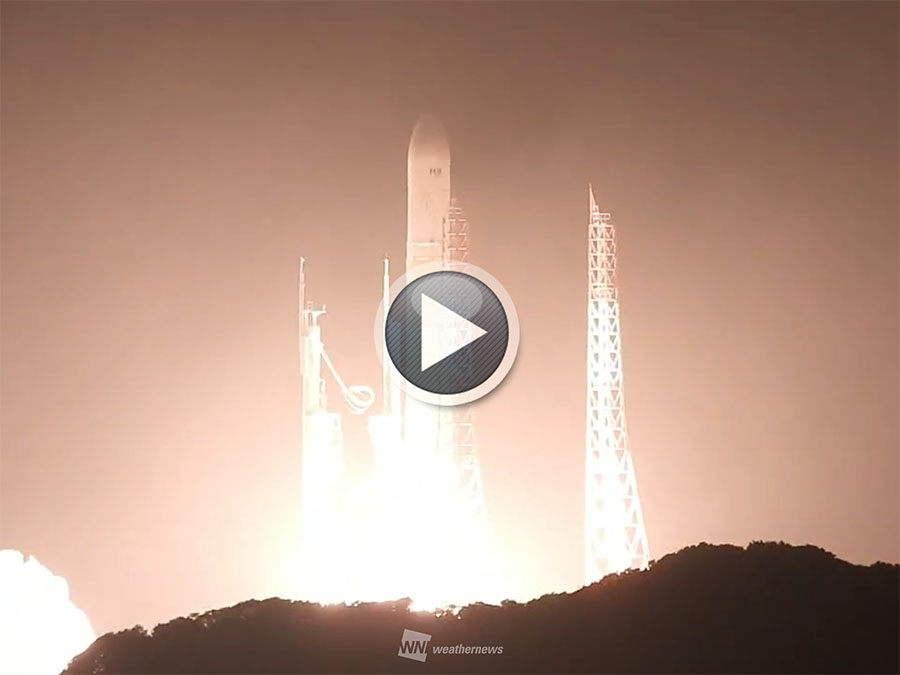
The quiet comeback nobody is writing about
Three consecutive launch successes. That is what it took for Japan to erase the memory of four failed H3 rocket flights in as many years — including a spectacular anomaly on the inaugural flight in 2023 and a partial failure on the seventh launch. The tenth flight, carrying the Martian Moons eXploration (MMX) probe, lifted off from Tanegashima at 4:41 AM local time under calm Pacific high-pressure skies. It worked.
Western outlets covered the weather and the noctilucent clouds — those eerie high-altitude formations visible at 80 kilometers up, usually a polar phenomenon that appear after powerful launches when rocket exhaust interacts with the upper atmosphere. Sightings were reported from Kagoshima, Miyazaki, and even the Kanto plain. But the real story is not in the sky above九州.
It is in what this success means for the trajectory of East Asian space capability.
Why the H3’s reliability matters more than you think
The H3 rocket was designed to replace the aging H-IIA and H-IIB fleet at a fraction of the cost — roughly half the price per kilogram to orbit — by using new manufacturing techniques and a single large-engine configuration. It was supposed to be the backbone of Japan’s commercial launch ambitions. Instead, it became a symbol of Japan’s repeated technical missteps.
The first three launches failed. The fourth was aborted on the pad. The fifth succeeded but carried a questionable payload outcome. The sixth launched fine but raised eyebrows over engine performance margins. By the time the eighth and ninth flights succeeded in a row, a narrative had already hardened in international space circles: Japan could not execute a reusable-or-at-least-reliable heavy-lift vehicle.
That narrative is now broken.
What the H3 finally delivers is not just a rocket that flies — it is a rocket that flies reliably enough to support ambitious planetary missions without the cost overruns and schedule slip that have plagued JAXA’s science programs for decades. The MMX probe itself is a precision instrument designed to land on Phobos, one of Mars’s two moons, collect surface samples, and return them to Earth — a first for any Asian nation and only the second sample-return mission attempted at Mars after Russia’s ill-fated Phobos Grunt in 2011.
The Mars sample-return race nobody outside Tokyo is tracking
Most international coverage of MMX frames it as a Japanese curiosity — a polite scientific exercise. That framing misses the competitive pressure driving it.
China’s Tianwen-3 mission, still in development, aims for the same goal: a Mars moon sample return. India’s ISRO has signaled interest in a broader Mars sample-return concept. And now South Korea, which just launched its first lunar orbiter with the Nuri rocket and is developing the Nuri-2 for heavier payloads, is watching closely. The successful H3 flights open the door for Korea and others in the region to partner on future deep-space missions rather than remain permanently on the outside of high-thrust launch architecture.
Japan’s earlier failure with Phobos Grunt — a joint mission with Russia that crashed in 2011 after the upper stage failed to ignite — was a national trauma. MMX is the redemption arc. The difference this time is that JAXA is no longer betting its reputation on a single risky flight. Three consecutive H3 successes mean the risk premium has dropped substantially for the MMX mission itself, which will spend nearly four years en route to the Mars system.
Who wins when Japan’s rocket finally works
The immediate winner is JAXA’s Planetary Science Directorate, which has spent years rationing its deep-space ambitions after the Hayabusa2 success was followed by repeated launch-setback disappointment. The/MMX team can now plan trajectories, communication windows, and sample-return return vehicle designs without the constant shadow of launch failure looming.
Mitsubishi Heavy Industries wins too, though silently. The company’s aerospace division absorbed brutal criticism during the H3 failures. Contracts with international customers — including potential commercial launch deals that were put on hold — are now back on the table. A reliable H3 means MHI can compete against SpaceX’s Falcon 9, Arianespace’s Ariane 6, and China’s Long March fleet in the growing market for medium-to-heavy commercial launches.
Japan’s regional neighbors win by proximity. A reliable Japanese launch vehicle means more opportunities for Korea, Taiwan, and Southeast Asian nations to access space through partnership rather than dependency on a single superpower’s launch infrastructure. In a region where space access is increasingly viewed through the lens of strategic autonomy, Japan’s renewed reliability matters more than any single launch.
What happens next
The MMX probe is on a multi-year trajectory to Mars. Its critical milestones — orbit insertion, descent to Phobos, sample collection, and the return journey — are years away. But the H3’s reliability streak changes the arithmetic. Previous Japanese planetary missions have carried the implicit assumption that something might go wrong at launch. This time, the assumption is different.
JAXA is expected to announce next steps for its planetary science roadmap soon. The success of the H3 removes a major constraint. What was once a cautious, incremental program — Hayabusa, Hayabusa2, then maybe — now has the launch architecture to support multiple ambitious missions in parallel. A follow-up to MMX, a Venus orbiter, a Jupiter system mission — all of these become more realistic when your launcher actually works.
The noctilucent clouds observed after the launch will fade within hours. The H3’s importance will not.