Japan's Phobos Mission Changes the Rules of Space Exploration
Japan has launched its $578 million MMX mission to sample-return from Mars's moon Phobos. The stakes go far beyond one moon — they're about who controls deep-space science and what Phobos can tell us about the early Solar System.
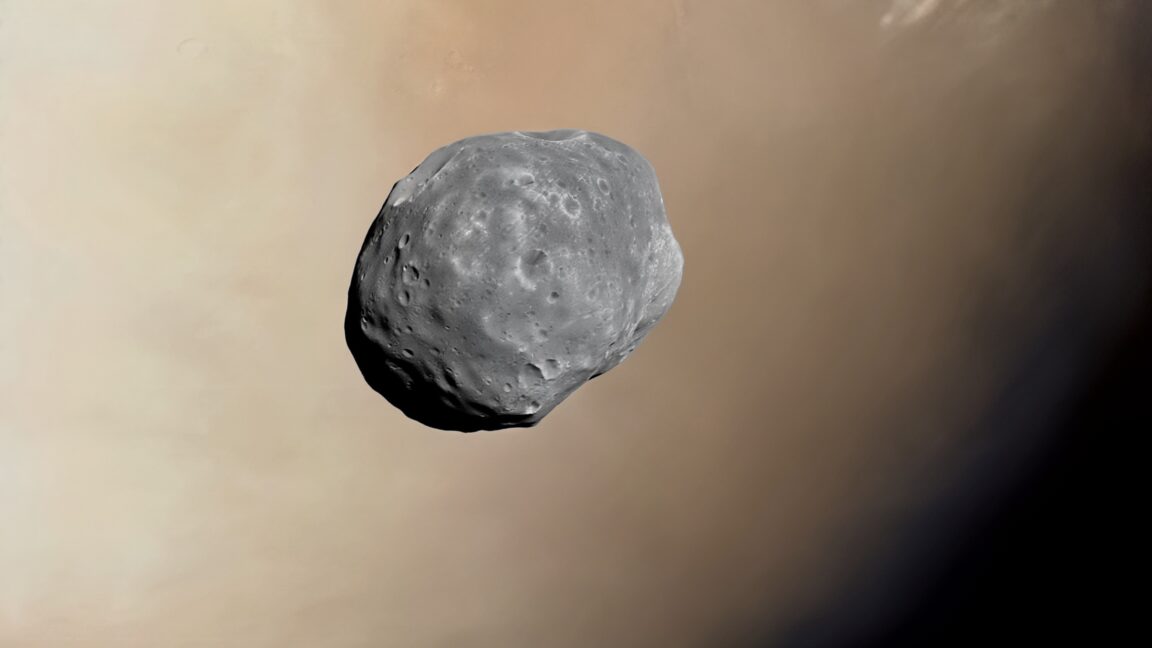
The Shot Heard Around the Solar System
Japan’s MMX spacecraft lifted off Monday from Tanegashima Space Center, riding a newly-configured H3 rocket with four strap-on boosters pushing past Earth’s gravity at more than 24,000 miles per hour. Five years later, it will attempt something no nation has ever done: land on a moon of Mars, scoop up soil, and bring it home.
The $578 million mission is Japan’s most ambitious interplanetary endeavor to date. But the real story isn’t just the engineering — it’s what this mission signals about the shifting center of gravity in space exploration.
While the United States focuses on returning to the Moon and building a presence there, and Europe pursues its own planetary ambitions with mixed results, Japan is quietly building a second expertise that competitors can’t easily replicate: sample return from deep space.
The Hayabusa Legacy
Japan already owns this particular milestone. The Hayabusa and Hayabusa 2 missions brought pristine asteroid specimens back to Earth — the first and second times any country had ever done so. Scientists still mine those samples decades after delivery, publishing new findings well into the 2020s.
MMX is the logical next step. If Phobos is, as some theories suggest, a captured asteroid rather than a product of a giant impact on Mars, then studying it up close and returning material will be essentially asteroid science with a Martian twist. But if Phobos is instead debris from a collision that scarred early Mars, the samples would rewrite planetary formation models.
No remote sensing mission can answer that question. Only samples returned to Earth-based labs can.
That’s why NASA and European agencies are participating — not because they lack capability, but because Japan has proven it can execute sample returns when others falter. Russia’s Phobos-Grunt mission disintegrated in 2011. Soviet Phobos landers lost contact in 1988. Japan’s track record speaks for itself.
The $578 Million Gamble
The spacecraft weighs nearly 9,900 pounds at launch, two-thirds of it propellant. After arriving at Mars next August, it will jettison its propulsion module and begin three years of reconnaissance around Phobos and its smaller sibling, Deimos.
The climax comes in late 2028 or early 2029. A French-German rover called Idefix — roughly the size of a shoebox — will drop onto Phobos and attempt to operate for up to 100 days in gravity less than one-thousandth of Earth’s. Then the main spacecraft will attempt up to two landings on the moon’s surface.
Phobos is so small, its gravity so feeble, that a landing is a genuine risk. The lander could bounce back into space or tip over. MMX’s landing gear is designed to absorb impact energy, but the margin for error is thin.
Once on the surface, the craft will deploy a coring drill on a robotic arm and fire a NASA-provided pneumatic sampler using high-pressure nitrogen gas. Scientists expect to collect at least 10 grams — one-third of an ounce — of material.
The sample return capsule will splash down in South Australia in 2031. US researchers receive 15 percent of the Phobos specimens as part of NASA’s contribution. The rest goes to Japanese laboratories.
Why This Matters Beyond Science
Phobos orbits roughly 40 times closer to Mars than our Moon does to Earth. That proximity means the moon’s surface may harbor traces of Martian material deposited over billions of years — atmospheric dust, impact ejecta, whatever has rained down onto Phobos from its parent planet.
Studying those traces would be a proxy for studying Mars itself, decades before any crewed mission lands there. If MMX finds evidence that Phobos contains Martian rock, it would give scientists a taste of Red Planet geology without the enormous cost and risk of a Mars surface sample return.
The mission also raises questions about human exploration architecture. Future astronauts may use Phobos as a staging point between Earth and Mars. Understanding the moon’s composition, surface conditions, and structural integrity matters for anyone planning to land humans there.
Who Wins, Who Loses
Japan wins credibility. The H3 rocket’s upgraded configuration performed as intended, and the MMX spacecraft separated cleanly and reported a stable status within hours of launch. For a space agency that needed to prove its heavy-lift capabilities after earlier rocket setbacks, this is a vindication.
The United States wins access. NASA gets 15 percent of Phobos samples and a seat at the table for a mission that could reshape understanding of Solar System formation. The US Mars sample return effort, which has been stalled in budget and organizational limbo, benefits from having a parallel path to Martian-extrinsic material.
China and India watch carefully. Both nations have announced or hinted at Mars missions, and both understand that sample return capability is a marker of space power. China’s Tianwen program has landed on Mars and is preparing for its own sample return. India’s upcoming Mangalyaan-2 ambitions include orbital instruments that could complement — or compete with — what MMX discovers.
The losers are the old assumptions about who leads planetary science. For decades, the narrative was straightforward: NASA led, everyone else followed. Japan now leads a category — sample return from celestial bodies beyond the Earth-Moon system — that neither the US nor Europe has the operational history to match.
The Real Prize
The scientific question at the heart of MMX is deceptively simple: why are Phobos and Deimos there at all?
The leading hypotheses divide along two lines. One says these moons are captured asteroids, dragged into Mars’s grip by gravity. The other says they formed from debris ejected when something massive struck early Mars — the same kind of collision that likely formed Earth’s Moon.
The answer changes everything about how we understand Mars’s history. If Phobos is captured, it tells us about the population of objects circulating the early Solar System and how planetary migration reshaped the inner planets. If it’s impact debris, it tells us about the violent environment Mars endured during its first billion years — information that would transform our understanding of when and whether life could have emerged on the Red Planet.
Neither hypothesis can be confirmed without physical samples. Remote sensing data, as compelling as it is, cannot distinguish between a D-type asteroid and altered Martian crust at the resolution these missions achieve.
That’s the quiet revolution MMX represents. Japan has built a pipeline from launch pad to laboratory that no other nation currently operates for destinations beyond the Moon. The samples won’t arrive until 2031. The papers won’t stop coming for decades. But the launch itself — calm, precise, unceremonious — marked a transition that most observers outside the room didn’t fully register.
The age of American-exclusive planetary sample return is over. The age of Asian-led deep-space science has begun.