Japan's Rice Market Is Breaking — And the Government Can't Agree How to Fix It
Rice prices have halved since last autumn as Japan faces a record surplus that threatens to bankrupt farmers. Behind the chaos lies a deeper conflict: the government can't decide whether rice reserves exist to prop up prices or guarantee food security.
A Staple Market Staggering Under Its Own Success
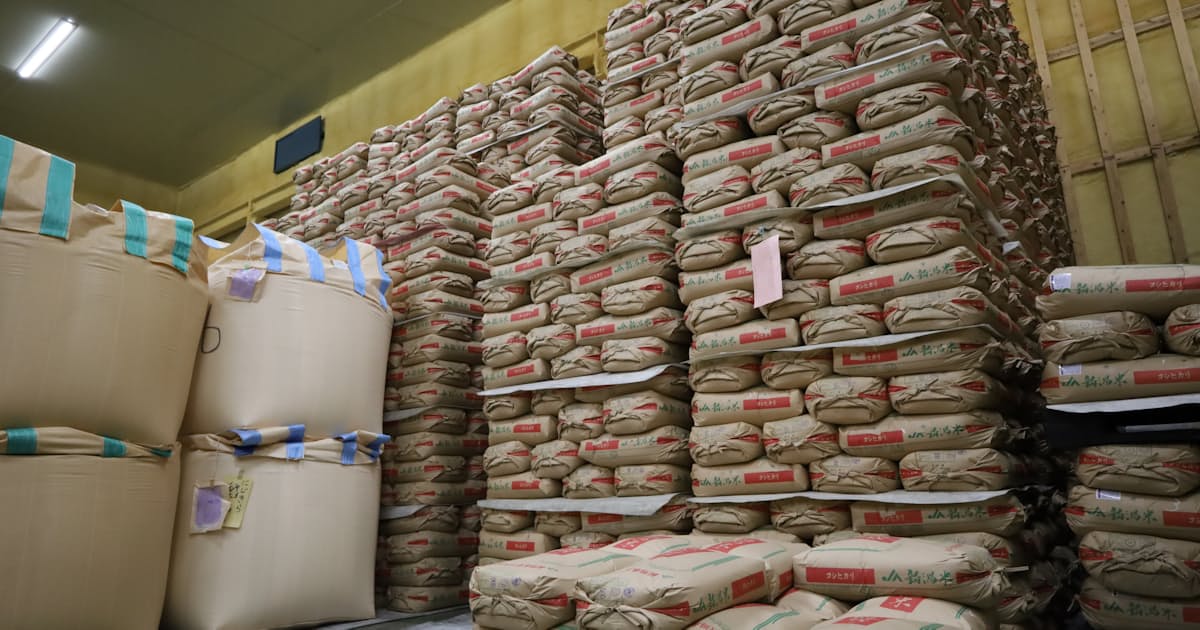
Japanese rice prices have collapsed to half their autumn 2025 levels, and there is no sign of a floor. Wholesalers are dumping inventory at a loss before the 2026 harvest arrives, and even the new crop is expected to trade cheaper. In mid-August, a distributor at a major rice wholesaler put it bluntly: “We’re selling at a massive loss. There’s no choice.” The sentiment that followed was almost darker — “Once it gets like this, there’s only one direction left.”
This is not a seasonal dip. The collapse is the product of a collision between three forces: a record surplus from expanded planting, surging imports that flooded the market, and emergency government releases that emptied strategic reserves. Taken together, they expose a structural problem in one of the world’s most protected agricultural markets — and a government that cannot agree on what the rules should be.
How Japan Got Here
The chain of events begins with what commentators have called the “Reiwa Rice Riot.” Last year, panic buying drove consumers to empty shelves. The government responded by releasing roughly 320,000 tons from its reserves — far below the 1 million ton target that Japanese law envisions for food security stockpiles. Retailers and importers seized the moment, bringing in large volumes of foreign rice. Farmers, seeing strong demand, planted more.
All three moves were rational in isolation. Together, they created a glut.
By July 2026, early-harvest rice in Miyazaki and Kochi was trading at prices 40 percent below last year’s estimates. In Niigata, costs of production were already exceeding market prices — a condition known locally as cost dislocation, or kosetsu-gai. When growing rice stops being profitable, farmers do not simply wait for prices to recover. They leave the land.
The Government Is At War With Itself
What makes this crisis politically dangerous is not the surplus itself but the rift it has opened inside the Japanese government. The Agriculture Ministry wants to buy rice back into reserves at current depressed prices, arguing that the 320,000-ton reserve level is dangerously low. The Cabinet Secretariat, responsible for inflation policy, refuses. Buying rice to support prices would contradict the government’s broader price-stabilization agenda.
The two positions are not actually incompatible — they just serve different purposes. Reserve stockpiles were never meant to be a price-support tool. Their legal purpose is food security: ensuring Japan can feed itself during a crisis. At 320,000 tons, the country is less than a third of its statutory target. Buying grain now, precisely when prices are low, is the most efficient time to close that gap. It does not subsidize farmers. It stocks warehouses.
The fact that Tokyo cannot see this distinction says something about how deeply rice policy is tangled in Japan’s political economy.
Who Wins, Who Loses
The immediate losers are clear. Japanese rice farmers are already producing below cost in key regions. Every season of low prices accelerates departures from the land. Japan’s rice self-sufficiency rate — already fragile at roughly 97 percent of caloric needs — will erode further if the economics of growing rice become untenable.
Rice wholesalers are also losing, but differently. The distributor quoted above was not boasting about volume; he was describing a fire sale. When you cannot move inventory without hemorrhaging money, the business model is broken.
The unlikely beneficiary may be foreign rice exporters. Japan’s emergency import surge last year opened doors that were previously sealed. If domestic prices stay suppressed, Japanese processors and retailers will continue sourcing from abroad, gradually reorienting supply chains away from domestic producers.
Consumers win in the short term with cheaper rice on the shelf. But cheap rice in a country where the average household spends a meaningful share of food income on grain carries a long-term risk: a depopulated rural economy and a food system that depends on overseas supply for its staple.
What Happens Next
Japan’s rice market is built on institutions that do not exist anywhere else. The Agricultural Cooperative distributes grain through a system of advance estimated payments (gaitanken). Prices reset every harvest season. Government procurement and distribution manage the flow in ways that insulate the market from normal supply-and-demand feedback. None of these mechanisms are designed for a surplus this deep.
The most likely path forward is not reform but drift — until the drift becomes a crisis. If 2026 crop prices hold at or below current levels, the number of active rice farms will shrink noticeably. Rural municipalities that depend on agricultural tax revenue will feel the strain. The Food Security Agency, which oversaw the reserve release, will face questions about why the buffer ran so thin.
There is a narrower but more consequential possibility: the current stalemate forces a redefinition of what rice reserves are for. If Tokyo accepts that buying grain now serves national security, not price manipulation, the purchase program could proceed without contradicting inflation policy. That would require political will — and a cabinet that treats food security as separate from consumer-price management. Neither is guaranteed.
Why This Matters Outside Japan
Japan accounts for roughly one-quarter of global rice consumption and maintains one of the world’s highest tariff rates on the grain — 778 percent on imported rice. When Japan’s domestic market signals distress, it matters for regional food-security calculus. A country that cannot reliably grow its own staple is a country that will look outward in a crisis.
The psychological effect on grain markets is real but indirect. Japan does not export rice. Its surplus does not depress global prices the way Brazilian soy or Vietnamese milled rice does. But the precedent matters. If a protected, subsidized market can unravel this quickly, it raises questions about every similar system — South Korea’s rice controls, India’s buffer stocks, China’s wheat reserves. None of them are immune to the same trap: overproduction bred by guarantees, followed by a price collapse that the guarantees can no longer contain.
The Reiwa Rice Riot was supposed to be a one-time shock. What it really revealed is that the system governing Japan’s most important calorie source has been running on inertia for decades. The rice price crash is not a correction. It is a stress test the system did not pass.