Japan's Prime Minister Walks a Fiscal Tightrope on Bonds and Tax Cuts
Prime Minister Sanae Takaichi's clarification that Japan will not reject all bond issuance marks a subtle but significant pivot in fiscal posture. The government faces mounting pressure to fund a food consumption tax cut without reigniting market anxiety over debt sustainability.
A Measured Retreat From Fiscal Orthodoxy
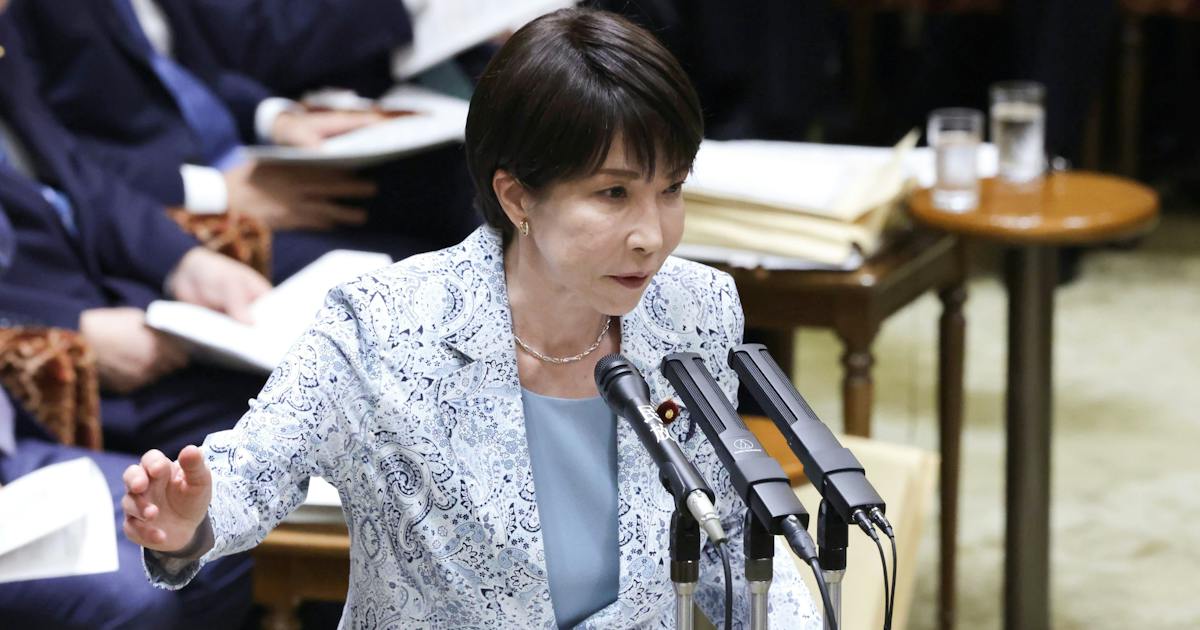
Prime Minister Sanae Takaichi did not announce a new policy on Monday evening. But her choice of words — posted to X, not delivered in a formal cabinet briefing — carried enough weight to make Japanese bond traders pause.
The statement was a quiet recalibration. Takaichi acknowledged, for the first time in these terms, that the government would not “deny” the issuance of sovereign bonds when viewed across the full budget cycle. The caveat was immediate and emphatic: the policy of avoiding special exemption bonds — the deficit-financing instruments Japan has relied on since the financial crisis — remains unchanged for the upcoming consumption tax cut on food.
What this means in practice is that Tokyo is buying itself room to maneuver without formally abandoning its fiscal discipline narrative.
The Contradiction at the Center of Japanese Fiscal Policy
The contradiction is becoming impossible to ignore. Japan’s debt-to-GDP ratio stands at roughly 260 percent — the highest among advanced economies. Yet Takaichi’s administration has committed to cutting the consumption tax on food items from April 2027, a policy shift that will reduce revenue at exactly the moment demographic collapse is accelerating the cost of eldercare, pensions, and healthcare.
In her October 19 parliamentary appearance, Takaichi was pressed by Yoshifumi Hamano of the Constitutional Democratic Party, who asked whether clinging to the principle of avoiding deficit bonds was not itself a form of ideological rigidity. Hamano’s point was blunt: if you cut taxes and simultaneously cut spending by an equivalent amount to avoid borrowing, you have cancelled out the stimulus. You have changed nothing.
Takaichi’s answer was careful. She reiterated that revenue trends would be monitored, that both expenditure and revenue sides would be reviewed, and that the debt-to-GDP ratio would continue its gradual decline. The overall volume of bond issuance through the initial and supplemental budgets would be “appropriately controlled,” she said — not rejected.
The distinction matters. It is the difference between a government that has no plan and one that is deliberately preserving options.
Why Bond Yields Are Watching Closely
Japanese government bond markets have priced in a remarkably stable monetary-fiscal regime for years. The Bank of Japan has maintained ultra-loose policy even as global central banks tightened. Foreign holders of JGBs have been patient. The risk has always been political, not structural.
Takaichi’s comments introduce a variable. If the administration begins issuing deficit bonds to fund tax cuts or stimulate demand — even at modest scales — yield curves could reprice. The market’s tolerance for Japanese fiscal expansion has always been conditional on the government’s public commitment to eventual consolidation. Any signal that this commitment is weakening threatens to accelerate the very borrowing costs Takaichi’s team is trying to manage.
This is not theoretical. When Prime Minister Fumio Kishida announced his own deficit-financed stimulus packages in 2023 and 2024, long-dated JGB yields rose sharply before the BOJ intervened. Takaichi inherits that sensitivity.
The Real Question: What Replaces the Revenue Loss
The food consumption tax cut is scheduled to take effect in April 2027. The government has confirmed the rate will drop to 1 percent. The Treasury has acknowledged that funding must be secured through the 2027 budget cycle. No specific offset has been detailed beyond vague references to “expenditure and revenue review.”
This vagueness is the real story. A consumption tax cut that reduces revenue without a credible replacement mechanism is, in standard fiscal arithmetic, a deficit-financed transfer — regardless of whether the bonds are technically labeled as “special exemption” instruments or something else.
Takaichi’s October 19 post was an attempt to have it both ways: to maintain the credibility of fiscal restraint while opening the door to borrowing if circumstances require it. That door remains half-closed. But the fact that it was opened at all signals a government under pressure.
Who Wins and Who Loses
Household consumers — particularly lower-income families who spend a larger share of their budget on food — stand to gain from the tax cut. The administration frames it as a cost-of-living measure, and the political calculation is straightforward: food price sensitivity is a reliable electoral issue in an aging democracy.
Bond markets lose the clarity they had before. The ambiguous signal creates uncertainty, and uncertainty is expensive in fixed income. Even a small risk premium increase on JGBs translates into billions in additional debt service over the lifespan of Japan’s outstanding liabilities.
The Bank of Japan occupies the most awkward position. It has committed to gradual monetary normalization while simultaneously being the primary buyer of Japanese government debt. Any fiscal expansion that pushes yields higher forces the BOJ to choose between defending its yield curve target and allowing market discipline to reassert itself. Neither option is comfortable.
What Happens Next
The next critical moment will come with the 2027 budget proposal, expected in late autumn of this year. That document will reveal whether Takaichi’s government has identified actual spending cuts or revenue increases to offset the food tax reduction, or whether it will simply declare the matter resolved and move forward.
International investors watching Japan will be reading that budget document for signs of fiscal direction. The current ambiguity serves no one well — not the Japanese government, not the BOJ, and certainly not foreign holders of JGBs who are already monitoring the yen’s trajectory with some apprehension.
Takaichi’s posting was an attempt to manage expectations. It may not be enough.