Japans UN Push to Erase Enemy State Clauses Is a Direct Shot at China
Prime Minister Sanae Takaichi revived dormant UN Charter provisions from the WWII era not for historical revisionism but as a direct rebuttal to Beijing's threats. The move exposes how Japan's security posture has hardened — and what it means for the US-Japan-Korea trilateral.
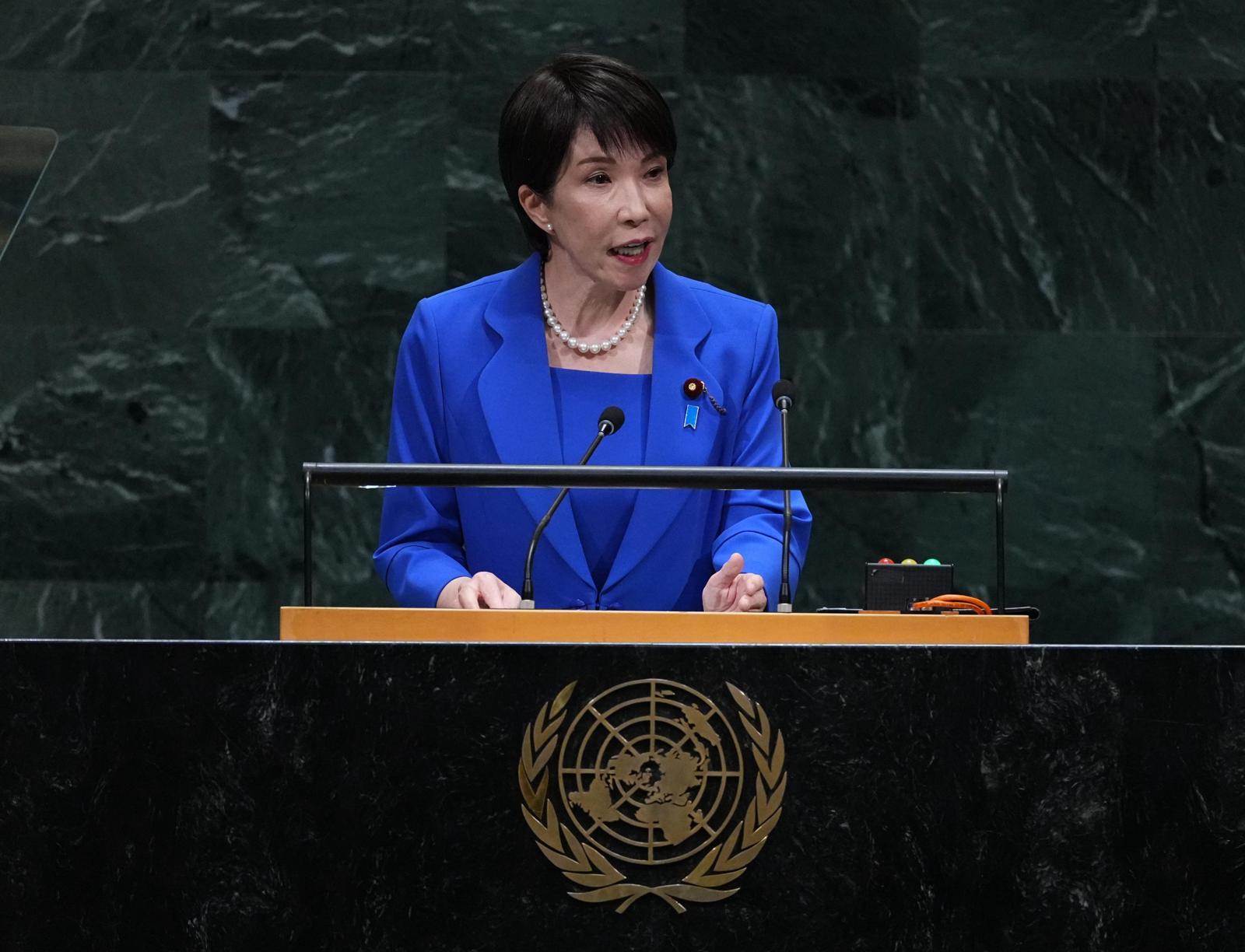
The clause no one thought mattered — until China said it did
When UN member states voted in 1995 to call the Charter’s enemy state provisions obsolete, they were closing a chapter. The 2005 agreement to formally delete them seemed inevitable. But the text of Articles 53, 77, and 107 remained — frozen in legal limbo, dormant but not dead.
Sanae Takaichi made sure nobody forgot they existed.
Speaking at the 81st UN General Assembly on September 22, the Japanese prime minister revived the decades-old debate with unusual directness. She framed the deletion as a matter of Japan’s pride and honor — seventy years of contribution to the UN, she said, deserved recognition. But the subtext was unmistakable. China had spent the past year weaponizing these provisions.
The trigger was Takaichi’s own November 2024 statement that Japan could intervene in a Taiwan contingency. Beijing responded within weeks. Mao Ning, the foreign ministry spokesperson, declared on September 8 that the enemy state clauses remained valid and that Japan risked military action if it acted provocatively. The message was blunt: you are still a defeated power. Your sovereignty has conditions.
Takaichi’s UNGA speech was the public rebuttal Bloomberg identified — a rejection of China’s attempt to keep Japan legally hemmed in by wartime settlements Japan never agreed to live under permanently.
Why the timing is deliberate
The speech landed three days after a 35-minute meeting with Donald Trump. The meeting itself carried signal value beyond its substance.
Takaichi called him Donald. He called her a great prime minister who would leave her name in history. The warmth was calculated. Japan’s Foreign Ministry confirmed the two discussed China-related agendas ahead of the upcoming US-China summit, plus cooperation on artificial intelligence, semiconductors, rare earths, and critical minerals. The language suggested a pact to coordinate economically as well as militarily.
Holding a high-profile bilateral meeting with the US president on the eve of Washington’s talks with Beijing is a calibrated gesture. It says: Japan is not a sideline actor in Indo-Pacific strategy, and any deal between Trump and Xi does not define the architecture around China.
Takaichi’s speech did the same work on the multilateral stage.
What China stands to lose
Beijing’s invocation of the enemy state clauses has been less about legal precision and more about psychological pressure. The provisions give China a rhetorical tool to remind Japan — and other regional states — that the postwar order still carries victor’s justice. It is a reminder that Japan’s military normalization remains provisional in the eyes of at least one major power.
Deleting the clauses removes that tool. It also strips China of a convenient justification for future military posturing against Japan. If the UN Charter no longer distinguishes between former Axis powers and everyone else, Beijing loses a legalistic scaffold for claims that Japan’s self-defense upgrades are illegitimate.
But deletion is far from guaranteed. Amending the Charter requires a two-thirds majority of UN member states and ratification by all five permanent Security Council members. China is the obstacle. Moscow and Washington will likely assent — Russia has its own veto grievances, and Washington benefits from a more militarily capable Japan — but Beijing has every reason to block. The clauses serve a strategic purpose beyond symbolism.
What this means for Seoul
South Korea’s government has not publicly weighed in on Takaichi’s push. That silence is telling. Seoul shares Japan’s interest in seein the clauses rendered moot — China has echoed similar rhetoric toward Korea as well — but any overt alignment with Tokyo’s campaign risks complicating relations with Beijing at a moment when Seoul is already navigating a fragile balancing act.
The broader concern in Seoul is trilateral coordination. The US-Japan-Korea triangle has made strides since the 2023 Camp David framework, but Takaichi’s unilateral move at the UN — timed around a bilateral meeting with Trump, before any coordination with Yoon Suk Yeol’s administration — could strain that momentum. Japan is signaling that it will act independently when its security interests demand it, and that independence cuts both ways: it strengthens Tokyo’s hand with Washington but complicates consensus with Seoul.
The Security Council reform angle
Takaichi also pushed for Security Council expansion, arguing that permanent and non-permanent seats must increase to restore legitimacy. Her explicit reference to Russia’s failure to address its invasion of Ukraine was pointed. It reframes the council’s credibility crisis as evidence that the current structure cannot adapt — and that Japan’s claim to a permanent seat is not about status but about functional representation.
The reform agenda and the enemy state deletion are linked. Both aim to dismantle the institutional architecture that treats Japan as a second-class security actor. One removes the legal basis for collective coercion against Tokyo. The other removes the veto-based lockout from the body that decides such matters.
Who wins, who loses, and what happens next
Japan wins visibility. Takaichi turned a technical legal question into a headline moment at the UN, reinforcing her hawkish credentials at home and signaling to Washington that Tokyo is willing to lead on China containment without waiting for American cues.
China loses a tool. Its narrative that Japan remains a potential aggressor under international law just lost rhetorical force — even if the legal framework technically persists for now.
The US wins indirectly. A more assertive Japan aligns with Washington’s burden-sharing expectations, even if it complicates Beijing diplomacy. Trump’s personal rapport with Takaichi adds a layer of unpredictability that neither China nor South Korea can easily factor into their calculations.
South Korea faces the sharpest dilemma. It benefits from a Japan less constrained by wartime legal baggage but risks being pulled into Tokyo’s confrontational posture without having shaped the decision.
The next test comes quickly. If Takaichi returns to Tokyo and accelerates defense spending or posture changes justified by the need to shed lingering wartime constraints, Seoul will have to decide whether to follow or distance itself. The enemy state clauses may be dormant text, but the strategic competition they represent is very much alive.