Japan's viviON GAMES Bets Against Subscriptions in the Cloud
A new Japanese cloud gaming service launches with a buy-to-play model instead of subscriptions — a bet that could shift how indie games reach mobile players and challenge Western streaming assumptions.
A Different Bet on the Cloud
Japan’s viviON GAMES is launching with a premise that sounds small but carries an unusual strategic weight. It streams PC games to smartphones — no download, no port, no subscription. You buy each title outright and play it in a browser. The service goes live August 26, 2026.
What makes this worth watching is not the technology itself, but the business model sitting inside it. Most Western cloud gaming plays the subscription game — GeForce Now, Xbox Cloud Gaming, Ubisoft+ Connect. viviON is betting that Japanese players, and the developers who make games for them, prefer something older and arguably simpler: pay once, own the experience. That might sound backward for a cloud platform, but it’s deliberate, and it signals where the real competition lives.
How It Actually Works
The engine behind viviON GAMES is called OOParts Engine. It runs PC games on dedicated cloud servers and streams the output to a phone browser. Because the game runs on its PC-native architecture, there’s no porting required. A title built for keyboard and mouse still behaves as built; the input layer adapts to touch when necessary, but the core build stays intact.
That absence of porting work is the technical hook. Many indie developers in Japan spend months adapting smallPC games for mobile. viviON removes that step entirely. The developer ships the PC version once, viviON runs it, the player touches a screen. For the publisher, it’s a distribution channel that does not require a parallel build pipeline.
At BitSummit PUNCH in May, seven titles were shown in early access. The lineup reads like a cross-section of Japan’s indie scene — horror, narrative-driven games, adventure titles. Notable names include Yoru Mitsu (夜廻三), Seifuku Kanoko (制服カノジョ), Kemono Mix Re (ケモノミクス Re), Katamichi Yuusha Plus (片道勇者プラス), Terminus Historia | Kyokai Sen’eki (境界戦役), Shiro Naga Island no Kikan (シロナガス島への帰還), and Daru Gurami Haigerei (だる絡み背後霊).
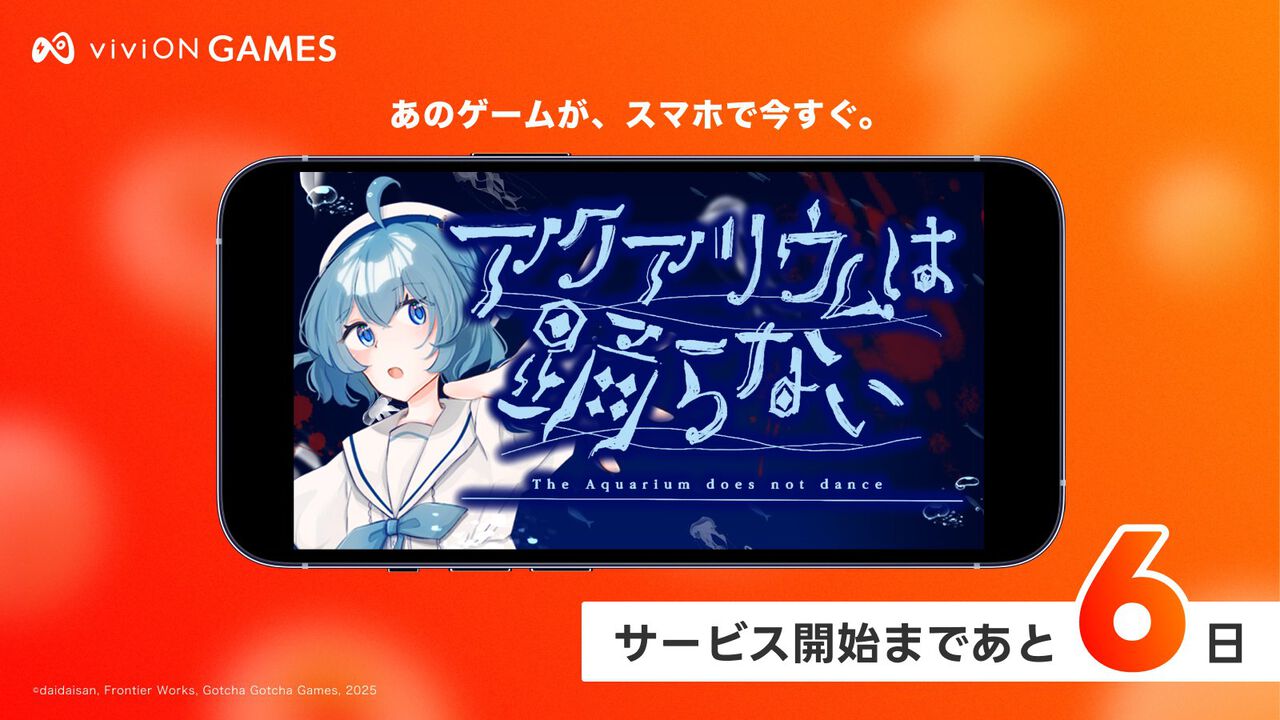
Starting August 20, viviON began revealing one playable title per day on X. The first was Aquarium is Dancing (アクアリウムは踊らない), a horror game made by a developer who describes themselves as “horror-phobic.” It’s an odd detail, but it points to the kind of creator economy viviON is courting — personal voice, niche appeal, willingness to experiment with format.
Who Wins, Who Loses
Winners: Indie developers who have struggled to reach mobile audiences without committing resources to a full port. Publishers already shipping PC titles in Japan get a second storefront essentially for free. Players who own a recent phone but not a gaming PC gain access to a broader library than mobile-native stores typically offer.
Losers: Anyone expecting a subscription discount. viviON is explicitly rejecting the “Netflix of games” framing. You pay per title. That means developers earn more per sale if adoption is selective, but it also means players must judge each purchase individually — no all-you-can-play cushion.
The bigger question is what this does to established platforms. Steam already serves Japanese indie developers well. itch.io remains the low-friction home for experimental titles. viviON’s edge is not price — it’s accessibility. If you can open a browser and play a PC game on your phone today, you have removed three steps that most mobile-only users currently face.
Why the West Should Care
Western cloud gaming has spent years trying to solve the latency problem while selling subscriptions. viviON is solving a different problem: distribution friction for games that already exist. The OOParts Engine is not a new rendering architecture; it is a delivery architecture. That distinction matters.
If the buy-to-play model gains traction in Japan, it creates a template that could travel. Western indie developers — particularly those with completed PC titles — could use the same approach without rebuilding their distribution strategy around subscription revenue shares. The economics shift in their favor: a direct purchase split with viviON likely outperforms the typical 30 percent platform cut on subscription aggregators.
There is also a cultural signal. Japan’s gaming market has historically resisted subscription-only models for single-player experiences. Console owners still buy physical discs. Digital storefronts favor per-title purchases. viviON GAMES is not fighting that preference; it is leaning into it.
What Happens Next
The August 26 launch date is firm. The seven titles shown at BitSummit are confirmed early entries. Daily reveals on X will continue through launch, which suggests a marketing cadence designed to build anticipation without relying on influencer spend.
The metrics that will determine whether this model scales are simple: how many players actually buy individual games rather than waiting for a subscription to appear, how many developers choose viviON over Steam or itch.io for their mobile-adjacent launch, and whether latency complaints force a rethink of the browser-first approach.
If viviON fails, it fails as a niche experiment. If it succeeds, it forces Western cloud platforms to reconsider whether subscription is the only viable path — or whether the real opportunity lies in letting people buy the games they want, exactly when they want them, on whatever device is closest to hand.
That bet has not been tested at scale. The next few months will show whether Japanese players are willing to pay for convenience, and whether developers are willing to treat a browser tab as a storefront.