JTBC Reorganization Signals a Media Crisis No One Saw Coming
JTBC has entered court-supervised reorganization, the first major Korean broadcaster to fall. What happens to press freedom — and the rest of private media — depends on who holds the debt.
The Bankruptcy Court Just Changed Korean Media Forever
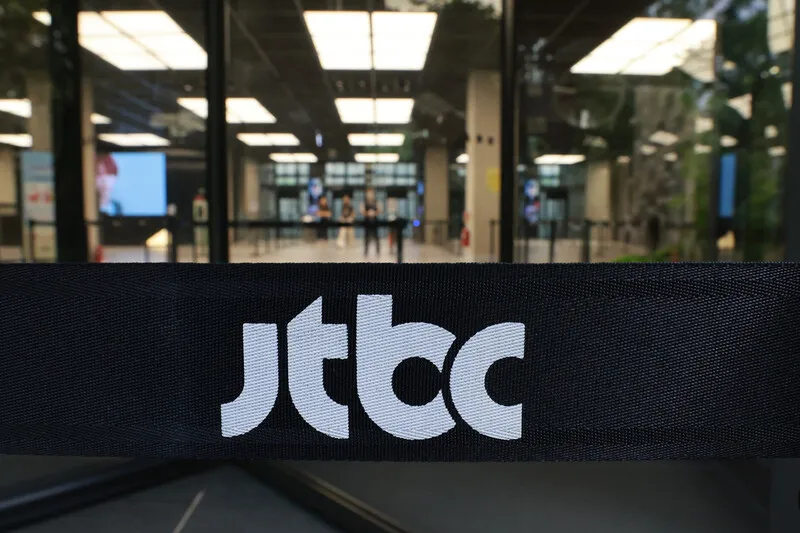
JTBC, one of South Korea’s most influential private broadcasters, has entered court-supervised reorganization. The Seoul Bankruptcy Court’s decision on August 28 to open formal proceedings — after a failed autonomous restructuring attempt — marks the first time a major national broadcaster has fallen into this category. What happens next will define not just JTBC’s survival, but the future of editorial independence in Korean media.
The court cited a combination of structural forces that have crushed traditional broadcasting: the post-COVID surge in OTT platforms, spiraling production costs, and the irreversible migration of advertising dollars from linear TV to digital. Olympic broadcasting rights created a sudden, massive cash outflow on top of chronic revenue erosion. Central Group’s broader liquidity crisis, already dragging its four affiliated companies — Central Holding, Contentree Central, Megabox Central, and Central P&I — into restructuring applications since June 15, sealed the outcome.
JTBC’s public default came on June 12, when it failed to repay a 20.6 billion won ($14.6 million) asset securitization loan. Default is a quiet trigger. It does not immediately mean closure, but it does mean the clock is now ticking on a process that could strip the network of its current ownership structure entirely.
Management Stays — For Now
The court has chosen to let JTBC’s existing management team remain in place during the restructuring, declining to appoint a separate receiver. This is an unusual but not unprecedented move. Courts sometimes prioritize continuity when a broadcaster’s news operations are seen as a public-interest asset, and it may reflect the sensitivity of placing a politically critical outlet under outside supervision during an election-cycle-heavy year in South Korea.
But the court’s own language carries a warning: “management may be replaced if accountability grounds emerge.” The phrase is vague by design. It leaves open the possibility that creditors — or the court, at their request — could install a new leadership layer before the reorganization plan is finalized.
That matters because JTBC has built its brand on adversarial journalism. The network’s coverage of government scandals, corporate wrongdoing, and political controversies has made it a frequent target of criticism from conservative figures and, at times, regulatory pressure. The question hanging over every creditor negotiation is whether financial vulnerability will translate into editorial softening.
The Timeline Is a Trap
The procedural calendar is tight and unforgiving. Creditors must submit their claims by November 6. Hanwha Accounting Firm will complete its investigation by December 4, filing its report by December 8. An explanation session for stakeholders must conclude by December 31. Then comes the reorganization plan, due January 29, followed by a vote among creditors and shareholders.
Each deadline compresses the window for meaningful renegotiation. Creditors with secured claims will have disproportionate leverage. If the debt structure includes significant bank loans or bondholder exposure, those lenders can shape the outcome more than any public statement about press freedom ever could.
There is also the Central Group dimension. Central HLD, CentralPNI, Contentree Central, and Megabox Central all filed for corporate reorganization on June 15. Their restructuring plans are running in parallel. JTBC’s fate may be entangled with decisions about Megabox’s theaters, Contentree’s content pipeline, and Central Group’s remaining viable assets. Whoever emerges as JTBC’s new owner may already be calculating what to do with the network’s library, its sports rights, and its news division — separately or bundled.
A Domino That Could Topple the Whole Row
JTBC is not the only private broadcaster bleeding ad revenue. KBS, MBC, and SBS all face the same structural decline. But JTBC’s reorganization is different in one critical way: it is the first to cross from financial stress into formal court proceedings. That transition sends a signal that the business model some operators have been clinging to is no longer viable.
Other networks are not in reorganization yet, but their balance sheets are not immune to the same pressures. If JTBC’s restructuring results in a fire-sale of assets or a creditor-led ownership change, it establishes a new baseline for how the market values Korean broadcasting — a baseline that will haunt negotiations at every other network.
The advertising collapse is the invisible protagonist here. Linear TV ad spend in South Korea peaked years ago and has been in steady decline. Digital platform spending, dominated by Naver and Google with growing competition from YouTube and domestic OTT players, has redrawn the entire revenue map. Broadcasters who cannot pivot quickly enough to subscription or hybrid models face exactly the trajectory JTBC just entered.
What Changes If Nothing Changes
Even in the best-case scenario — JTBC survives reorganization with its newsroom intact and its ownership structure largely unchanged — the network’s financial position will be weaker. Debt repayment obligations will constrain investment in original programming, investigative units, and the kind of risk-taking journalism that built its audience in the first place.
Worse scenarios are easier to imagine than to predict. A creditor consortium installing a hands-on controller. A strategic buyer acquiring the sports and entertainment portfolio while stripping the news division. A management shuffle that coincides with editorial softening on controversial investigations.
None of this is certain. The court process will play out over months, and the January 29 deadline for the reorganization plan is still distant. But the opening of proceedings itself is a seismic event. JTBC was never the most profitable Korean broadcaster, but it was one of the few private networks with a reputation for editorial independence that survived decades of political pressure intact.
What happens to that reputation now depends on a set of financial calculations made behind closed doors between creditors, accountants, and judges. The public will get headlines about voting results and plan approval. It will not get to see the terms being negotiated.
That gap between the courtroom and the newsroom is where the real story is playing out.