A Judge, a Hostess Club, and Korea's Rule-of-Law Test
The indictment of a senior judge over alleged hostess club entertainment exposes how judicial accountability and political pressure are colliding in South Korea — especially as the Constitutional Court faces a historic appointment crisis.
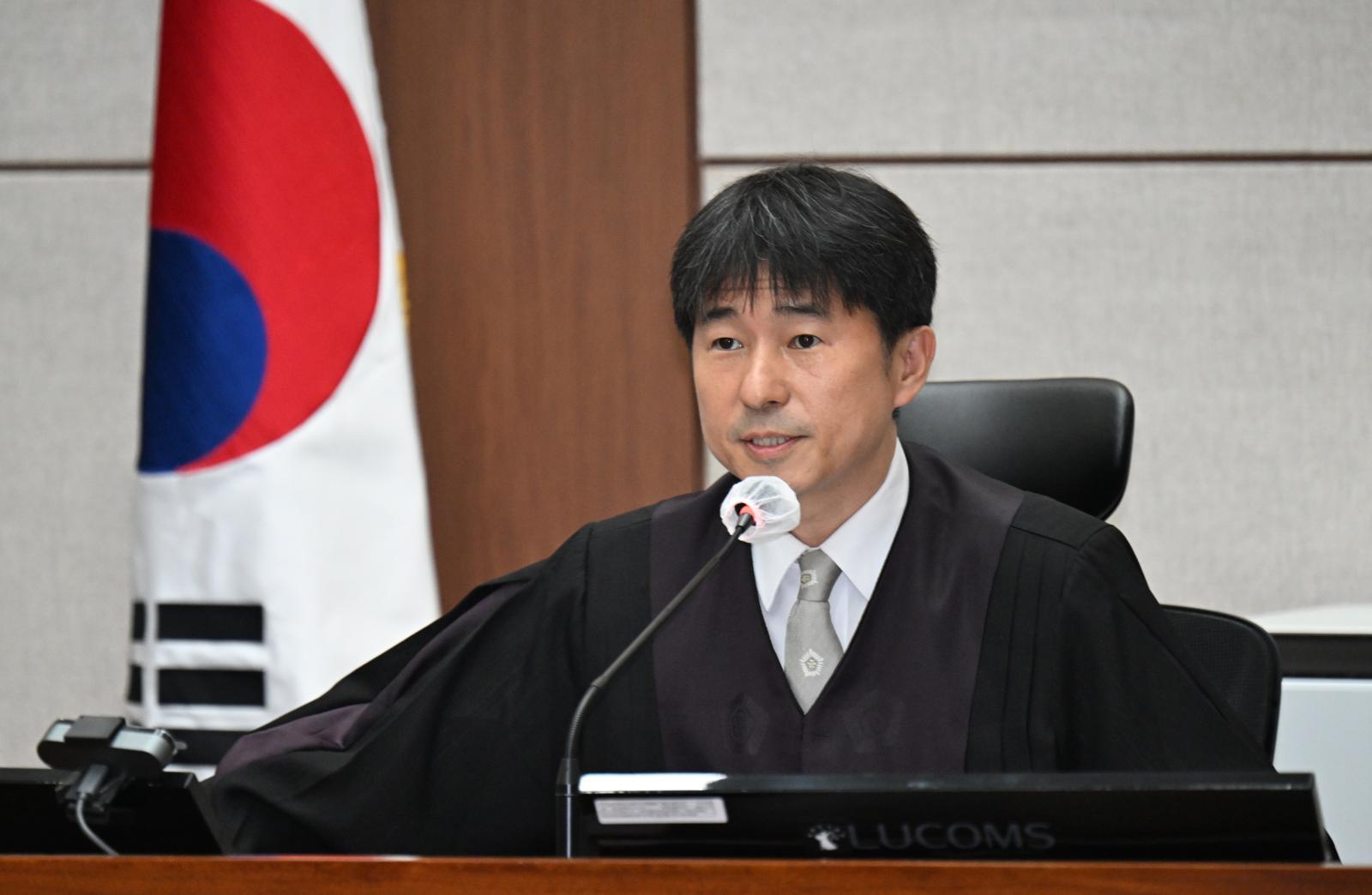
A Judge at the Center of Two Crises
South Korea’s new anti-graft agency has indicted a senior judge over allegations that he accepted hostess club entertainment, a move that sounds routine for a country accustomed to high-profile prosecutions — but lands with unusual weight given who is on trial.
Ji Gwi-yeon, a division chief judge at the Seoul Northern District Court, faces charges under the Frivolous Request Prohibition Act for allegedly arranging and paying for roughly 4 million won (≈$2,800) in alcohol and hostess services at a reservation-only pub in Cheongdam-dong, one of Seoul’s most exclusive entertainment districts. The incident, which occurred in August 2023, involved two lawyers splitting the bill with him — each man’s share coming to about 1.36 million won, well above the 1 million won threshold that triggers automatic criminal liability under current law, regardless of whether any official act was performed in return.
That Ji is now standing trial is notable for reasons that go well beyond the numbers. He was, until recently, one of the judges presiding over the treason case against former President Yoon Suk-yeol — a proceeding that has become the single most politically charged trial in South Korea’s modern history. And he is simultaneously entangled in a separate institutional crisis that has paralyzed South Korea’s highest court.
How the Scandal Broke
The allegations first surfaced in May 2024, when members of the ruling Democratic Party released photographs showing Ji sitting at the Cheongdam-dong establishment alongside the two lawyers. The images arrived at a moment of acute political vulnerability: Ji was a sitting member of the panel hearing charges that Yoon, the former conservative president, had led an insurrection during the declaration of martial law in December 2024.
The timing turned a routine corruption inquiry into a political flashpoint almost immediately. Opposition figures argued the photos were a politically motivated hit job designed to undermine a judge handling one of the most consequential cases of the decade. Supporters of the Democratic Party countered that no public official should be above scrutiny, especially one wielding life-altering judicial power during a national crisis.
The Anti-Corruption and Civil Rights Commission — known in Korean as Gongsucho — spent the next 473 days investigating. Prosecutors obtained taxi call records, financial transaction data from the establishment, and conducted repeated summonses. Ji has consistently denied wrongdoing, telling investigators he has no memory of the incidents.
Notably, the ACRC dropped separate bribery charges. Its reasoning was narrow but significant: the two lawyers who dined with Ji had no active cases before his court, and a win they had secured in his courtroom nearly a decade earlier was too temporally distant to establish quid pro quo. A second gathering at the same venue in September 2024, involving 4.16 million won in total spending, was also not prosecuted — this time because the per-person share fell below the 1 million won statutory threshold.
So the case that proceeds is a technical violation — accepting entertainment above the legal limit — rather than an allegation of bought-and-paid-for rulings. That distinction will dominate the trial, and it will dominate the political debate around it.
The Bigger Picture: A Court Without a Court
To understand why this story matters beyond the usual corruption beats, you have to look at what is happening to South Korea’s Constitutional Court right now.
The Court has been unable to hold sessions or issue decisions for months because President Yoon’s successor, President Lee Jae-myung, has refused to appoint replacements for several justices whose terms expired. The crisis escalated after the Constitutional Court nullified key provisions of a legislative package pushing the Moon Jae-in-era’s policy agenda, and the executive branch responded by simply not filling the vacancies. At last count, the nine-seat court had fewer than half its members confirmed, making it functionally incapable of hearing the cases that define South Korea’s democratic guardrails.
This is not an abstract institutional dispute. The Constitutional Court is currently scheduled to rule on the constitutionality of laws that determine the balance of power between the presidency and the National Assembly — including provisions governing emergency decrees, parliamentary oversight, and the scope of prosecutorial authority. Without a quorum, those questions hang in legal limbo.
Into this vacuum steps the ACRC’s indictment of a judge who sat on the Yoon treason bench. The message, whether intentional or not, is unmistakable: the institutions meant to check executive power are themselves subject to scrutiny, and the people staffing them are not immune.
Who Wins, Who Loses
The immediate winner is the ACRC, which has spent years establishing its credibility as an independent anti-corruption body that can investigate anyone — including judges and former presidents. Convicting a division chief judge sends a clear signal that the office means business, even when the underlying conduct looks like standard elite socializing rather than outright graft.
The loser is institutional trust in the judiciary. South Korea’s courts already suffer from low public confidence, and a high-profile indictment of a judge presiding over a politically sensitive case will deepen the perception that the bench is either compromised or selectively targeted — and in a country where those two ideas are often treated as interchangeable.
For the Democratic Party, the fallout is complicated. The party’s lawmakers released the original photographs, positioning themselves as transparency advocates. But the indictment also risks undermining the legitimacy of the treason proceedings, which the party views as a cornerstone of its political project. If the judge who helped convict Yoon is himself convicted of a corruption offense, the entire case acquires an aura of political revenge — exactly the narrative conservative forces have been promoting since the martial law crisis began.
What Happens Next
Ji’s trial will proceed under normal criminal procedure. He is not in custody — the ACRC indicted him without arrest, a standard posture for white-collar cases where the defendant is not considered a flight risk. But the political consequences will play out on a completely different timeline.
The Constitutional Court appointment crisis is unlikely to resolve before the trial concludes. President Lee has shown no indication he will accelerate confirmations, and the opposition People Power Party controls enough seats to block any rushed appointments. That means the Court will likely remain below quorum through at least the second half of 2026, leaving South Korea without its final arbiter on the most consequential constitutional questions of the decade.
Meanwhile, the Ji indictment could prompt a broader reckoning within the judiciary. If the ACRC’s investigation uncovers a pattern — judges accepting entertainment from lawyers who appear before them — the current legal framework, which draws its bright line at 1 million won per transaction, may come under pressure to tighten. The law’s current design, which treats a 1.01 million won drink and a 10 million won feast identically while exempting a 999,000 won one entirely, is increasingly difficult to defend in public discourse.
The most important question, though, is not what the law says about hostess clubs. It is whether South Koreans will view this indictment as evidence that accountability is finally reaching the highest levels of power — or as another weapon in a political war that has already hollowed out the institutions supposed to stand above it.