Justice Dept Overrode Prosecutors to Dweaken ICE Officer Charges
A federal prosecutor who fought to charge an ICE officer with constitutional violations was fired and is now under investigation for leaking. The case reveals how the Trump Justice Department is overriding its own attorneys to protect immigration agents.
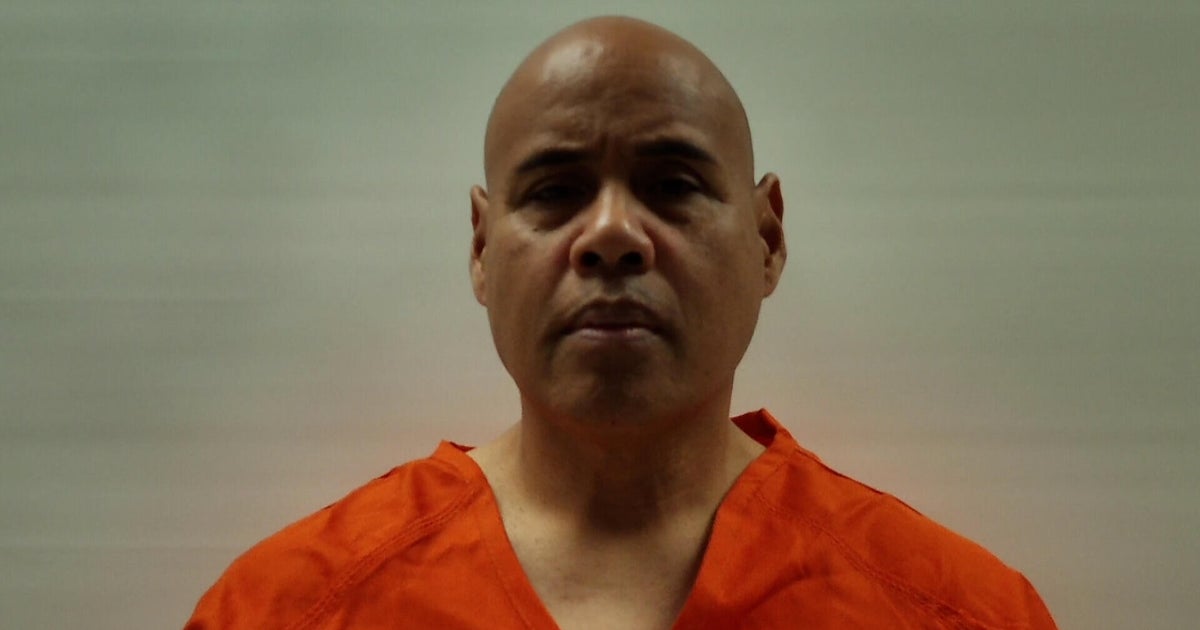
The Override That Shouldn’t Have Needed Proof
Christian Castro is charged with lying to federal investigators about the night he shot a Venezuelan man in Minnesota. That alone would make headlines. But the deeper story is about how Castro got those relatively narrow charges instead of the much more serious ones a federal prosecutor thought the evidence warranted — and what happens to the lawyer who dared to disagree.
The U.S. Attorney’s office in Minnesota was ready to pursue charges that Castro violated the constitutional rights of Julio Cesar Sosa-Celis under color of law. Those carry stiff penalties — up to life in prison if death results. Instead, the case was redirected to Main Justice in Washington, and Castro faces only false-statement counts. A federal grand jury returned the six-count indictment Wednesday. Castro was taken into custody Thursday in Texas.
Matthew Evans, the federal prosecutor who handled the case, sent an email to the victims’ attorneys outlining the change. He told them it was being directed by Main Justice and the U.S. Attorney’s office. Then he added something extraordinary: “I objected in the strongest possible terms and fought it as hard as I could. It wasn’t enough.”
Four sources familiar with the matter told CBS News that Evans was fired shortly after. He is now under investigation by the Justice Department on allegations of leaking — a detail that transforms this from a routine personnel matter into something that looks increasingly like punishment for speaking truth to power within the department itself.
What the Video Actually Showed
The shooting took place in January, during a federal immigration enforcement surge in Minnesota. The timeline matters. It came just one week after agents killed Renee Good, another Venezuelan immigrant, in a separate encounter that also drew national scrutiny.
The initial account from the Department of Homeland Security painted Castro as a defender ambushed while trying to make an arrest. According to DHS, Sosa-Celis fled a traffic stop, crashed his vehicle, and then ran toward Castro armed with a broom handle and snow shovel. Two other men, including Alfredo Alejandro Aljorna, were charged with federal assault and resistance.
The video didn’t support that version.
An FBI affidavit filed in the case against the two men showed Aljorna was the one who fled, not Sosa-Celis. Sosa-Celis had been shot in the leg. Cellphone footage shared by a Democratic state lawmaker captured a woman telling 911 operators that her husband had been chased by ICE agents all the way to his home before being shot in front of his family.
When the federal government reviewed the evidence, it couldn’t sustain the original charges. Federal prosecutors dropped the case against Aljorna and Sosa-Celis in February, citing newly discovered evidence that was “materially inconsistent” with the allegations. The dismissal came with prejudice — meaning the charges can never be reintroduced.
Todd Lyons, then acting head of ICE, acknowledged the contradiction publicly. “Video evidence has revealed that sworn testimony provided by two separate officers appears to have made untruthful statements,” he said. Both officers were placed on leave. Castro remains suspended without pay.
The Pattern Behind the Specifics
This case doesn’t exist in a vacuum. It sits inside a broader architecture of incentives that makes accountability for federal immigration enforcement increasingly optional.
Greg Abbott, the Texas governor, refused to extradite Castro to Minnesota, where he had originally been charged in state court in May. That stalled the case for months. Hennepin County Attorney Mary Moriarty didn’t mince words about Abbott’s role: “Despite Gov. Abbott’s best efforts to shield Mr. Castro, we will see him soon.”
Abbott’s refusal created a jurisdictional loophole that allowed Castro to sit out the proceedings. It also sent a signal: state-level political protection can delay or dilute federal accountability when immigration enforcement crosses state lines. Other governors with similar political orientations may take note.
The charge downgrade itself reflects a pattern that has surfaced in multiple jurisdictions. Federal prosecutors routinely encounter resistance when they try to pursue civil rights charges against immigration officers — not because the evidence is weak, but because the institutional will to prosecute is absent. Main Justice has the authority to override local U.S. Attorneys on charging decisions, and it appears to be exercising that authority selectively.
Evans’ firing and subsequent investigation for leaking compound the concern. The Justice Department’s Office of Professional Responsibility has investigated similar allegations in the past, often finding that leakers were targeting internal communications that critics found inconvenient. The timing here — firing a prosecutor who objected to a charge reduction, then opening an investigation into that same prosecutor — raises the possibility of retaliation that the department’s own rules are designed to prevent.
Who Wins and Who Loses
Castro wins the immediate battle. False-statement charges are far easier to convict on than constitutional-violation counts, and they carry far fewer sentences. Even if convicted, the maximum penalty is typically measured in years, not decades. The internal suspension without pay is a professional inconvenience, not a career ender.
The Sosa-Celis family loses something harder to quantify: the opportunity for a full accounting of what happened to their son on that Minnesota street. A civil rights prosecution would have established, on the record, that Castro acted unconstitutionally. A lie-to-investigators prosecution establishes only that Castro lied afterward — which is a narrower finding and a weaker deterrent.
Matthew Evans loses his job. The legal community that relies on uniform standards of prosecution loses a precedent-setting moment. Federal prosecutors across the country now have a new data point: objecting to a charge downgrade in an immigration enforcement case carries professional risk.
And the rule of law loses because the mechanism designed to ensure consistency — the independence of federal prosecutors from political direction — has been demonstrated to be contingent rather than structural.
What Comes Next
The initial court appearance is scheduled for Friday. Beyond that, the case enters the standard pretrial process, where discovery will force both sides to put the evidence on the record. The video footage, the FBI affidavit, the DHS initial statements, and Evans’ email will all become part of the public document stream.
Whether Evans’ firing draws scrutiny from the congressional committees with oversight authority is another question. The Justice Department’s inspector general has jurisdiction over claims of wrongful termination. So far, neither avenue has produced public action.
The Minnesota shooting was one incident in a pattern. The charge reduction was another. Evans’ treatment may be the most consequential of all — not because it changes the outcome for Castro, but because it signals what kind of institutional culture now operates inside the department responsible for enforcing federal law against its own agents.