The Kennedy Center Threat Is Not About Renovation
The Trump administration's threat to demolish the Kennedy Center over a court blockade exposes how cultural institutions are becoming leverage in a broader war on established authority.
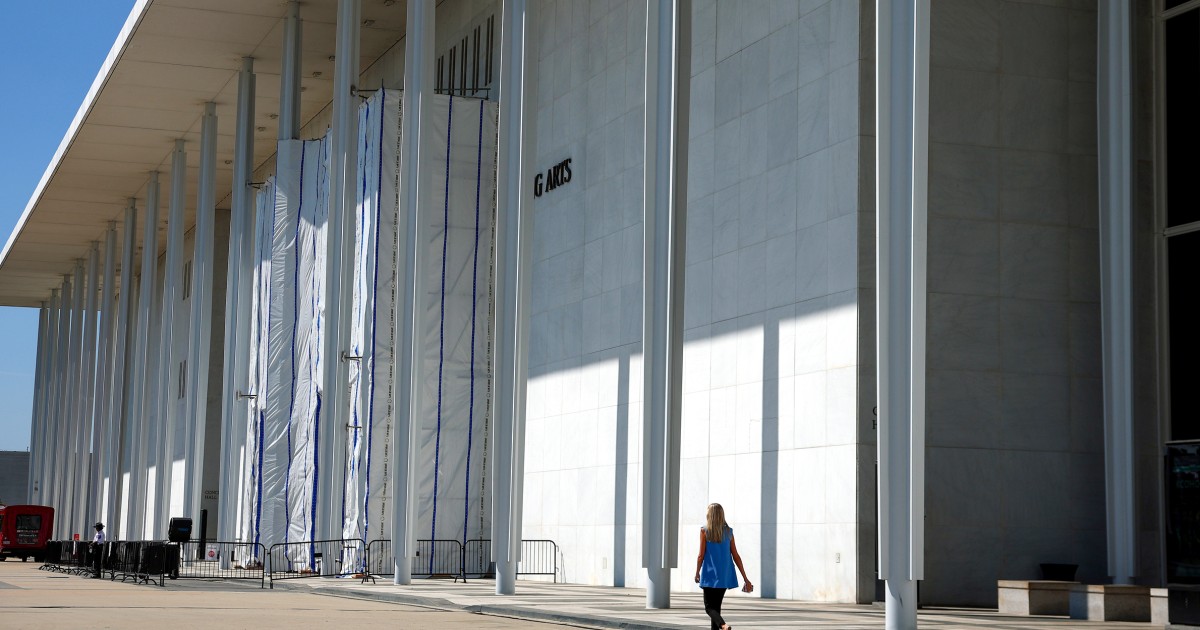
A Building as Hostage
The Justice Department has labeled the Kennedy Center structurally unsound, fundamentally unsafe, and embarrassing to the nation’s capital. The filing came from DOJ attorney Brantley T. Mayers, who was arguing before a D.C. federal judge that the arts institution should be allowed to close for two years so renovations can proceed. But buried inside the legal brief was a threat that reads less like infrastructure planning and more like a siege tactic: if the court blocks the closure, the administration will raze the building and consider replacing it with an outdoor amphitheater overlooking the Potomac River.
The amphitheater option, Mayers acknowledged, “fails to adequately honor” President John F. Kennedy. But it would be “simpler and more economical to build, operate, and maintain.” That phrasing matters. The administration is not negotiating with a court it respects. It is signaling that its commitment to the project runs deeper than the building itself, and that it will destroy what exists rather than accept a legal obstacle.
The Real Dispute Is About Control
Rep. Joyce Beatty, Democrat of Ohio, filed the motion the administration is now opposing. She argues the closure was rushed and that board members lacked sufficient information before voting. She is also challenging the Kennedy Center board’s renewed attempt to add Trump’s name to the building’s facade. A judge previously ruled that earlier attempt unlawful and ordered the name removed. Trump is appealing. The board voted this month to add his name back in a “sslightly different way.”
This is not two separate controversies. It is one. The closure threat and the name change fight are linked moves in the same game. The administration wants the building transformed—both physically and symbolically. When the court stepped in, the response was not to negotiate or adjust. It was to threaten demolition. That escalation reveals something important: the administration treats the Kennedy Center not as a public cultural institution but as a project awaiting its completion. And projects can be torn down when they do not cooperate.
Matt Floca’s Language vs. Washington’s
There is a stark difference between how the Kennedy Center’s own leadership and the Justice Department describe the situation. Executive Director Matt Floca has talked about replacing stage lifts and rigging systems, addressing electrical work, and preventing leaks. These are maintenance problems with a timeline. Floca estimated two years if the facility closes. He did not mention razing the site.
The DOJ filing does not seem concerned with preserving what is there. It treats the building as a liability and the renovation as a moral obligation. Mayers wrote that President Trump, “given his unrivaled expertise and experience in real estate and construction, and prominence as President, is uniquely qualified to accomplish” the restoration. The language is notable. It frames real estate development as a form of presidential expertise and positions the administration’s vision as superior to the institution’s own.
That framing is not incidental. It reflects a broader worldview in which established institutions are flawed by design and only an external force with sufficient will can fix them. Cultural institutions, in this calculus, are not stewards of tradition. They are obstacles to be overridden.
The Amphitheater That Wasn’t Meant to Win
The proposed outdoor amphitheater has been floated for years. It never gained serious traction. The administration’s sudden embrace of it now reads less like a policy position and more like a bargaining chip. The strategy is clear: present an option that no one wants, then argue that the court is forcing the country toward something worse than demolition. It is a classic pressure tactic. Make the alternative unbearable so the original demand seems reasonable by comparison.
But the tactic also reveals insecurity. If the administration were confident its case was sound, it would not need to threaten the destruction of a national cultural landmark. The fact that it does suggests the legal and public relations ground is weaker than it appears. The amphitheater is a bluff. The demolition threat is the message.
What This Means for Cultural Institutions
The Kennedy Center stands at the intersection of culture, politics, and institutional power—and the collision is not abstract. It has concrete implications for how every major arts organization in the United States operates. When a federal administration treats a national institution as disposable, it changes the relationship between government and culture. Institutions that once relied on bipartisan reverence become vulnerable to unilateral action.
The board that approved the closure plan was appointed by Trump. That detail complicates the narrative. It is easy to frame this as a political fight between an administration and its opponents. But the internal dynamics are messier. The board voted to close the center. Some members say they were not given enough information. The legal challenge comes from Congress, not from within the institution itself. That fragmentation matters. It means the administration can claim it has institutional support while using that support selectively.
Who Wins, Who Loses
If the administration gets its way and the center closes for two years, the arts community loses immediately. Touring productions vanish. Artists lose venues. Audiences lose access to a cultural landmark on the waterfront. The Kennedy family’s legacy takes a symbolic hit, even if they have not publicly weighed in on this specific dispute.
If the court blocks the closure and the administration follows through on demolition, the loss is catastrophic and irreversible. A building that has hosted presidents, artists, and generations of Americans disappears. The amphitheater that replaces it will be cheaper to maintain and harder to defend culturally.
If the court blocks both the closure and the name change, the administration faces a choice: back down or escalate further. The filing’s tone suggests the latter is more likely. The question is whether the administration expects to win the next round or whether the threat itself is the point.
The Larger Pattern
This dispute does not exist in a vacuum. It reflects a moment in American politics where institutional trust has eroded to levels that some historians describe as historic lows. In that environment, cultural institutions are natural targets. They are symbols of establishment authority, perceived as out of touch, expensive, and unaccountable. An administration that campaigns on dismantling entrenched systems has every reason to test its power against them.
The Kennedy Center is a test case. If the administration can force a closure, rename the building, and potentially replace a decades-old structure with something simpler and cheaper, it sends a signal to every other cultural institution in the country. Comply or become expendable.
What Happens Next
A hearing is scheduled for Thursday afternoon in D.C. on the closure and the name change. The judge will decide whether the center can shut down. That decision will shape the next phase of the dispute. If the closure is allowed, the administration gains leverage. If it is blocked, the demolition threat becomes the central question—and whether the administration will follow through.
The name change appeal adds another layer. Trump’s legal team is pursuing a parallel track to reshape the building’s identity even as the administration threatens its physical survival. The two efforts reinforce each other. One attacks the structure. The other attacks the memory attached to it.
What emerges from this case will matter beyond Washington. Cultural institutions around the country watch closely. The Kennedy Center’s fate will set a precedent for how deeply political forces can penetrate spaces that have traditionally operated outside the fray. The demolition threat is not just about a building. It is about what happens when a government decides that tradition is no longer worth preserving.