Kerch Bridge Strike: Ukraine’s Escalation of Crimean Logistics War
Ukraine's drone hit on the Kerch Bridge paralyzes a key supply route to occupied Crimea, testing Russian defenses and signaling a shift toward targeting critical infrastructure at scale.
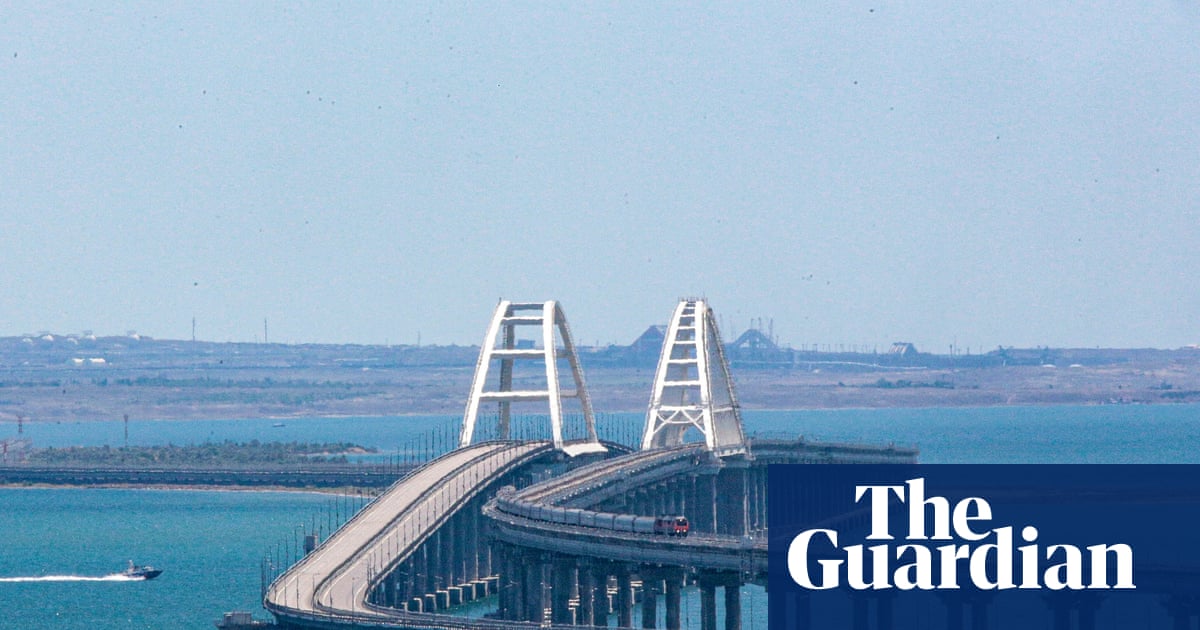
The bridge that holds Crimea hostage
At 5:38 a.m. local time, a kamikaze drone pierced one of the Kerch Bridge’s arches. The structure listed at a 15‑degree angle, described by one observer as “looking tired.” Overnight, Kyiv had launched 1,336 drones—the single largest barrge of the war. Around 600 were intercepted over Moscow, but a handful slipped through to Crimea.
Within hours, roughly 2,000 vehicles were stranded on both sides of the crossing. Sergey Aksyonov, Russia’s Kremlin‑appointed governor, warned traffic would be restricted “likely until the afternoon.” Dmitry Peskov called it “minor damage” and insisted traffic continued, even as experts assessed the steel spine that links mainland Russia to occupied Crimea.
The Kerch Bridge is more than a road and rail link. It is the primary logistical artery for a population of 2.4 million people living under occupation and for thousands of Russian troops stationed there. Every truck carrying fuel, food, ammunition, or construction materials passes over its double‑deck span. When the bridge slows, Crimea squeezes.
Why the timing matters
The strike came days before a scheduled summit in Shenzhen between China’s president, Xi Jinping, Donald Trump, and Vladimir Putin. Washington says the talks will not centre on Ukraine, where Russia’s military offensive has largely stalled after nearly five years of war. Yet Kyiv’s latest operation sends a clear message: Ukraine can still strike deep inside contested territory, and it is willing to challenge Russia’s most visible symbol of conquest.
This is not the first attempt. In October 2022 a truck laden with explosives damaged part of the road deck. A year later a “sea baby” unmanned surface vehicle struck a different section. Since then, Moscow reinforced the approach with metal barges, boom barriers, and layered air‑defence systems. The latest breach suggests those upgrades have gaps—or that Ukraine’s swarm tactics are evolving faster than they can be patched.
Who wins, who loses
Ukraine gains two things: a tangible disruption to Russian logistics, and a psychological boost. Each successful strike on the bridge chips away at the aura of invulnerability that Moscow has projected since annexing Crimea in 2014. For Kyiv, which has suffered repeated missile and drone attacks on its energy grid and cities, the strike is framed as proportional retribution.
Russia loses credibility and operational tempo. Every repair effort diverts engineers, equipment, and political attention from the front lines. If the bridge remains closed for days—a realistic possibility given the structural uncertainty—trucks will reroute through the vulnerable land corridor across the Isthmus of Perekop. That alternative capacity is far lower and more exposed to Ukrainian artillery.
The Kremlin has every incentive to minimise the damage publicly. Peskov’s “minor damage” line was a performance for domestic audiences, not an engineering assessment. Behind the scenes, Moscow is likely accelerating contingency plans for sustaining Crimea without reliable bridge traffic.
The scaling question: civilian infrastructure at risk
The Kerch strike is part of a pattern that extends beyond military targets. In recent weeks, Russia has repeatedly bombed two critical bridges over the Dnipro River in Kyiv, choking a vital transport link for a city of 3 million. Ukraine’s response has been to aim at similarly pivotal infrastructure: railway hubs, fuel depots, and now the bridge itself.
This mirrors a dangerous logic seen in other conflicts—where attacking “dual‑use” infrastructure becomes a strategy of societal pressure. The bridge carries both military convoys and commercial trucks, passenger cars, and rail freight. Disrupting it affects civilians on both sides of the occupation line, though the brunt of the hardship falls on Crimea’s Russian‑aligned population and the Ukrainian residents still living there.
What happens if this escalates into systematic targeting of civilian‑critical infrastructure? Both states have the capability. Ukraine has demonstrated long‑range drone campaigns against Russian refineries, storage sites, and ports. Russia has relentlessly pounded Ukrainian power plants, hospitals, and transport nodes. The line between military necessity and collective punishment is thinning, and the Kerch Bridge sits squarely in it.
Geopolitical ripples ahead of the summit
The Shenzhen gathering will not address Ukraine directly, but the region’s great powers are watching closely. China’s president is expected to signal support for Putin without committing material aid that could trigger secondary sanctions. Trump, facing domestic pressure to leverage his mediation role, has floated an outline in which Kyiv cedes parts of the Donbas in exchange for NATO membership or binding security guarantees. President Volodymyr Zelenskyy has already ruled out handing over territory, and the details of any guarantee remain vague—no American troops on the ground, according to Kyiv.
Ukraine’s Kerch strike underscores why Kyiv feels it cannot trade land for peace while Russia still controls Crimea. The bridge is a physical tether to Moscow; breaking it weakens the occupation’s logistical backbone. If Ukraine can routinely disrupt such chokepoints, any negotiated settlement must account for a Crimea that is functionally isolated.
What comes next
Expect Russia to invest heavily in reinforcing the bridge’s anti‑drone defences—more electronic warfare, closer‑in interceptors, possibly underwater countermeasures. Ukraine will likely continue its drone onslaught, focusing on softer targets in the region while keeping the bridge in its sights. The war of attrition over Crimea’s logistics is far from over.
For ordinary Ukrainians, the strike is vindication after months of air‑raid sirens and blackouts. For Russians in Crimea, it is a reminder that the bridge is no longer a secure conduit. And for Western policymakers, it is a sobering illustration that even a stalled front can produce striking opportunities—if Ukraine retains the tools to execute them.
The Kerch Bridge has become a barometer of the conflict’s second dimension: not just who holds the line, but who can sustain the hold. Tomorrow’s assessments of the arch’s stability will determine how long that barometer flickers.