Kim's China Visit Signals Beijing Is Rebuilding the NK Channel
Kim Jong-un's trip to China reveals Beijing is quietly rebuilding the North Korea mediation channel through economic leverage, while Trump's team searches for a diplomatic win it can sell domestically before the midterms.
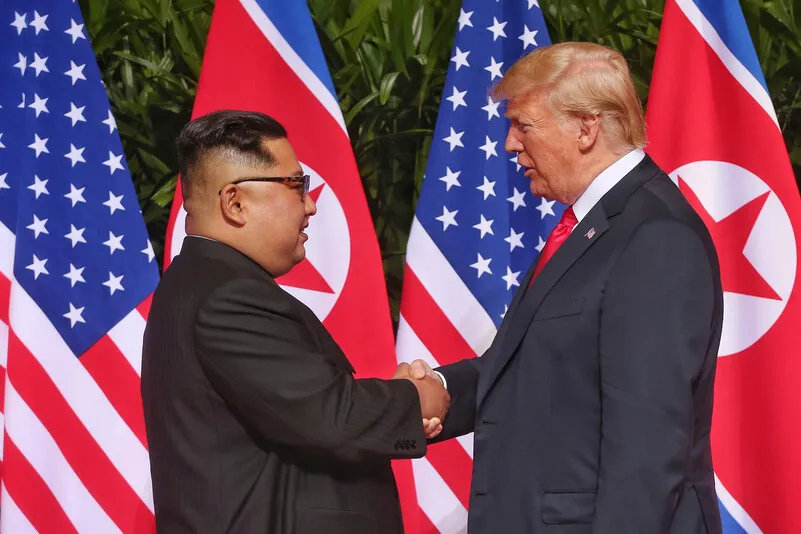
The Visit That Wasn’t a Summit Prep
Kim Jong-un arrived in Dandong on November 24. The photographs showed him touring a local automobile plant and standing beside the new Yalu River bridge that physically connects North Korea and China. Chinese state media called it a study tour focused on “economic and trade cooperation.” The Western press immediately filed stories suggesting the visit was preparation for a Trump-Kim summit at APEC in Shenzhen on November 18–19.
Both narratives are wrong. This visit had nothing to do with preparing for American diplomacy, and Trump’s team is chasing a deal that North Korea has no interest in closing on America’s schedule.
The decisive detail is embedded in the seating chart. Kim met Wang Huning, the fourth-ranking figure in the Chinese political hierarchy and chairman of the National Committee of the Chinese People’s Political Consultative Conference. He did not meet Xi Jinping. By every established protocol of Chinese diplomacy, a head of state visiting Beijing for security or nuclear negotiations meets the general secretary. Kim’s substitution — or Xi’s decision to keep his number two away — sent a calibrated message to Washington’s allies: Beijing controls the North Korea channel, and it is opening and closing it on its own terms.
The economic framing of the visit only reinforces the point. The automotive plant inspection, the border bridge, the trade corridor discussions — these are the tools of a state that has learned from the failure of its 2018 mediation. Back then, China brokered the Singapore summit and received nothing in return: no denuclearization concession, no regional stabilization, and no leverage over the United States. Washington treated China as a corridor and then walked away. Xi’s administration learned a hard lesson. The current strategy is to bind Pyongyang economically to China rather than diplomatically to America. Build the bridge. Finance the factory. Own the supply chain. Let Washington come to you when it needs the lever pulled.
The Trump Midterm Dilemma
Trump is approaching the midterms with a familiar hunger for a foreign-policy victory he can package for a domestic audience. A North Korea summit is exactly the kind of event that fits his brand: a photograph with a man he can call “very nice,” a declaration that tension has melted, a story he can tell about strength through personal diplomacy. The APEC window in Shenzhen creates a plausible cover — two world leaders, one multilateral stage, a natural excuse for a bilateral meeting.
But the logistics are collapsing. Reuters reported on November 23 that multiple US and South Korean officials consider a summit this year extremely unlikely. The United States floated the idea to Pyongyang and received no response. The APEC preparation window is too short. And Kim is not sitting in Pyongyang waiting for an invitation.
Trump himself revealed the disconnect on November 19 when he told reporters that while he maintains a good relationship with Kim, he could not say who was requesting a meeting. The phrasing mattered. A president who believed a summit was imminent does not speak in vagueness about the other side’s initiative. What Trump was really saying is that his team has lost control of the agenda.
Ankit Panda at the Carnegie Endowment for International Peace has estimated the probability of an APEC-side summit at below 10 percent. His analysis is straightforward: Pyongyang will agree to talk only if Washington offers a significant policy shift, and the Trump administration is not willing to deliver one. The North Koreans know the administration’s constraints. They also know that Kim has already played this hand before — the 2018 Singapore summit produced nothing, the 2019 Hanoi collapse was humiliating, and China absorbed none of the political cost either way. There is no incentive to repeat the pattern for an American audience.
Who Actually Won This Visit
Beijing won. It displayed access to Pyongyang without committing to American demands. It reframed the relationship around economics instead of security. It allowed Kim to visit China without the optics of a summit preparation — which means the next time Kim does visit before a US meeting, the signal will be unmistakable. The fact that this trip produced none is, in itself, a signal.
Washington lost a chance to shape the narrative. The Trump team wanted to position the APEC summit as a triumph of renewed engagement. Instead, the story will be a non-summit, a silent rejection, and a continuation of the deadlock that has defined North Korea policy for decades. The midterms give the administration no room to absorb a diplomatic empty-handed loss.
Pyongyang’s position is the most interesting of all. Kim is practicing a form of hedging that previous North Korean leaders did not attempt with this degree of precision. He is deepening economic ties with China while systematically denying Beijing the diplomatic role it would prefer. He is signaling to Washington that a deal is possible without committing to a timeline. And he is ensuring that China bears the cost of its own mediation efforts — because every time Beijing appears to facilitate a breakthrough that does not materialize, its credibility with the Trump administration erodes.
The Yalu River bridge is the perfect metaphor for this moment. It physically connects two countries. It carries trucks and cargo. It does not connect to Washington. China built it to extend its sphere of influence. Kim accepted the construction because it serves his economy. And both sides know that a bridge is not a handshake.
The Real Story Behind the Headlines
The Korean media cycle is fixated on whether the Trump-Kim meeting will happen. That is a distraction from the much more consequential question: what is China doing while the United States is distracted?
Beijing is constructing an alternative architecture for Northeast Asia — one in which North Korea is economically integrated into Chinese supply chains, where trade flows through custom-built infrastructure, where the United States is a peripheral stakeholder rather than a central mediator. The 2018 summits were supposed to produce denuclearization. They produced neither denuclearization nor a viable Chinese mediation framework. What they did produce was the lesson that China should stop investing political capital in American-brokered outcomes.
The current visit is not the first step toward a resumption of North Korea-US talks. It is the first step toward a post-American regional order in which China is the primary power broker and North Korea is an economic client rather than a diplomatic pawn.
Trump’s team should not read this visit as a signal that a summit is imminent. They should read it as a signal that the United States is being managed out of the room. The APEC meeting in Shenzhen may still produce a handshake — Michelle Lee Steel noted that if a summit happens, it will be announced with virtually no warning — but the strategic landscape has already shifted. Beijing is no longer asking Washington what it wants from Pyongyang. It is telling Washington what it has decided to do.
The bridge over the Yalu is complete. The question now is whether the United States still has a place on the other side.