Trump and NATO Chief's Ukraine Meeting Is a Transatlantic Fault Line
Trump's upcoming Florida meeting with NATO chief Mark Rutte isn't routine diplomacy — it's a test of whether America will unilateralize Ukraine's security guarantees and force Europe to choose between autonomy and abandonment.
The Meeting That Was Never Going to Be Routine
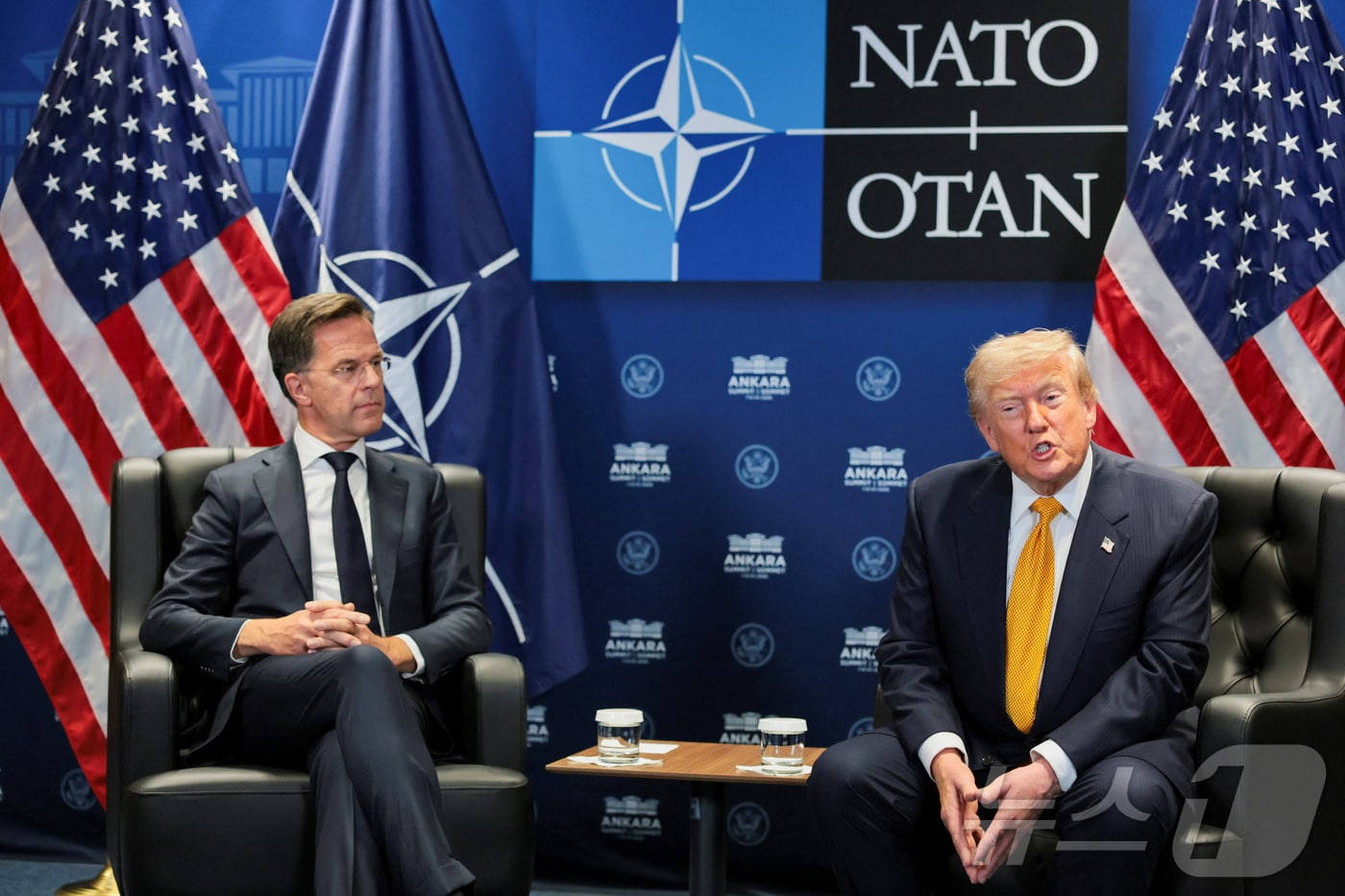
Donald Trump is scheduled to meet NATO Secretary General Mark Rutte on the 25th in Palm Beach, Florida. On paper, this is a standard diplomatic touchpoint — a sitting president convening with the head of the alliance whose member states collectively spend nearly twice what Washington contributes as a percentage of GDP. But reading this through the lens of where things actually stand makes the exercise feel less like scheduling and more like a stress test.
What happened before Trump arrived at that table matters more than what he says at it.
A President Who Calls Putin His Friend
Last week, Trump attended the APEC summit in Shenzhen and held bilateral meetings with both Vladimir Putin and Xi Jinping. He referred to Putin as “my friend” in public remarks — language that sent immediate tremors through European capitals. Nato itself published a statement reaffirming its support for Ukraine within hours.
This is not ambiguous. Calling a Russian president your friend while simultaneously discussing how to guarantee Ukraine’s security against that same president is not a contradiction you can smooth over with press releases. It is a signal. And the signal is that Trump does not view alliance commitments through the lens Europeans do.
Rutte’s Strategy of Deliberate Flattery
Rutte, who took office roughly a month before Trump’s election victory, has adopted a strategy that some NATO insiders privately describe as aggressive charm offensive. The most famous example surfaced during last year’s Brussels summit: a text message in which Rutte addressed Trump as “daddy.” The clip went viral and drew widespread criticism across European media as embarrassing subservience.
But the tactical evaluation may be more complicated than the moral one. By several accounts, that same personal rapport helped defuse moments when the relationship threatened outright rupture — particularly around Washington’s interest in absorbing Greenland and demands for European contributions to Iran contingency planning. Whether flattering a volatile partner is statesmanship or capitulation depends entirely on whether it produces outcomes that protect the alliance’s core interests.
Rutte told reporters recently that nuclear-armed leaders meeting was “very important” and that seeking solutions among them was “completely normal,” directly responding to European anxiety about the APEC side deals. That framing does three things: it legitimizes direct US-Russia accommodation, it positions NATO as a participant rather than an observer, and it signals to Trump that his secretary general is aligned rather than adversarial.
The Real Question: What Does Ukraine’s Security Look Like?
According to Reuters, the White House confirmed the Palm Beach meeting on the 23rd and indicated that discussions will focus on Ukraine security guarantees. The United States is reportedly considering a bilateral security arrangement modeled on Article 5 of the NATO treaty — the mutual defense clause — but extended to Ukraine without requiring Kyiv’s formal membership.
This is the pivotal detail. If the US offers Ukraine an Article 5-style guarantee independently, it accomplishes two things simultaneously. First, it gives Kyiv a deterrent framework that Moscow would have to weigh against. Second, it sidesteps the political impossibility of admitting Ukraine into NATO under current conditions — a process that would require unanimous consent from all 32 members and almost certainly trigger a Turkish veto over Kurdish policy disputes, among other blockers.
But the implications run deeper than Kyiv’s borders.
An American unilateral guarantee of this kind fundamentally reshapes the relationship between Washington and its European allies. It means the US decides what security architecture looks like without going through NATO’s consensus machine. It means European defense planners must adjust their own calculations around deterrence postures, forward deployment, and arms procurement to match a reality in which America has made a binding commitment that Europe did not negotiate.
Who Wins, Who Loses
Ukraine wins if the guarantee is credible and explicitly tied to US military assets on the ground or in the region. It loses if the language is deliberately vague — a placeholder for political convenience rather than a operational commitment.
Trump wins either way. He gets to announce a deal, demonstrate transactional flexibility that plays well domestically, and position himself as the architect of a new security order that bypasses institutional inertia. The fact that he met Putin and Xi first only strengthens the narrative that he operates outside traditional frameworks.
Rutte wins if he can anchor whatever emerges back to NATO’s strategic concept. He loses if the US arrangement becomes the default template and NATO’s role is reduced to implementation rather than direction-setting.
European allies who depend on Article 5 for their own deterrence — Poland, the Baltic states, Romania — face the hardest calculation. They benefit from precedent if Washington proves willing to extend similar guarantees. They lose leverage if the US demonstrates it can make and break security commitments unilaterally, rendering NATO membership conditionally valuable rather than constitutionally guaranteed.
Smaller allies are already hedging. Defense spending targets, dual-hatting arrangements with regional powers, and diversification of arms procurement away from sole-US dependency are not speculation — they are the observable policy response to an environment where Washington’s commitments can no longer be assumed permanent.
What Happens Next
The Palm Beach meeting is a proxy. Whatever emerges from it — a joint statement, a unilateral announcement, silence — will recalibrate how every NATO capital plans its defense budget for the next fiscal cycle. The question European ministers will be answering privately is simple: does America remain the anchor of collective defense, or has it become a variable we must plan around?
How NATO responds determines whether the alliance evolves into a more autonomous security community or fractures into a collection of bilateral arrangements mediated by Washington.
The meeting itself is late afternoon on the 25th. Details remain scarce. But the framework underneath it is already visible.