Koreas $185B Chip Boom Has No One to Run It
South Korea and Taiwan are pouring record capital into semiconductor expansion, but a demographic collapse is starving the fabs of the engineers who operate them. The talent shortage threatens to delay yields and reshape the global chip supply chain.
The Money Is There. The People Are Not.
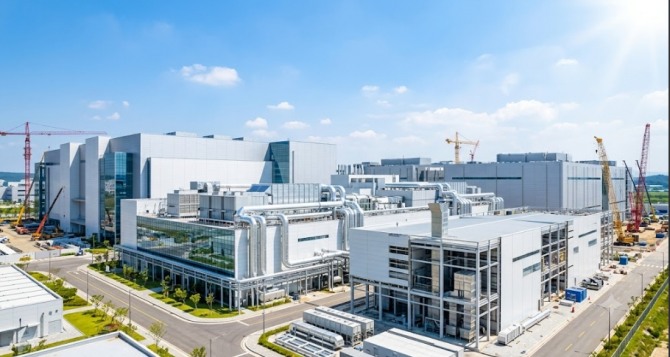
Asia’s semiconductor industry is about to spend more on equipment in a single year than many countries’ defense budgets. According to Nikkei Asia, major manufacturers across the region are committing over $136 billion to capacity expansion in 2026 — a figure driven overwhelmingly by AI infrastructure demand. Samsung Electronics, SK Hynix, TSMC, and ASE are all building new fabs or expanding existing ones at a pace that has no historical parallel in the industry’s recent memory.
But the equipment is only as useful as the people who can install, calibrate, and run it. And that is exactly where the crisis sits.
A Demographic Trap
The numbers are stark and they are getting worse every month. Taiwan’s total fertility rate fell to 0.69 as of August 2026 — a figure so low it barely registers on any meaningful scale. South Korea sits at 0.82. Japan projects 1.14 for 2025. These are not temporary dips. They are structural collapses that will not reverse within the timeframe that matters for semiconductor capital cycles.
Taiwan’s job-to-applicant ratio in the semiconductor sector has crossed 2.0, meaning there are now more open positions than there are job seekers. In equipment construction specifically, the ratio spikes to as high as 12 openings per applicant. That is not a labor market. That is a fire sale for human beings.
A equipment engineer with just two years of experience in Taiwan is now receiving monthly salary offers of around 100,000 new Taiwan dollars — roughly $3,200 before bonuses — and that premium is climbing. Salaries are not rising because demand is healthy. They are rising because there literally is no one else to hire.
Who Gets Hungry First
ASE, the world’s largest outsourced semiconductor packaging and testing company, raised its 2026 equipment investment plan twice — from $8.5 billion to $10.5 billion — and is now scrambling to recruit 3,000 engineers this year and another 1,000 next year. Grand Process Technology, a packaging equipment supplier, reported that it cannot fill positions fast enough even as it ramps production capacity by more than 50 percent.
TSMC alone plans to add 8,000 workers in Taiwan in 2026. Its total headcount has grown 38 percent over four years, reaching 91,353. Every new worker TSMC absorbs is one fewer candidate available to the companies that serve it — equipment suppliers, packaging partners, facility builders.
That is the mechanism that makes this a chain reaction. Korea’s Samsung and SK Hynix are not competing with each other for engineers. They are competing with TSMC’s entire ecosystem for the same shrinking pool.
Samsung is expanding its Pyeongtaek complex. SK Hynix is building the M15X facility in Cheongju. Both are focused on high-bandwidth memory and advanced packaging — the very processes most dependent on skilled manual precision that resist easy automation. WhenASE and its supplier network pull engineering talent away from Korean contracts to meet Taiwanese demand, the delay lands on Korean production lines.
The Real Risk Is Not Delay. It Is Yield.
A delayed equipment installation is expensive but manageable. A delayed yield ramp is catastrophic. Advanced packaging — fan-out wafer-level packaging, hybrid bonding, CoWoS-type architectures — requires months of process tuning after installation before a line produces shipping-quality chips. Each month of stalled tuning is a month of zero revenue from a multi-billion-dollar investment.
If Korean equipment suppliers cannot staff their lines, the initial yield stabilization period for next-generation packaging nodes lengthens. That pushes production timelines further out and raises the per-wafer cost at a moment when margin compression is already a structural feature of the memory business.
The supply chain does not break at the point of order placement. It breaks three months later, when the machine arrives and there is no one qualified to turn it on.
What Could Absorb the Shock
There are two variables that could change the trajectory, and neither is certain.
First, if North American cloud providers slow their datacenter buildout — perhaps through capex discipline or a shift toward more efficient chip architectures — the equipment order flow would ease and the pressure on the engineering labor market might ease with it. There is no clear signal of this happening yet.
Second, AI-driven smart factory controls could substitute for some of the manual expertise that currently bottlenecks setup and tuning. This is not science fiction. Companies are already deploying machine-learning systems for predictive maintenance and process optimization in semiconductor fabs. But these tools require skilled operators to build, maintain, and trust them. If the same engineer shortage prevents factories from automating their way out of the shortage, the loop closes.
Why the World Should Care
English-language coverage of the semiconductor boom focuses almost exclusively on geopolitics — CHIPS Act subsidies, export controls, Taiwan risk. The demographic angle is underreported because it is slow-moving and lacks the drama of a policy decision. But it is arguably the more binding constraint.
You can subsidize a fab. You cannot subsidize a generation of workers. South Korea and Taiwan are investing $136 billion this year alone into capacity that assumes a labor force capable of operating it. That assumption is wrong. The question is not whether the investment will happen. It is how much the wrong assumption will cost.
The engineers who can stabilize a new packaging line in its first ninety days are the稀缺 resource in Asian semiconductors right now — more scarce than lithography tools, more scarce than foundry slots. Until the industry finds a way to produce them faster than birth rates are depleting them, every new fab will carry a hidden tax: slower ramp, higher cost, and a supply chain that runs tighter than anyone publicly admits.