Korea's 25 Trillion Won Gamble to Keep Its Chip Giants Powered
KEPCO is asking Samsung and SK Hynix to prepay 25 trillion won in electricity bills over five years — a desperate workaround to fund the grid expansions their factories depend on. The deal exposes how Korea's semiconductor dominance now hangs on an energy crisis Western analysts barely notice.
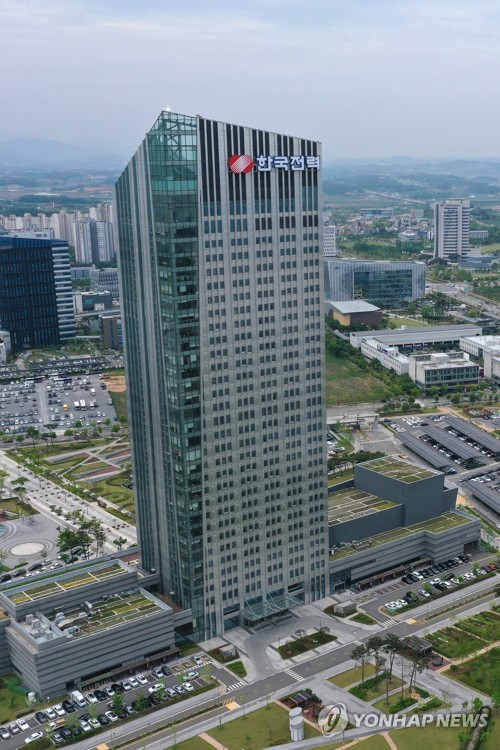
A Prepayment Plan That Sounds Like a Bailout and Works Like One Too
On September 2, at a National Assembly seminar titled “Energy Industry National Strategy in the K-GX Era,” a mid-level KEPCO official named Park Chang-ryul stood before lawmakers and laid out a number that should make anyone paying attention to global semiconductor supply chains uneasy: 25 trillion won.
That is roughly $17.5 billion at current exchange rates. It is also the total amount Korea’s two largest chipmakers — Samsung Electronics and SK Hynix — would be asked to prepay in electricity bills over five years. Samsung’s share: 20 trillion won. SK Hynix’s: 5 trillion.
In return, KEPCO would use that money to build the power infrastructure those same factories depend on. The company calls it a mutual complement. Call it what it actually is: a recognition that Korea’s grid cannot keep up with the power demands of the AI boom, and that the country’s most valuable industries may starve without a financial workaround this unusual.
The Grid Problem Nobody in Silicon Valley Is Discussing
Korea consumes roughly 480 terawatt-hours of electricity annually. Semiconductor fabs alone account for an outsized and growing slice of that. A single advanced logic fab can draw as much power as a small city — 300 to 500 megawatts during peak operation. Samsung’s new Gwangju complex and SK Hynix’s ongoing expansions in Icheon and Yi Kimpo are multiplying that demand just as the country’s transmission capacity hits wall after wall.
KEPCO’s own data shows that peak demand has climbed steadily, but grid investment has not kept pace. The utility’s traditional funding tools — corporate bond issuance and regulated tariff adjustments — are running out of room. Bond markets are already pricing in rate uncertainty. Tariff hikes face political suicide ahead of local elections and public backlash against energy costs.
So KEPCO designed something else. Ask the biggest customers to pay upfront. Build the grid with their money. Guarantee those customers a timely power supply for their new factories. Everyone wins, except anyone who thinks this arrangement is normal.
Who Actually Wins and Who Pays
The winners are obvious. Samsung and SK Hynix lock in guaranteed grid access for their most capital-intensive projects. No more waiting on infrastructure that may or may not be ready when a fab needs to go live. In an industry where a delayed startup can cost billions in lost revenue and erode competitive position against TSMC and Intel, that certainty is priceless.
KEPCO wins too — it gets nearly a full year’s worth of borrowing replaced and can cut its corporate bond issuance roughly in half, a relief for an already leveraged state utility. The government wins by keeping Korea’s chip industry alive without raising tariffs or issuing new sovereign debt.
But the structure carries a quiet risk that deserves more attention. These are not generic industrial consumers. They are two companies that together produce a significant fraction of the world’s memory chips and a growing share of foundry output. When you tie a national grid expansion to the financial health of two corporations, you have effectively socialized grid risk while privatizing the upside. If either company falters — and the memory cycle is brutal — KEPCO holds billions in prepaid credits that may not cover the infrastructure cost. The Korean taxpayer, through KEPCO, absorbs the shortfall.
What the Interest Rate Question Reveals
One detail in the proposal has not been resolved and matters more than it appears: the interest rate. KEPCO has not disclosed whether the prepayments will earn a return. If the companies receive zero or below-market interest, this is effectively a forced loan to the state utility at favorable terms. If the rate is competitive, KEPCO is competing with its own bond market for capital — which undermines the whole point of reducing debt issuance.
That ambiguity is likely intentional. Both sides are still negotiating. But it also means the deal’s true cost — to taxpayers, to consumers, to the companies themselves — remains unclear.
Why This Matters Beyond Korea
Western coverage of Korea’s power crisis tends to focus on summer blackouts or winter conservation appeals. It rarely connects those headline stories to the structural question underneath: can a country that dominates critical segments of the global chip supply chain actually power its way through the AI era?
The answer matters for everyone building AI infrastructure. Korea produces roughly 60 percent of the world’s DRAM and a significant share of NAND flash. TSMC dominates logic, but the memory layer is where Korea sits. Any disruption to Korean chip output ripples through data center provisioning, GPU supply chains, and cloud pricing globally. A grid failure at an SK Hynix plant is not a local incident — it is a supply shock with international price implications.
Japan faced similar questions during its own grid restructuring. Taiwan has spent decades hardening its semiconductor grid against both physical and political risk. Korea is now designing a financial solution that tries to solve an infrastructure problem with a balance-sheet trick. It may work. It may also reveal that the real bottleneck for the AI boom is not silicon — it is electrons.
What Happens Next
The proposal is still in negotiation. No interest rate. No firm timeline. No commitment from either Samsung or SK Hynix. KEPCO’s own statement on September 3 confirmed that the specific terms — participation, rate, amount, period — remain undecided.
What is certain is the direction of travel. Korea is choosing to keep its chip industry powered, even if it means redesigning how utilities and industrial consumers finance the grid together. The 25 trillion won prepayment is not a policy experiment. It is a template. If it works, other countries with strained grids and concentrated high-tech industry will watch closely.
The AI boom is being sold as a story about chips and code. The real bottleneck may be something far less glamorous: whether a national utility can find a way to pay for the wires before the factories run out of power.
Korea just proposed a $17.5 billion answer. The rest of the world should be paying attention.