Korea's Dead Perfect-Scorer, AI Raid: What Comes Next
Seoul police raided the apartment of a 32-year-old who scored a perfect 100 on Korea's law entrance exam, now dead, over suspected generative-AI cheating. An unnamed accomplice remains a live target in what is likely the first criminal probe of AI misuse on a major standardized test.
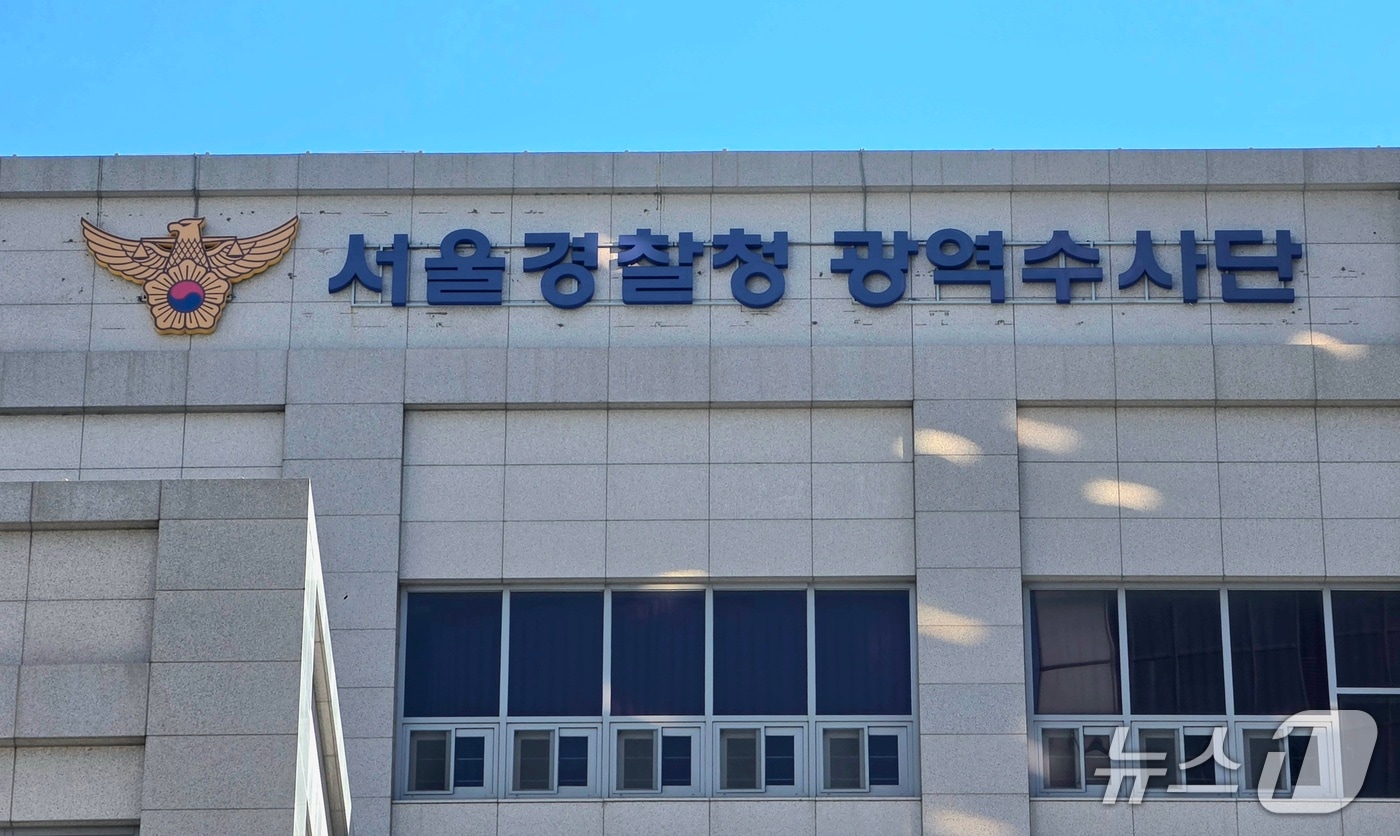
A corpse, a raid, and a test that never got a fair answer
On the morning of November 26, investigators from the Seoul Metropolitan Police’s Financial Crimes Unit walked into a third-floor apartment in Sin림-dong, Gwanak-gu, and began lifting a laptop, a phone, and whatever else might still be hiding in the drawers. The man whose life they were forensically reopening was Lee Jin-woo, 32. He had been dead for a week.
Lee had just posted a perfect 100 on the LEET, Korea’s Law Scholastic Ability Test — the exam that functions as the de facto gatekeeper for every serious law-school applicant in the country. Think of it as the LSAT, but with a national-exam gravity that the American version simply does not carry. A perfect score on the LEET is, in practice, almost unheard of. It is the kind of result that makes the scoring committee pause, cross-check, and call the candidate in for a proctored re-examination.
Instead of a re-exam, Lee got a complaint. Two of them, filed on November 18, alleging that he used generative-AI tools to answer questions on both last year’s Suneung (Korea’s national college-entrance exam, the equivalent of the SAT or ACT) and this year’s LEET. The charges, as written in the police docket, are not academic-misconduct paperwork. They are criminal: obstruction of official duties by deception, business obstruction, and fraud. In other words, the state is treating a machine-written exam answer as a crime against the exam body, not just a policy violation at a university.
That framing is the part English-language readers are most likely to miss. The LEET and Suneung are not private-test-company products. They are administered under a government statute. Falsifying results on them already carries a statutory penalty; adding a generative-AI layer just gives prosecutors a new verb to attach to an old crime. The police do not have to invent a new offense. They have to prove the AI output was substituted, and that the substitution was done by the test-taker or, in this case, possibly by someone else who supplied the tool.
The accomplice in the warrant
The search warrant issued for Lee’s apartment names a second, unnamed individual — an accomplice, according to the police’s own description. That person is alive, and that is the thread that keeps this investigation from collapsing into a purely posthumous curiosity.
Lee died on the afternoon of November 19, the day of this year’s Suneung, in a lodging facility in Gangdong-gu, Seoul. The police have not publicly confirmed a cause of death. What they have confirmed is the sequence that made the death so conspicuous: on the morning of the 19th, Lee publicly announced he would sit in a public space, time-stamped, solving the Suneung Korean-language paper with a pen and a timer, to prove the exam had been written by a human hand. He never appeared.
The two complaints had gone in the night before. The public demonstration was his answer. The lodging-room death was the footnote nobody expected, and it has now complicated the entire evidentiary picture. Lee is, in the legal language the source uses, the subject of a “no-prosecution” disposition: a dead defendant cannot be charged. The case against him is closed. The case against the accomplice is not.
What the tutor and the KakaoTalk logs add
On November 25, the day before the raid, investigators spoke with a person identified only as “A,” a private tutor who gave Lee Biology II sessions before last year’s Suneung. From A they collected KakaoTalk chat logs — the messaging app that is essentially the operating system of Korean daily life — between A and Lee. The logs are not yet public, but their collection tells you where the police think the AI pipeline ran. The theory the complaints imply is not that Lee typed a prompt into ChatGPT in a darkened exam hall. It is that someone else, off-camera, generated the answers and fed them back through a channel that a proctor would not have intercepted.
The tutor’s role in that channel is the piece the investigation is still trying to pin down. If A supplied the model output, A is the accomplice. If A was merely a study partner, the accomplice is someone else, and the KakaoTalk records are the breadcrumb trail to find them.
Why this will not stay a Korean story
The LEET is not the GRE, not the MCAT, not the SAT. But the structural problem it exposes is identical to the one every test-administering body on earth is now wrestling with. The LSAT, the MCAT, the GRE, the UK’s A-levels, the AP exams: all of them were designed in an era where a human brain was the bottleneck. Generative AI removes that bottleneck overnight, and the proctoring hardware — a camera, a microphone, a sealed room — has no native way to detect a person who is not looking at the paper but is listening to a whisper-earpiece or reading a text message on a phone concealed in a sleeve.
Korea’s police have now made the choice, explicitly, to treat that gap as a criminal one. The Financial Crimes Unit running the raid is the same division that handles securities fraud and bank embezzlement. They are not an education department. They are not a university disciplinary board. The message that sends to test writers in New York, London, and Mumbai is harder to ignore than any policy memo from the College Board: the next wave of cheating scandals is going to arrive in the form of police warrants, not honor-code suspensions.
Lee Jin-woo will not testify. The laptop in his Sin림-dong apartment may. And somewhere in Seoul, a second name in a sealed file is waiting to become the face of this story. That face will be alive, and that is where the law actually starts.