Korea Puts AI at Cost of Power Grid, While US Moves to Regulate
As the US scrambles to regulate AI data centers choking its power grid, South Korea is doing the opposite — passing laws that exempt them from grid impact assessments. The divergence reveals a dangerous policy blind spot.
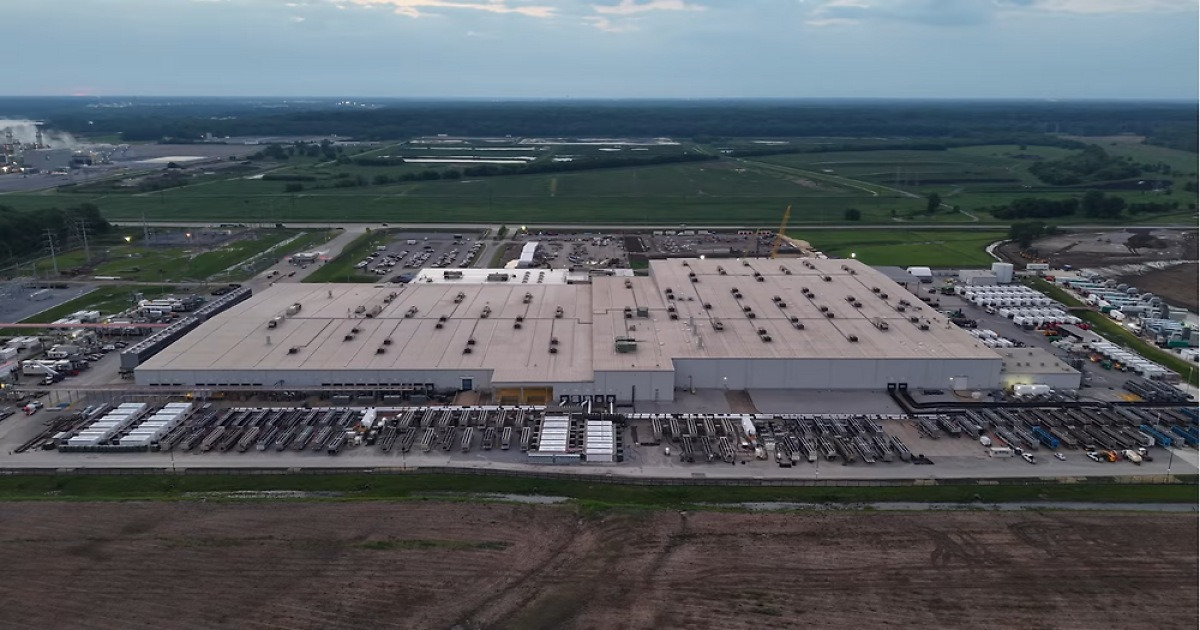
The Grid Is Screaming. Seoul Is Turning Down the Volume.
In the first half of 2025, something strange happened to the North American power grid. Across the US eastern corridor, data centers — the humming cathedrals of AI computing — began vanishing from the grid in rapid, unexplained surges. One event in February alone saw 1,800 megawatts of demand disappear in an instant. By June, the total had climbed to roughly 4,300 MW of sudden load reductions, all classified by the North American Electric Reliability Corporation (NERC) as “Customer-Initiated Load Reduction” — a bureaucratic term for a data center choosing to unplug itself.
These were not blackouts caused by grid failure. They were data centers protecting themselves. When a transmission line experienced a routine fault — a lightning strike, a tree branch, the kind of microsecond voltage dip that happens dozens of times a year everywhere — the data center’s backup power systems kicked in and severed the connection. The hardware was saved. The grid wasn’t.
When 1,800 MW of demand vanishes in a fraction of a second, the grid operator must instantly find 1,800 MW of spare generation to balance the system. When those same data centers reconnect moments later, the operator must ramp up another 1,800 MW almost as fast. The result is a grid pinned between two emergency states, held in check only by expensive spinning reserves that operators must keep on standby 24/7, just in case.
This is the hidden cost of the AI boom — and it is accelerating.
Three Giants Publish a Warning Nobody Answered
In August 2025, Microsoft, OpenAI and Nvidia released a preprint paper that should have sent shockwaves through every energy ministry on Earth. Titled “Power Stabilization for AI Training Datacenters,” the 50-author joint study documented what the industry had long suspected but rarely acknowledged publicly: AI training workloads produce power swings of tens to hundreds of megawatts within 20 to 30-second cycles.
The pattern is intrinsic to how large language models are trained. Each iteration alternates between a compute-heavy phase, where thousands of GPUs burn through calculations, and a communication-heavy phase, where GPUs synchronize their results. The compute phase draws far more power. As training jobs scale to tens of thousands of GPUs, the swings grow larger and faster — cycling between 10% and over 90% of rated power consumption, repeatedly, like a heart going into arrhythmia.
The paper’s warning was blunt: if these power fluctuations align with the resonant frequencies of turbine generators or long-distance transmission lines, they can trigger mechanical failure across the grid. The authors explicitly called on grid operators and utilities to share resonance and ramp specifications openly and to establish standardized communication channels with data center operators.
No utility responded with urgency. No regulator moved. At least, not until the data centers started disconnecting en masse.
Washington Rises. Seoul Sleeps.
The cascade of disconnection events in early 2025 forced the US regulatory apparatus into motion. In September 2025, NERC issued a Level 2 industry advisory urging grid operators to develop interconnection standards for large demand facilities like data centers. The responses revealed that operators were largely unprepared. By May 2026, NERC had escalated the advisory to Level 3 — a formal alarm — and proposed a threshold of 20 MW or above for mandatory registration, a figure that would capture most AI data centers.
FERC followed in July with a direct order to NERC: finalize binding standards by year’s end. The philosophical shift was significant. For decades, US grid reliability rules targeted supply-side infrastructure — power plants and transmission lines. Demand-side users were free to consume however they wanted. The AI data center crisis forced a reversal: the consumer, it turned out, was just as responsible for grid stability as the producer.
South Korea, meanwhile, took the opposite direction.
In April 2025, when NERC was sounding alarms, South Korea’s Ministry of Trade, Industry and Energy announced an incentive policy for data centers located in designated zones with surplus electricity. The policy would minimize — some officials reportedly said “effectively eliminate” — the requirement for power system impact assessments. These assessments, established under the Distributed Energy Activation Special Act in June 2024, were supposed to evaluate whether a new large-scale power consumer would destabilize the grid before it was built.
Two years after the law passed, no concrete standards had been issued. And now the ministry was creating an exception before the rules even existed.
The trajectory accelerated. In May 2025, the National Assembly passed the AI Data Center Special Act, which explicitly exempted data centers built or expanded outside the metropolitan area from power system impact assessments. The law takes effect in March 2027. Jeong Hye-kyung of the Progressive Party voted against it, calling it “a bill that shifts the costs and risks of corporate data centers onto citizens under the guise of AI industrial promotion.”
The logic of the exemption is self-evident: if you remove the assessment, you remove the obstacle. No impact study means no delay. No delay means faster construction. Faster construction means more GPU capacity. More GPU capacity means your country is an “AI superpower.”
Who Wins, Who Pays
The beneficiaries are clear. Samsung Electronics and SK Group — the two Korean conglomerates whose executives were photographed alongside President Lee Jae-myung at a June 2025 mega-project briefing — are positioning themselves as builders of the AI infrastructure stack. Samsung supplies the chips and the facilities. SK supplies the power. Together they form a vertical integration that the special law is designed to protect from regulatory friction.
The cost is borne by everyone connected to the Korean grid. Power system impact assessments are not paperwork exercises. They are the only mechanism that forces a prospective data center to demonstrate it can handle its own load without destabilizing the system around it. Remove that requirement and you are gambling that a facility consuming hundreds of megawatts will behave like a predictable load — when the evidence from the US shows it will not.
There is also a broader geopolitical dimension that English-language readers outside Korea may miss. The Korean government has been aggressively promoting AI data centers as one of three “mega projects” to revive the economy. This is not a marginal policy; it is a central pillar of the current administration’s economic strategy. The special act was debated and passed with remarkable speed, and the exemption language was inserted without public consultation or technical review.
Korean tech firms are also building data centers in the United States. The Samsung and SK brands appear on American power grid stress reports. The regulatory divergence between the two countries — Washington tightening rules, Seoul loosening them — creates a perverse incentive structure: Korean companies face lighter oversight at home while exporting the same unpredictable load patterns to American grids, where regulators are now trying to contain them.
What Happens Next
The immediate risk is operational. South Korea’s grid already operates with thin reserves compared to the US eastern corridor. Adding large data centers without impact assessments is equivalent to inviting unknown loads onto a system with no visibility into their behavior. The 2025 US disconnection events were triggered by faults that would be considered routine in Korea — lightning causes roughly 88 transmission faults per year across the country. If Korean data centers respond to those same faults by disconnecting and reconnecting, the grid operator faces identical shock cycles without the benefit of interconnection standards to manage them.
A longer-term risk is regulatory capture. The grid code — the set of technical standards that govern how facilities connect to and operate on the grid — is only now being discussed in South Korea. Energy transition advocates warn that the code currently addresses only renewable energy inverters, not the “malicious loads” that AI data centers represent. Without explicit requirements for load-smoothing equipment, reserve capacity, or real-time communication with grid operators, data centers will continue to treat the grid as a free service with no responsibility to maintain its stability.
The US experience offers a roadmap, but one that Korea is currently refusing to follow. FERC’s order to NERC establishes a principle that is both technically sound and politically significant: large consumers of grid power must meet the same reliability standards as large producers. Korea has not begun this conversation. It has built a bypass instead.
The data center power crisis is not a future problem. It is happening now in North America, and the same mechanics apply wherever AI infrastructure scales without grid discipline. South Korea’s choice to exempt data centers from assessment is not a neutral decision. It is a bet that growth will outpace consequence — and that the bill, when it comes, will be paid by someone other than the companies writing the checks.