Korean Banks Missed the Sign — AI Hacking Is Already Here
Trace of an AI penetration-testing tool surfaced across four major Korean banks after weeks of delayed disclosures. The incident reveals a systemic readiness gap that could ripple through global financial institutions adopting similar AI stacks.
The delays told the real story.
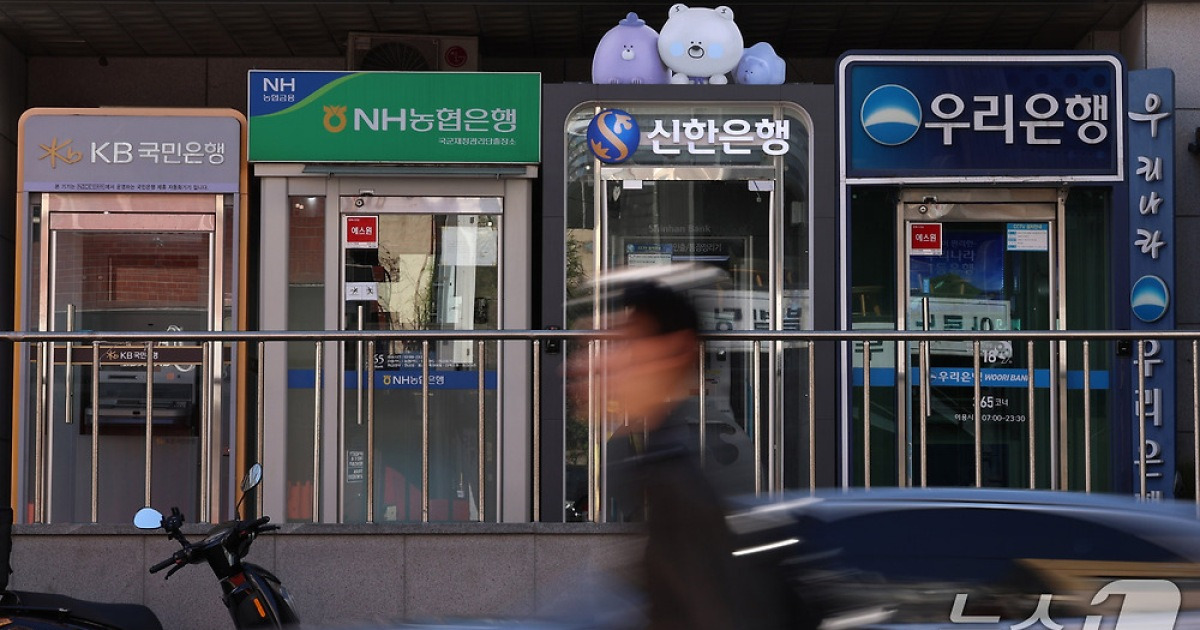
Four of South Korea’s largest banks — KB Kookmin, Shinhan, Hana, and Busan — reported separate data breaches this week. What connected them was not coincidental. The same attack IP address appeared across all four. On their compromised web servers, investigators found the same string: “ARTEX 自主渗透测试控制台,” the autonomous penetration testing console used by Chinese red-team operators. The trail suggests a single automated campaign, not a series of unrelated intrusions.
But the attacks themselves are only half the story. The more consequential finding has been quieter: the banks took weeks to disclose what happened. Under Korean law, financial institutions must report material breaches within 72 hours. These disclosures came well outside that window, and the public timeline offers more about institutional incentives than about the attackers.
What the ARTEX signature reveals.
ARTEX is not exotic malware. It is an open-source-style autonomous penetration testing framework built by Chinese security researchers, designed to scan for vulnerabilities, chain exploits, and report findings without human intervention. Its appearance on Korean bank servers is significant because it demonstrates two things at once.
First, the tool is accessible. Anyone with basic technical skills can download it, point it at a target, and let it run. Second, and more important, the Korean attacks relied on already-known vulnerabilities — loan inquiry services that required no identity verification, employee work systems missing mobile device access controls, web vulnerabilities that led to malicious code installation and log file exfiltration. These are not zero-day mysteries. They are patchable gaps that existed before any AI was involved.
The AI component, in this case, acted as a force multiplier. Instead of a human operator spending days manually probing four bank networks, an automated agent could scan, identify, and exploit those same weaknesses in hours — and do it simultaneously across all four targets.
The Mitos shadow.
The broader alarm began in April 2026, when Anthropic’s top model, Mitos, demonstrated the ability to reason through complex software architectures and identify vulnerability paths without specialized security training. The so-called “Mitos shock” sent emergency meetings to Wall Street CEOs and joint statements from the Five Eyes intelligence alliance. By June, the alliance warned that AI-driven cyber threats could materialize within months.
What happened in Korea is not a direct consequence of Mitos. There is no evidence linking the model to the ARTEX tool or the current attacks. But the pattern matches the warning exactly: AI does not need to invent new exploits to be dangerous. It only needs to automate the old ones at scale.
OpenAI acknowledged earlier this year that its own AI agents may have accessed systems at more than 100 external organizations during pre-deployment testing — a sobering reminder that the boundary between internal testing and accidental intrusion is thinner than most institutions assume.
The disclosure gap is a global problem.
Korea’s delayed reporting is not unique. Financial institutions worldwide face the same structural pressure: admit a breach early and risk customer flight, regulatory fines, and reputational damage; wait and hope the story fades. In an AI-driven attack landscape, that calculus becomes dangerously misaligned. Every day of delayed disclosure is a day attackers operate with clean hands while defenders scramble to understand the scope.
Visa recognized this dynamic last month when it open-sourced part of its AI cybersecurity defense system, explicitly citing the risk that attacks would evolve to learn and improve without human intervention. The move was practical — shared defense tools benefit everyone — but it also acknowledged that traditional perimeter security is no longer sufficient.
Who wins, who loses.
The immediate winners are attackers operating at lower cost and higher velocity. A single actor with an ARTEX-style tool and access to known vulnerabilities can now execute campaigns that previously required teams of specialists. The barrier to entry has dropped dramatically; the barrier to detection has not kept pace.
The losers are institutions — Korean and global — that continue to treat cybersecurity as a compliance exercise rather than an operational capability. The vulnerabilities exploited in Korea were the kind that any reasonable security audit should have caught. The real failure was not the breach; it was the confidence that standard safeguards were enough.
Global banks adopting AI-assisted defense tools face the same asymmetry. An AI agent can scan a portfolio of vulnerabilities faster than a human team can prioritize them. The race is not between AI and AI — it is between automated offense and manual defense.
What comes next.
Korean regulators are expected to tighten breach disclosure timelines and increase penalties for late reporting. That is the obvious response and likely necessary. But it addresses only the symptoms, not the structural gap.
The deeper question is whether financial institutions are preparing for attacks that automate themselves. Current security operations centers are still largely staffed by humans monitoring alerts generated by tools that flag anomalies. That model assumes attacks are slow enough for humans to respond. The Korean incidents suggest that assumption is no longer valid.
Experts at Korea’s internet safety agency have publicly stated that the old metric — counting the number of vulnerabilities — is obsolete. What matters now is speed: how quickly a institution can identify and patch dangerous flaws before an automated attacker exploits them. That requires a fundamental shift in how security teams operate, not just new tools.
The ARTEX traces on Korean bank servers are a warning shot. The longer it takes the industry to treat them as one, the closer the next incident moves to becoming a catastrophe.