Korea Bets Big on NVIDIA's Vera Rubin — at Double the Price
South Korea is spending 27.5 billion won per rack on NVIDIA's next-gen AI chips — twice what Wall Street expected. The move signals a dramatic shift from memory dominance to direct competition in cutting-edge AI silicon.
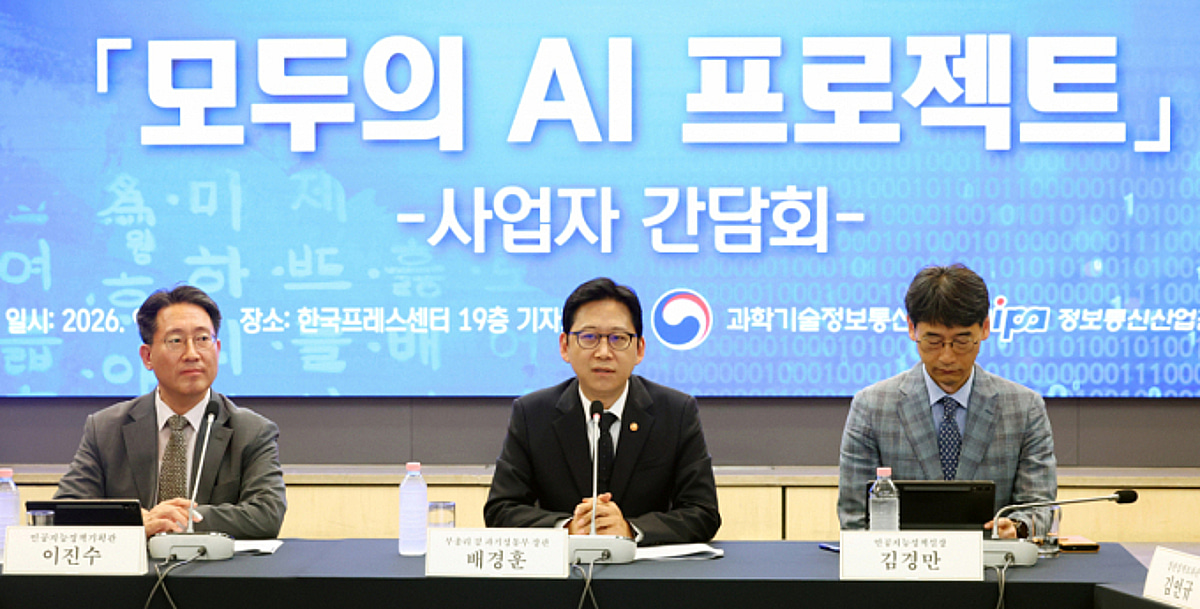
Korea Is Paying Twice the Market Price for NVIDIA’s Best Chip
South Korea’s government has allocated 27.5 billion won per rack for NVIDIA’s next-generation Vera Rubin AI processor — roughly double what major Wall Street firms projected. The number comes from leaked project documents obtained by Deputy Lee Jeong-heon’s office and confirms what was already suspected: Korea isn’t just buying chips. It’s making a structural bet.
The budget sits at 3.85 trillion won for next year alone, designated entirely for 140 NVL72 server racks. Each rack contains 72 Rubin GPUs and 36 Vera CPUs. Across the full deployment, that equals approximately 10,080 Rubin GPUs — a figure that aligns precisely with what Science and ICT Minister Bae Hyun-soon said last June. “To build a model like Anthropic’s Mistos, we’ll need around 10,000 Rubin GPUs,” he stated. The math checks out. This is not a speculative reserve purchase. It is a targeted acquisition with a named objective.
Why the Premium Price Tag
The price gap between Korea’s budget and analyst estimates is stark. Bernstein valued the NVL72 rack at $910,000 in June. Morgan Stanley placed it closer to $780,000. Korea is budgeting the equivalent of roughly $2.1 million per rack. That is more than double the consensus forecast.
Officials justify the spread by pointing to GPU supply constraints and ancillary infrastructure costs. In a market where demand vastly outstrips available supply, premium pricing is not unexpected. But the real story is not the per-unit cost. It is the willingness to pay it.
South Korea has never funded individual chip acquisitions at this scale through government budgets. The country’s semiconductor strategy has traditionally centered on memory production — Samsung and SK Hynix dominate DRAM and NAND markets. This is different. This is a direct investment in the compute layer, not the storage layer. It is a pivot toward the most contested frontier in global AI.
The Strategic Move Beyond Memory
For decades, Korea’s semiconductor identity has been locked to memory. That strategy served the country well through the 1990s and 2000s but offers diminishing returns in an era defined by training inference workloads and large language models. The Vera Rubin procurement represents a clean break from that posture. Korea is positioning itself not as a supplier of commodity silicon but as an owner of frontier compute capacity.
The timing matters. Anthropic recently unveiled its supermodel Mistos, and the announcement triggered immediate concern in Seoul. Without access to comparable infrastructure, Korean AI research risks falling further behind U.S. and Chinese labs. The Global AI Frontier Lab project — the vehicle for this procurement — is Korea’s answer. It is designed to close that gap by concentrating top-tier hardware inside publicly funded research infrastructure.
The 140 racks acquired this year are separate from the 52,000 advanced GPUs the ministry has pledged to secure by 2028. That larger target is aspirational. Actual delivery depends on NVIDIA supply, which remains heavily allocated to American hyperscalers. Korea will likely receive only a fraction of what the 2028 goal envisions.
Who Wins, Who Loses
The immediate winner is the Global AI Frontier Lab initiative and its affiliated research institutions. They gain access to hardware that would otherwise be unavailable to non-U.S. entities without competing directly with Google DeepMind or OpenAI purchasing power. The secondary winner is Korea’s AI ecosystem broadly — startups and universities that can lease compute through government channels avoid the capital expenditure required to build equivalent infrastructure independently.
The loser is unclear but implicit: Korean memory manufacturers. While Samsung and SK Hynix benefit from long-term demand growth, this procurement signal tells international customers that Korea’s strategic priority is shifting. The government is betting its budget on GPU supremacy, not memory scale. That rebalancing may influence how global clients perceive Korea’s semiconductor commitment over the next five years.
NVIDIA benefits directly. Any guaranteed government purchase at inflated prices strengthens its revenue outlook, particularly for a product line that has become the industry benchmark. The deal also reinforces the company’s pricing leverage in a constrained market.
What Happens Next
Supply will be the binding constraint. Even at premium pricing, Korea cannot buy what NVIDIA does not produce. If Rubin GPU output remains allocation-limited through 2027 and 2028, the 140-rack purchase may represent the ceiling rather than the floor of Korea’s ambitions. The 2028 target of 52,000 GPUs is effectively a wish list unless NVIDIA significantly expands manufacturing capacity or Korea negotiates preferential supply agreements.
There is also a delivery risk. The documents note that actual allocations may vary depending on NVIDIA supply conditions. If shipments fall short, the 3.85 trillion won budget could either go unspent or be redirected toward alternative platforms — potentially AMD or domestic Korean designs — neither of which currently matches Vera Rubin performance for large-scale training workloads.
The broader question is whether this investment translates into competitive AI models. Hardware is necessary but insufficient. Korea still lacks the talent density, venture capital ecosystem, and commercial distribution networks that have propelled Silicon Valley and Shanghai. The Vera Rubin procurement is a credible first move, but it is one move in a much larger game.
What is clear is that Korea has stopped treating frontier AI compute as something to observe from the sidelines. It is buying its way into the arena — at a price that reflects both scarcity and determination.