Korea's Chip Giants Just Rejected the Government on Its Own Power Grid
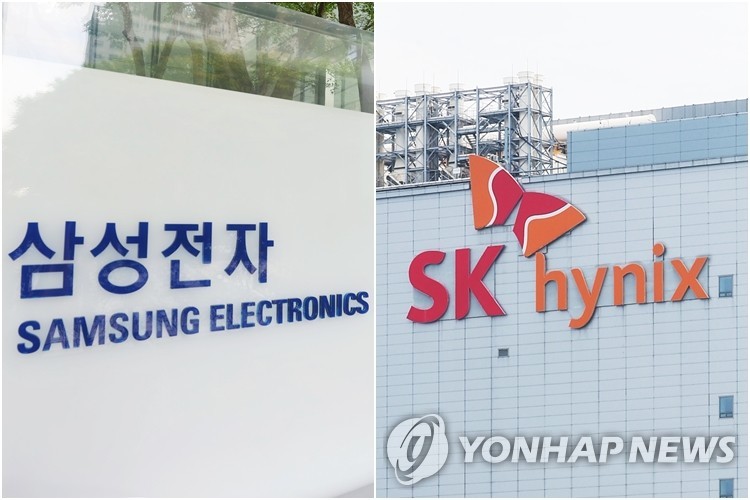
Samsung and SK Hynix turned down a 25 trillion won electricity prepayment deal from state utility KEPCO — a rare public refusal that exposes the limits of Korea's government-industry coordination model just as global chip demand surges.
The Refusal That Speaks Volumes
Samsung Electronics and SK Hynix told Korea Electric Power Corporation (KEPCO) no — and in a country where the boundary between state utility and industrial giants has always been porous, that no carries weight far beyond the balance sheets of two companies.
The proposal was straightforward on paper: pay five years of electricity bills upfront, totaling 25 trillion won (roughly $18 billion), and KEPCO would use the cash to build the power infrastructure that Samsung and SK Hynix need to expand their semiconductor campuses in Yongin and the Honam region. Samsung’s share alone was 20 trillion won; SK Hynix’s was 5 trillion.
The companies said the timing was wrong. Not the idea — the money.
Why Cash Is Now the Scarcer Commodity
Semiconductor makers have been enjoying the best cycle in a generation. DRAM and NAND prices have climbed, AI demand has flooded orders, and revenue has surged. On the surface, a company flush with cash should welcome a government request to prepay bills — it signals confidence, it strengthens relations with the state, and it helps build the infrastructure those companies depend on.
But Samsung and SK Hynix saw something else. They saw a world where the next five years of demand are far from guaranteed. AI chip cycles can compress. Memory markets can swing as dramatically as they rose. And tying up 20 trillion won in a single cash commitment — even with a favorable interest rate structure — means pulling that liquidity out of R&D, capex, and M&A options that may prove more valuable down the line.
For Samsung, the calculus is even sharper. The company is still digesting its expanded foundry ambitions, its TSMC rivalry, and a consumer electronics business that faces stiff competition from Apple and Chinese manufacturers. Every won locked into a KEPCO prepayment is a won not available if a once-in-a-decade opportunity appears.
SK Hynix faces a similar tension. Its memory business is more concentrated than Samsung’s diversified empire, which makes predictability more valuable — and volatility more dangerous. The decision to decline suggests SK Hynix’s leadership believes the current cycle’s tailwinds are real but not durable enough to justify such a large upfront commitment.
The Power Grid That Doesn’t Exist Yet
KEPCO’s side of the story is not without merit. Its balance sheet tells a story of a company under strain. Total debt stands at 210.7 trillion won. Daily interest payments alone amount to 11.5 billion won. The government had granted KEPCO special permission to issue debt up to five times its capital and reserve base — a limit that expires by the end of next year. Without new revenue sources, KEPCO faces a tightening financial corridor.
The Yongin and Honam semiconductor clusters are real projects with real timelines. Samsung’s Yongin campus expansion and SK Hynix’s Icheon operations require enormous amounts of power. Building new substations and transmission lines takes years, not months. The logical argument is that getting cash upfront from the two companies that will consume most of that electricity makes sense — both for KEPCO’s finances and for the pace of infrastructure delivery.
KEPCO’s counter-proposal offered above-market interest, payable semi-annually against electricity bills. In theory, this was a win-win: the companies got a return on their cash, KEPCO got the capital it needed, and the government got grid upgrades faster.
In practice, the math did not convince the two largest industrial consumers in Korea.
What This Says About Korea’s Model
The more interesting story here is not the money — it is the relationship.
Korea’s postwar economic miracle was built on a compact between the state and its champion firms. The government directed credit, set priorities, and coordinated investment. Companies delivered growth, employment, and export targets. When the state asked for something, the answer was usually yes — or at least, a very careful yes.
That compact is fraying. Not because Korean companies have suddenly become independent-minded, but because the economic environment has changed in ways that make old forms of coordination less useful.
Samsung and SK Hynix operate in global markets where their competitors are not subject to government pressure. TSMC does not face a request from Taiwan’s state utility to prepay decades of electricity bills. Intel does not answer to a Washington utility board. Korean companies are competing internationally while being asked to manage domestic political economies — a tension that only grows as chip demand becomes a geopolitical asset as much as a commercial one.
The rejection is likely to prompt private conversations. These two companies do not want to damage their relationship with KEPCO or, by extension, the government. But the public nature of the refusal — reported through industry sources rather than through official channels — signals that the old model of quiet compliance is giving way to something more transactional.
Who Wins, Who Loses, What Comes Next
KEPCO loses first. Its debt problem remains unsolved. The special debt issuance window closes by end of next year. Without the 25 trillion won prepayment, it must find other ways to fund grid expansion — potentially through higher consumer electricity rates, more government subsidies, or tighter borrowing terms that further strain its finances.
The government loses second. It wanted a coordinated solution to two problems simultaneously: KEPCO’s funding gap and the semiconductor industry’s power needs. The deal would have tied both outcomes together. Now the problems remain separate, and the political optics are poor.
Samsung and SK Hynix win — conditionally. They preserved flexibility, sent a signal about their financial discipline, and avoided locking up capital in a deal whose terms they found unfavorable. But they also risk alienating the state utility that controls the electricity their factories depend on. In Korea, that is not a relationship you damage lightly.
The semiconductor industry wins in the short term by keeping options open. In the medium term, it may find itself scrambling for power infrastructure that was supposed to be built with prepayment money. Memory cycles are cyclical. When the next downturn hits, the companies that preserved cash will have an advantage — but so will the companies at foundries and packaging facilities that did not get the grid upgrades they needed.
The global chip industry watches closely. If Korea’s largest semiconductor firms are willing to push back against state requests, it suggests that even in countries with strong government-industry coordination, the pressure of global competition is reshaping the rules. That may be good for corporate strategy. It may be bad for national industrial policy.
The next move belongs to KEPCO. The question is whether it can fund its grid without the companies it needs most, or whether it will return with a proposal that makes the first one look reasonable by comparison.