Korea's Record Exports Are Reshaping Global Trade—And That Terrifies Washington
South Korea's September exports shattered records at $120.9 billion, driven by a semiconductor boom that alone reached $60.3 billion. The country is on track to become the world's fourth-largest exporter, but its dual dependence on US technology and Chinese demand creates a geopolitical tightrope.
The $120 Billion Signal
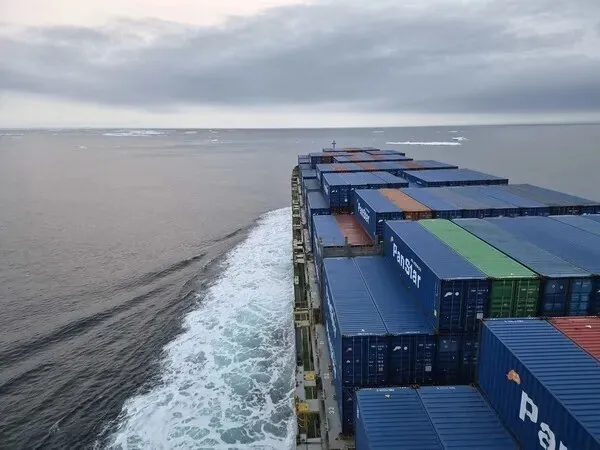
South Korea’s trade ministry confirmed what the market had already begun to suspect: September exports surged to a record $120.9 billion, an 83.5 percent jump from the same month last year. For the first time in the country’s economic history, a single month crossed the $120 billion threshold. The previous high, set in June at $102 billion, looked almost modest in retrospect.
The headline number matters less than its composition. Semiconductors alone accounted for $60.3 billion of that total—up 263 percent year over year and $13.6 billion higher than the previous monthly record set in August. Memory chip prices, driven by insatiable AI data center demand, continue to climb. Imports rose 26 percent to $71.1 billion, leaving a trade surplus of nearly $50 billion for the month, also a first.
On the current trajectory, South Korea will cross the $1 trillion annual export mark by mid-November, becoming only the fourth country in history to do so after Germany, the United States, and China. The 2024 annual export record of $709.3 billion was already shattered by September alone, with cumulative exports reaching $814.5 billion.
The AI Chip Acceleration
The semiconductor story is not merely cyclical. This is structural demand meeting constrained supply at the most lucrative point in the technology value chain. Samsung Electronics and SK Hynix are selling high-bandwidth memory and advanced DRAM at prices that have barely been seen since the late-2000s commodity boom. The margin expansion is extraordinary.
What English-language coverage often misses is the geographic tension embedded in this export surge. Roughly a third of South Korea’s total exports flow to China. A disproportionate share of those semiconductor shipments serve Chinese buyers—both through legitimate commercial channels and through end-use arrangements that American officials consider circumventions of export controls.
Washington wants Seoul to close those channels. Beijing sees them as legitimate commerce. Seoul sits precisely between them, and the $120.9 billion figure makes the balancing act both more valuable and more precarious.
Who Wins, Who Loses
Samsung and SK Hynix win in the immediate term. Record chip prices and record volumes are generating cash flows that will fund expansion across multiple fabrication sites, including the massive new complex Samsung is building in Taylor, Texas. Their market capitalizations reflect this. The Korean won strengthens against the dollar, which benefits consumers and imported energy costs but complicates competitiveness for other export sectors.
TSMC loses relative positioning. South Korea’s semiconductor export surge coincides with TSMC’s aggressive expansion in Arizona and Japan, both of which carry heavy subsidy conditions and long timelines before meaningful revenue. The Korean advantage is temporal and price-driven right now. TSMC’s advantage is geopolitical alignment with Washington. Both matter.
China’s tech ambition faces a paradox. Chinese AI companies need Korean memory chips to train models and run inference. Those same chips strengthen a competitor economy that is aligning technologically with Washington. Beijing has responded with its own memory chip development programs and procurement diversification, but those alternatives will not reach meaningful scale for years.
The United States gains and loses. American AI companies benefit from the chip supply that keeps prices competitive. But every extra billion in Korean exports that circumvents US China restrictions erodes the coherence of the export control regime. That is why the Biden and likely future Trump administrations will press Seoul harder, not softer.
The Geopolitical Tightrope
Trade Minister Kim Jeong-gwan acknowledged the risk directly in his statement to reporters. He cited “strengthening global protectionism” and “tensions in the Middle East” as ongoing variables. What he did not say aloud is the most significant one: the United States is intensifying pressure on Seoul to restrict semiconductor exports to China, and Seoul has resisted categorically.
The resistance is not ideological. It is arithmetic. China is South Korea’s single largest trading partner. Cutting semiconductor sales to Chinese buyers would eliminate a substantial portion of the $60.3 billion September figure overnight. No alternative market can absorb that volume on any realistic timeline.
Seoul’s strategy has been to argue that it is already complying with US restrictions and that further constraints would be self-damage, not assistance to American strategy. This position has held so far. It may not hold forever.
What Comes Next
Two scenarios dominate the near term.
In the soft-landing scenario, semiconductor prices stabilize at elevated levels, the yuan recovers modestly, and South Korea crosses the $1 trillion export mark without major geopolitical disruption. The won strengthens gradually, the trade surplus remains robust, and the government can point to economic resilience as political capital heading into domestic elections.
In the disruption scenario, US pressure on Seoul intensifies dramatically, Middle East tensions escalate into regional conflict that disrupts shipping, or Chinese demand contracts faster than expected as Beijing accelerates its self-sufficiency drive. Any of these could flatten the export curve within quarters.
The more important story, though, is the one unfolding beneath the monthly headlines. South Korea has moved from being a mid-tier export economy dependent on commodity cycles to a structural chokepoint in the global AI supply chain. That status brings wealth. It also brings attention from every capital that wants to influence Seoul’s choices.
The $120.9 billion figure is a milestone. The real question is what happens when the rest of the world decides that milestone belongs to them instead.