Korea's church-state scandal reveals how faith networks capture democracy
The indictment of 32 religious figures in South Korea — including leaders of Shincheonji and the Unified Church — exposes a systemic problem: organized religion has quietly wired itself into the machinery of governance. The case is not an anomaly but a chapter in a regional pattern stretching from Japan's Aum cult to Taiwan's spiritual movements.
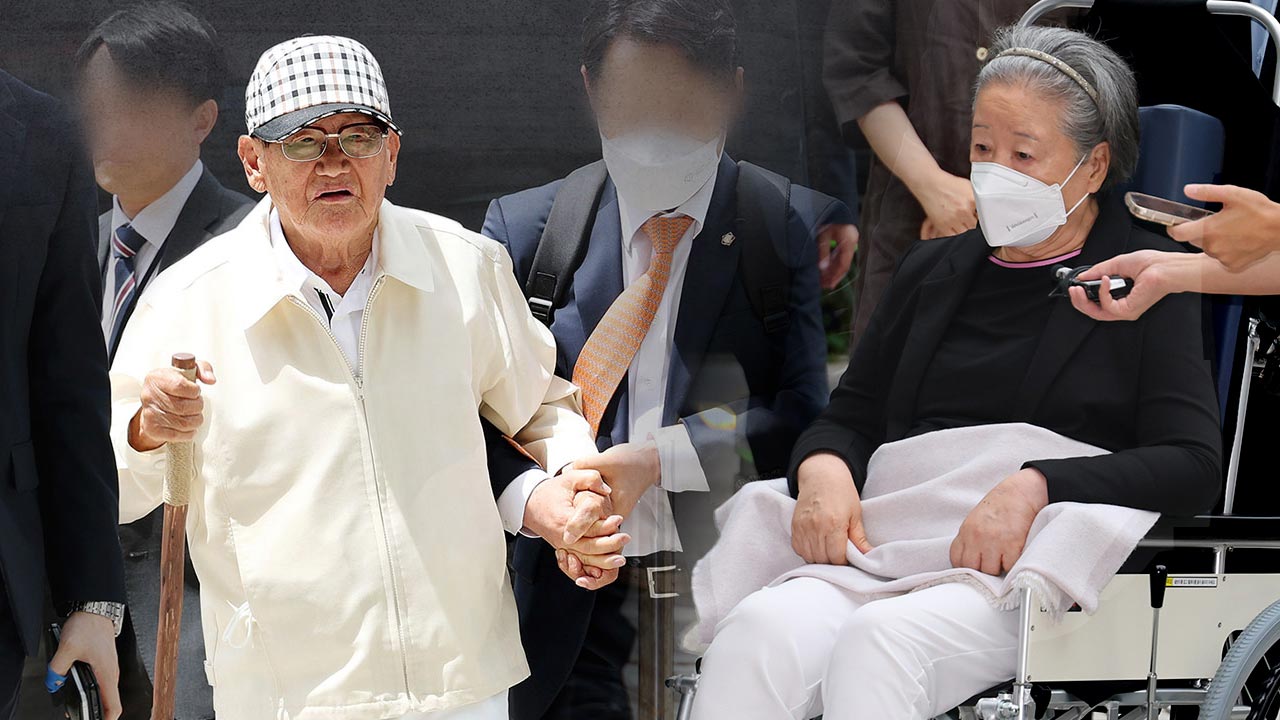
What happens when a congregation becomes a political machine
The joint investigation headquarters on religious-political collusion in South Korea spent seven months tracing how two of the country’s most powerful religious organizations — Shincheonji and the Unified Church — functioned as covert political machines. Its conclusion, delivered on August 31, 2026, reads like a blueprint for faith-state capture: 32 people indicted, billions of dollars in church funds diverted, and evidence that religious loyalty was systematically traded for political access.
The numbers tell the story. Shincheonji’s founder Lee Man-hee faces arrest for coercing members to join the ruling People Power Party across four election cycles, from the 2021 presidential primary through the 2024 general election. He and three associates were formally detained; 12 other church officials were indicted without arrest. The charges include organized party recruitment, corporate tax evasion at the total-assembly level, and embezzlement by senior clergy.
Han Hak-ja, president of the Unified Church, and 16 of her associates were indicted on suspicion of illegal political donations, bribery of lawmakers, and misappropriating 10.5 billion won in church funds — approximately $75 million at current rates. Investigators found Han had siphoned 3 billion won disguised as overseas missionary support, withdrawing it in cash and storing it in a personal vault. She reportedly kept the funds in a safe installed in her residence, with a single employee managing the books in secret. Authorities seized 26 billion won in cash found in her vault and placed preservation orders on the full amount.
Han’s church issued a statement calling the money “faith offerings” voluntarily given by members as expressions of religious devotion, insisting it was spent on public missionary purposes rather than private use. The defense has not been tested in court.
The mechanism is older than any single scandal
What makes this case striking is not that religion and politics mixed — they always do — but how efficiently the mixing was institutionalized. Shincheonji did not simply endorse candidates. It directed its membership apparatus to register voters under the party’s banner, turning congregational obedience into electoral leverage. The church treated party membership as a form of spiritual discipline, a tactic that blurs the line between persuasion and coercion in ways that democratic institutions struggle to regulate.
The Unified Church’s operations followed a different template but the same logic: wealth extracted from congregants under religious authority was deployed to buy political access. The allegation that lawmakers received funds through church intermediaries replicates a pattern seen across East Asia, where religious organizations serve as shadow lobbying networks precisely because they operate outside the transparency requirements that constrain secular interest groups.
South Korea’s legal framework has long struggled with this gray zone. Religious organizations enjoy tax exemptions and broad speech protections, yet when their activities cross into electoral coordination or financial concealment, enforcement has been sporadic and politically sensitive. The 2020 supreme court ruling that convicted Lee Man-hee of election law violations for his role in the 2020 general election — the first time a religious leader was criminally liable for vote manipulation in South Korea — was a milestone. This prosecution extends that precedent into new territory: not just vote manipulation, but the systematic conversion of religious institutions into political infrastructure.
A regional pattern, not an isolated case
Readers outside Korea might assume this is a local dysfunction. It is not. The architecture of faith-state capture in East Asia shares structural features that transcend any single country.
Japan’s Aum Shinrikyo, which carried out the 1995 Tokyo subway sarin attack, also maintained a political wing that ran candidates in national elections. The cult’s leader Shoko Asahara cultivated relationships with politicians who saw him as a voting bloc. Decades later, Japan still grapples with how easily religious organizations can penetrate democratic institutions when their members are mobilized as a disciplined electoral force.
Taiwan presents a different but parallel case. Buddhist and folk-religious organizations have long been embedded in local governance, providing social services that substitute for state capacity and in return earning political loyalty. The phenomenon of “Buddhist votes” — blocks of voters mobilized along religious lines — is an open feature of Taiwan’s electoral landscape, tolerated rather than regulated.
China’s state-managed religious system offers the negative contrast: the government co-opts churches and temples as instruments of control rather than allowing them to become independent power centers. But the result is the same dynamic — faith and politics merged, only with the direction of influence reversed.
What unites these cases is the assumption that religious communities, by virtue of their organizational density and moral authority, are natural political actors. Democratic systems everywhere face the question of whether to treat that assumption as a right or as a threat.
Who wins, who loses, and what comes next
The immediate consequence of the South Korean indictments will be legal — trials that could stretch for years and potentially reshape the country’s political landscape. Shincheonji’s political connections were concentrated in the People Power Party, and the exposure of coercive recruitment may weaken the party’s grip on certain constituencies. The Unified Church’s allegations implicate lawmakers across the spectrum, suggesting the problem is not partisan but structural.
But the deeper question is institutional. South Korea has now demonstrated that it can investigate and prosecute religious-political collusion. The joint task force was established in January 2026, giving it a narrow window to gather evidence before the 2027 presidential election cycle. If the prosecutions proceed transparently, they could establish a precedent that deters future attempts to convert congregations into political machines.
If they falter — through procedural delays, political interference, or appellate reversals — the lesson will be that faith-based capture is punishable in theory but resilient in practice.
For the region, the Korean case offers a reference point. Japan’s Religious Corporations Law still lacks robust audit requirements. Taiwan’s election laws do not explicitly address religious mobilization. China’s system suppresses the phenomenon entirely but at the cost of eliminating religious freedom. None of these models offers a clean answer.
The Korean indictments suggest that the most viable path is judicial: treating organized religious coercion as a prosecutable offense rather than a political nuisance. Whether the courts deliver that distinction — and whether the public treats it as more than a seasonal scandal — will determine whether August 2026 becomes a turning point or just another episode in a long-standing pattern.
The money in Han Hak-ja’s vault was real. The votes in Shincheonji’s registers were real. The only question is whether the institutions meant to check either of them are strong enough to matter.