Korea's Crypto Tax Is Driving Capital Out the Back Door
South Korea is taxing virtual asset gains at 22% while domestic stocks are effectively tax-free — a policy gap that's already shrinking trading volume by nearly 80% and pushing investors toward offshore exchanges. The capital flight could reshape how Asia thinks about digital-asset regulation.
The tax gap nobody is talking about
South Korea is about to become the first major Asian economy to fully tax virtual asset gains — and the market is already reacting.
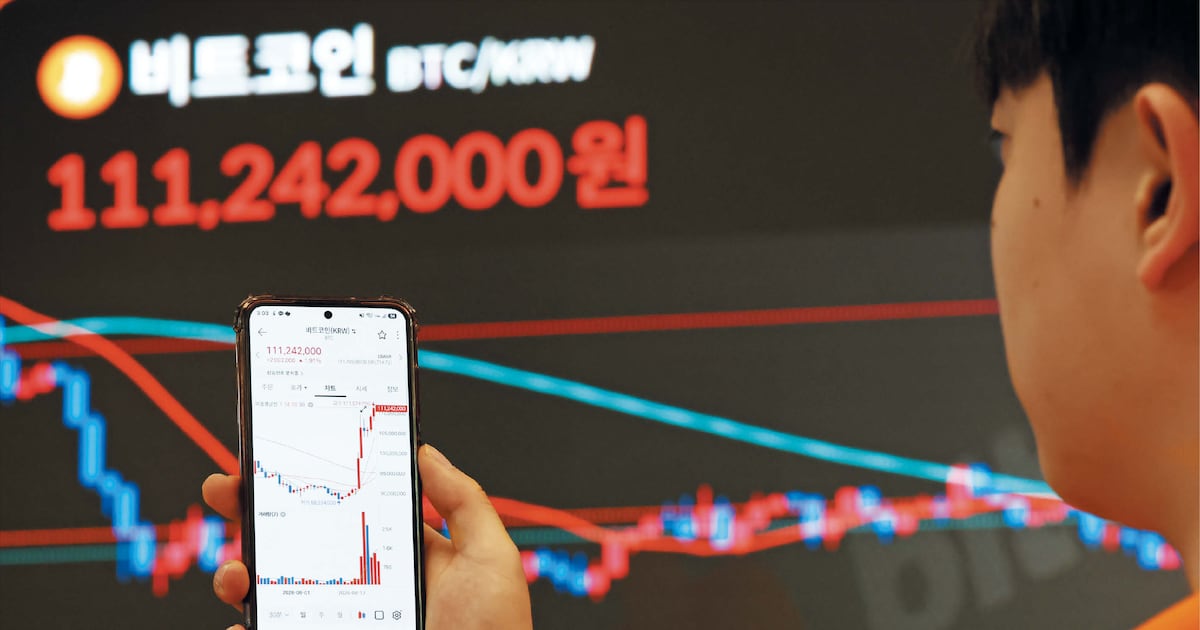
Bitcoin touched $80,000 for the first time since May, lifted by expectations that the U.S. government will expand its long-duration treasury buyback program and ease crypto regulation. But Korean investors watching from Seoul’s Gangnam district felt less like celebrating and more like checking their calculators.
From January 1 next year, gains above 2.5 million won ($1,850) on virtual assets will be taxed at 20%, plus a 2% local surcharge — a blunt 22% rate applied to profit every single year, with no offset for losses carried forward.
Meanwhile, capital gains on domestically listed stocks are effectively tax-free for retail investors after the financial investment income tax was shelved earlier this year.
The contrast is stark. And it is already moving money.
Volume collapsed before the tax even started
Data from CoinGecko shows South Korea’s five largest exchanges — Upbit, Bithumb, Coinone, Korbit, and Gopax — saw their average daily trading volume fall 79% in August compared with February, to just $632 million a day.
That is not a seasonal dip. That is structural flight.
Investors are not waiting to see whether the tax will hurt. They are already gone. A growing share is shifting to offshore exchanges and decentralized platforms where Korean tax authorities have no effective reach.
The government knows this is happening. It is just unsure what to do about it.
The acquisition-price trap
Even the mechanics of the tax are contentious.
Under the new rules, virtual assets held before the January 2026 implementation date will use the higher of either the original purchase price or the December 31, 2026 market value as the new cost basis. If you bought Bitcoin for 80 million won in 2023 and its year-end 2026 value is 100 million won, your basis steps up to 100 million — not 80 million.
That sounds fair on paper. In practice, it creates a timing trap: investors who bought at a low point now face a higher taxable gain simply because the asset appreciated before the tax started. The rule rewards volatility and punishes patient holders who bought early.
There is also the question of what happens if prices drop again before year-end. The basis is locked at the December 31 snapshot, regardless of whether January brings a crash. That creates a perverse incentive to sell into strength rather than hold through downturns — exactly the behavior a well-designed tax system wants to discourage.
Losses go nowhere
The most economically damaging feature is the loss disallowance.
The United States, the United Kingdom, and Japan all permit some form of capital-loss carryforward. Japan, starting in 2028, will allow three-year loss offsets for virtual asset investments. South Korea allows losses only within the same tax year — if you lose money in January and make it back in December, the gain is fully taxable. If you lose in Year 1 and gain in Year 2, the Year 1 loss evaporates.
Consider a simple case: an investor loses 10 million won in Year 1 and gains 30 million won in Year 2. Economic profit over two years is 20 million won. With loss carryforward, taxable gain is 20 million — tax due approximately 4.4 million won. Without it, taxable gain is the full 30 million — tax due roughly 6.6 million won.
That is a 50% penalty on the第一年 loss, baked into the system permanently.
A Catholic University professor, Ahn Sung-hee, recommended exactly this reform: allow loss carryforward and gradually broaden the loss-offset net to cover other asset classes, too.
The demographic angle
South Korea’s virtual asset investor base skews young. Of the 11.13 million individual investors registered with the Financial Supervisory Service at end-2023, 45.8% were in their 20s and 30s.
That makes the tax politically sensitive in a country where youth unemployment is high and housing affordability is among the worst in the developed world. Taxing the one asset class young Koreans have turned to for wealth creation — while leaving stock gains untaxed — reads as a generational levy.
Kim Woo-chul, a professor at Seoul City University, put it plainly: if the government does not broadly tax capital gains from stocks, then singling out virtual assets looks indistinguishable from discrimination.
The enforcement gap
Here is the uncomfortable truth: the tax may raise less revenue than anyone expects.
Offshore exchanges, decentralized platforms, and peer-to-peer trades are not trivially traceable. A Han Yang University professor, Oh Mun-sung, flagged this directly: investors who move assets to overseas or decentralized venues can effectively opt out of the Korean tax net.
The precedent exists. When Japan introduced its crypto tax regime, a portion of trading volume migrated to unregulated venues almost immediately. Korea’s geographically compact, digitally native population makes the same migration faster and easier.
If a meaningful share of the 11 million registered investors shifts offshore, the 22% rate becomes a tax on the wrong people — the ones who stay, not the ones who leave.
Why this matters beyond Korea
South Korea is the third-largest Bitcoin market by on-chain volume and a bellwether for Asian digital-asset adoption. Its regulatory choices signal what happens when a developed economy tries to tax something that does not respect borders.
Japan’s approach — gradual, with loss carryforward and a multi-year phase-in — has kept most domestic volume onshore. Korea’s approach — immediate, punitive on losses, and uncoordinated with stock taxation — is doing the opposite.
The broader lesson for Asia is not whether virtual assets should be taxed. It is how. A tax regime that ignores capital mobility, penalizes volatility, and ignores loss recovery will shrink the very base it intends to tax.
Korea is learning this the hard way. Its exchanges are already 79% smaller. The question is whether the government will adjust the rules before the remaining volume follows.
What happens next
Three scenarios are plausible.
First, the government holds course. Revenue collects, volume stays depressed, and the tax becomes a symbol of regulatory disconnect — much like the financial investment income tax that was shelved under political pressure.
Second, reforms arrive mid-cycle: loss carryforward is introduced, the basis-stepping rule is softened, or the rate is brought closer to the effective tax on other asset classes. This is the Japan path — adaptation after the fact.
Third, the capital flight accelerates to a point where revenue collapses and policymakers are forced into emergency revision. That is the risk no one is pricing in yet.
Bitcoin may have reclaimed $80,000. But in Seoul, the mood inside the Bithumb Lounge is not euphoric. It is cautious, calculating, and already looking for the next move.