Korea's Data-Center Boom Hides a 29-Reactors-Of-Diesel Smog Problem
An exclusive Korean investigation reveals that data centers are driving a surge in diesel backup generators nationwide — now totaling the output of 29 nuclear reactors, with zero emissions oversight. It is the environmental blind spot in the AI power crunch.
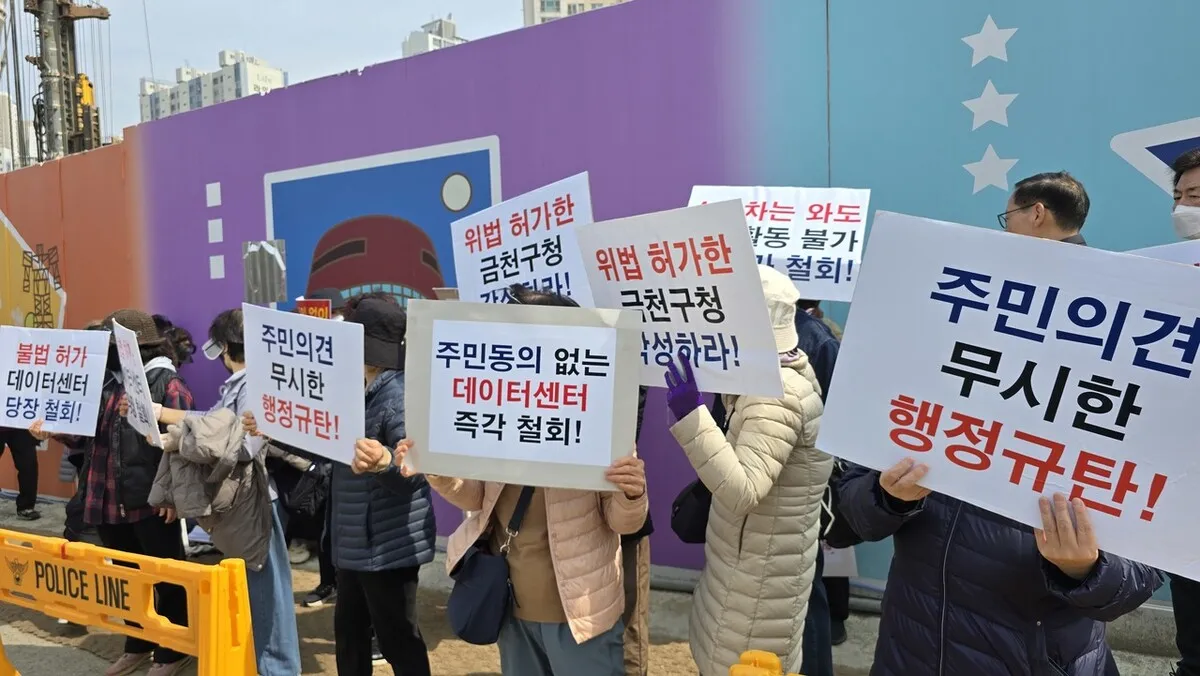
The smog behind the server farm
A resident of a Seoul apartment posted to an online community last year asking where to file a complaint. When the emergency diesel generator at a nearby data center kicked on, black fumes rolled down to the first-floor tennis court. “It’s incredibly thick,” the post read. “There’s nowhere to complain.”
That single grievance opens onto a structural gap in the global reckoning over AI’s appetite for electricity. The world is watching GPU demand, grid upgrades, and nuclear renaissance debates. What almost no one is tracking is the diesel exhaust quietly filling the air above the cities where that computing lives.
What the numbers show
A Hani exclusive, based on a comprehensive registry supplied by the Korea Electrical Safety Corporation and analyzed by Rep. Kim Tae-sun of the ruling Democratic Party, found 112,392 emergency backup generators nationwide, totaling 40.96 gigawatts of capacity. That is roughly the electricity output of 29 modern nuclear reactors — except these machines burn diesel and are exempt from every emissions rule that applies to industrial sources.
Half of that capacity sits in the capital region: Gyeonggi Province at 11.17 GW and Seoul at 7.88 GW. The concentration follows the data-center pipeline. New installations in the data-center, IT and semiconductor sector surged from 1.9 percent of the total in 2016 to 35.6 percent by September this year. Last year, data-center backup capacity added in a single year (127 megawatts) surpassed that of residential apartment complexes (89.8 MW) for the first time.
In Geumcheon District — where a lawsuit over a data-center project recently played out in Korean courts — 586 generators totaling 0.49 GW are installed. Seventy-eight percent cluster in the Gasan-dong area, and 74 percent were put in place after 2020. Three massive facilities alone account for the bulk: the Gasan Landmark Data Center, the Gasan Iwill Phase 1 and 2, and the Case Square Data Center Phases 1 and 2.
Why this matters beyond Korea
The pattern is not unique to South Korea. Data centers everywhere rely on diesel generators because grid reliability, even in a country as electrified as Korea, cannot guarantee the three-nines-or-better uptime that enterprise SLAs demand. What makes this case distinctive is the pace of build-out and the regulatory vacuum.
A 2016 study published in the Journal of the Air & Waste Management Association simulated a 10 MW data center in Houston running its backup generator for two hours. Nitrogen dioxide levels within two kilometers rose by 10 to 50 parts per billion. Fine particulate matter climbed by 1 to 5 micrograms per cubic meter near the stack — levels that exceed World Health Organization guidelines and disproportionately affect children and the elderly.
Korea’s data-center footprint is growing faster than Houston’s ever did. The regulatory gap is wider.
The loophole that turns emergencies into cost-cutting
The most consequential detail in the Hani report is not just the volume of diesel burning — it is why.
A power consulting firm is now marketing a service with the pitch: “Sleeping emergency generators make money.” The strategy is straightforward. During periods of peak grid demand, a data center runs its backup diesel generators instead of drawing from the utility. That lowers the facility’s measured maximum demand, which in Korea’s tariff structure reduces the basic demand charge. The generator, designed for rare emergencies, becomes a routine cost-optimization tool.
This is legal under current rules because emergency generators face no annual operating-hour limits and no verification procedure. There is no mechanism to distinguish a genuine outage response from a billing maneuver. The registry shows how much capacity exists. It does not show how often it runs, how much diesel is consumed, or how many tons of NOx and PM10 hit the air above residential neighborhoods each year.
The regulatory blind spot
Under Korea’s Air Pollution Control Act, internal combustion generators above 120 kW must register and meet emission standards. Emergency units are explicitly exempt. There are no reporting requirements for operating hours. No agency audits whether a generator rated for backup is in fact running weekly to shave a demand charge.
The result is a category of industrial pollution that is statistically invisible and legally unaccountable. Forty-one gigawatts of diesel capacity — nearly 30 nuclear-reactor equivalents — operates in a regulatory null zone.
“As AI data centers expand and electricity demand spikes, the range of use for emergency generators is broadening,” Kim told Hani. “A proper management system is urgently needed.”
What happens next
Three outcomes are plausible.
First, Korea could extend emission monitoring to emergency generators above a threshold capacity, requiring registration of operating hours and periodic stack testing. This would close the loophole without choking data-center resilience — genuine outages would still trigger legal generator use.
Second, utilities could reform demand tariffs to remove the arbitrage incentive. If peak-demand charges no longer reward on-site generation, the economic motive for routine backup running vanishes.
Third, if neither happens, the pattern will replicate. Other countries watching Korea’s data-center boom — Japan, Taiwan, the United States — face identical physics and identical regulatory gaps. The diesel smog above Seoul is a preview.
The broader implication
The AI energy narrative is dominated by questions of supply: where will the gigawatts come from, which reactors will restart, which grids will expand. The Hani data forces a parallel question about distribution: who breathes the exhaust when those gigawatts need backup?
The answer, so far, is communities adjacent to data centers. In Geumcheon, residents report uncertain exposure to emissions whose volume and frequency nobody can quantify. In other fast-building corridors — Songdo, Pangyo, the growing hubs across Gyeonggi — the same math applies.
Twenty-nine nuclear reactors worth of diesel capacity, sitting outside every emissions framework, is not a trivial externality. It is a policy choice. And until governments close the loophole, every new data center adds another invisible stack to the skyline.