Koreas Leverage Crackdown Pushes Retail Billions Into US Chip Bets
South Korea's new rules on leveraged ETFs created an unintended export of retail speculation — investors are flooding into 3x-leveraged US semiconductor funds. The question is whether NVIDIA's upcoming earnings justify the bet.
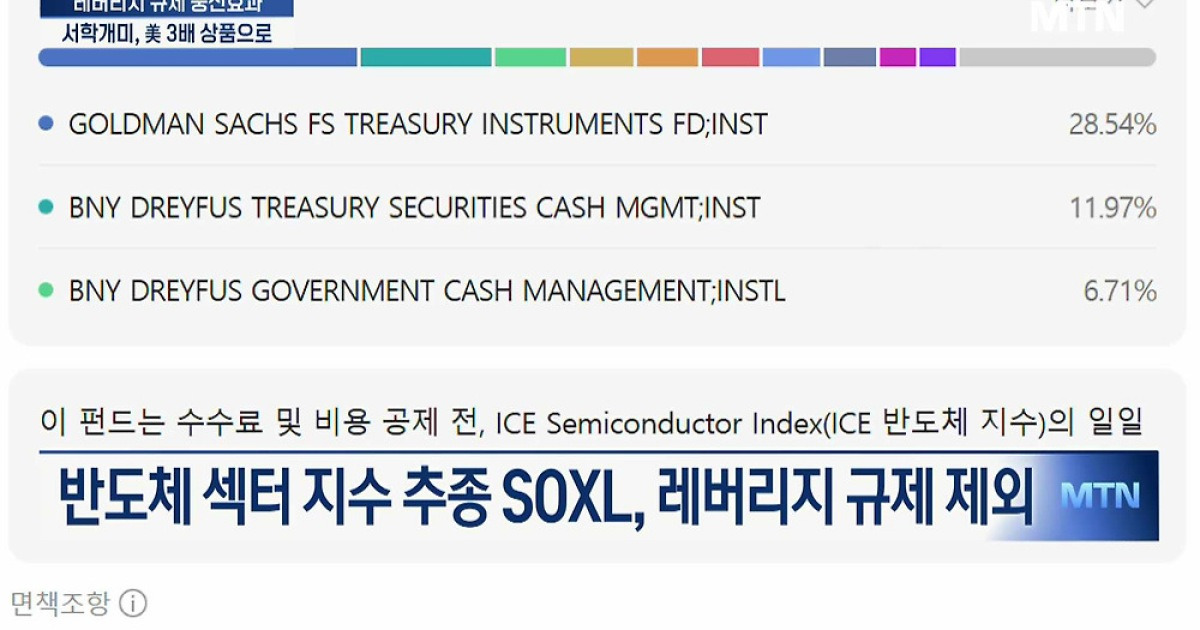
The regulation didn’t stop speculation. It just moved it.
South Korea’s financial watchdog imposed a rule on July 31 that requires investors to hold 30 million won in cash whenever they buy a leveraged ETF tied to a single stock — domestic or foreign. The intention was clear: cool down reckless borrowing by retail traders who had been piling into three-way amplified bets on individual equities.
The result was predictable in one direction and surprising in another. Single-stock leveraged trading cratered — down 90.6 percent from a daily average of 9 trillion won before the rule to just 872 billion won after. But the speculative appetite didn’t disappear. It flowed elsewhere.
Within a week of the regulation taking effect, Korean retail investors — the so-called “western stock ants” or 서학개미 — poured approximately 9,945 billion won, or roughly $719 million, into SOXL, a fund that tracks the Philadelphia Semiconductor Index at three times its daily return. SOXL isn’t classified as a single-stock product. It’s a sector index fund. The rule didn’t touch it.
A loophole with global consequences
What we’re seeing is regulatory arbitrage in real time. Korea’s domestic leverage crackdown has effectively exported high-risk retail speculation into American markets, with direct implications for the very companies the regulations were never meant to touch.
The numbers tell the story. Before the July 31 rule, 14 single-stock leveraged ETFs traded an average of 9 trillion won per day. By August 21, that figure had collapsed to 872 billion won. Meanwhile, margin trading balances among Korean retail investors climbed from 28 trillion won on the day the rule took effect to over 32 trillion won by August 24 — suggesting that leveraged demand is simply shifting form rather than evaporating.
SOXL, managed by ProShares, tracks the SOLX index, which is heavily concentrated in NVIDIA, Broadcom, and other major chipmakers. A 3x daily leveraged product means that a 1 percent move in the semiconductor index becomes a 3 percent move in the fund — compounding daily. Over volatile periods, this creates return drift that can dramatically diverge from three times the index’s cumulative performance. It’s a product designed for short-term traders, not long-term holders. And that’s exactly who’s buying it now.
Why semiconductors, and why now
The timing is notable. NVIDIA reports earnings on August 27, Korea time — one of the most closely watched data points in global markets. Retail investors are positioning aggressively ahead of what could be a defining catalyst for the entire semiconductor sector.
This isn’t the first time Korean retail has shown up at NVIDIA’s door. The 서학개미 have been buying US tech stocks in noticeable volumes since 2024, drawn by the AI boom and the relative stability of American markets compared to domestic uncertainty. What’s different now is the scale and the vehicle. Three times leverage changes the mathematics entirely.
Domestically, sentiment around Korean semiconductors has wobbled. Samsung Electronics announced a shareholder return plan worth 90 to 110 trillion won — a record, by any measure. But the market had been pricing in expectations closer to 140 trillion won, and the plan lacked specific timelines for share buybacks and cancellations. The disappointment is real, even if Kyobo Securities analyst Choi Bo-young noted that the capital allocation direction is at least clear.
When domestic options feel uncertain, Korean retail has historically looked outward. The question is whether SOXL is a rational proxy for semiconductor exposure or a gambling chip wrapped in an ETF wrapper.
Who wins, who loses
NVIDIA and other index constituents win in the immediate sense — sustained buying pressure supports valuations regardless of fundamentals. ProShares wins through management fees. Korean regulators lose the battle they started, since the risk hasn’t been eliminated, only relocated to a jurisdiction with weaker oversight of how Korean money is being deployed.
The retail investors are the wildcard. SOXL is a dangerous instrument even for professional traders. Daily compounding means that in a choppy market, the fund can bleed value rapidly. A sequence like +3%, -3%, +3%, -3% produces different results for a 3x fund than for the underlying index — and over extended periods, the drift works against holders. Retail traders treating this like a standard equity position are taking on risk they may not fully understand.
There’s also a structural question: what happens when the leverage ruletightens further? If regulators close the sector-index loophole, the same dynamics will push capital into other products — possibly into options, futures, or unregulated vehicles. The cat-and-mouse game between regulation and speculation tends to escalate, not resolve.
What happens next
NVIDIA’s earnings on August 27 will determine whether this wave of retail buying was prescient or premature. A strong report could validate the positioning and drive further inflows into SOXL and similar products. A miss could trigger a cascade of unwinds — particularly dangerous given that leveraged ETFs face redemptions and creation mechanisms that amplify moves in either direction.
Korean regulators will likely watch closely. The 30 million won requirement was supposed to reduce retail leverage, not offshore it. If the data continues to show capital fleeing domestic leveraged products for unconstrained foreign alternatives, expect amendments or new rules targeting sector-based leveraged funds.
For now, the spectacle is clear: a regulation designed to protect Korean retail investors from themselves has instead turned them into leveraged speculators in American chip stocks. The risk hasn’t disappeared. It’s just wearing a different passport.