Korea's Memory Giants Are Caught Between Washington and Beijing
Samsung and SK Hynix face a dual threat as Chinese rivals close the HBM gap and US pressure mounts for domestic production. A rare coordinated patent defense may be the only way to break China's reinvestment cycle.
The Squeeze on Korea’s Memory Giants Is Real—and It’s Getting Tighter
Samsung Electronics and SK Hynix have spent the better part of a decade stacking their capacity toward high-margin, AI-critical memory. HBM dominated their capital allocation. Generic DRAM and NAND receded.
Now the strategy is running into a wall built from two sides.
China is closing the technology gap fast. The United States is demanding they build more factories on American soil before Beijing can fully exploit the memory supercycle. It is a rare moment when two powerful nations pull a single industry in opposite directions, and the calculus is becoming impossible.
CXMT Has Already Crossed a Line
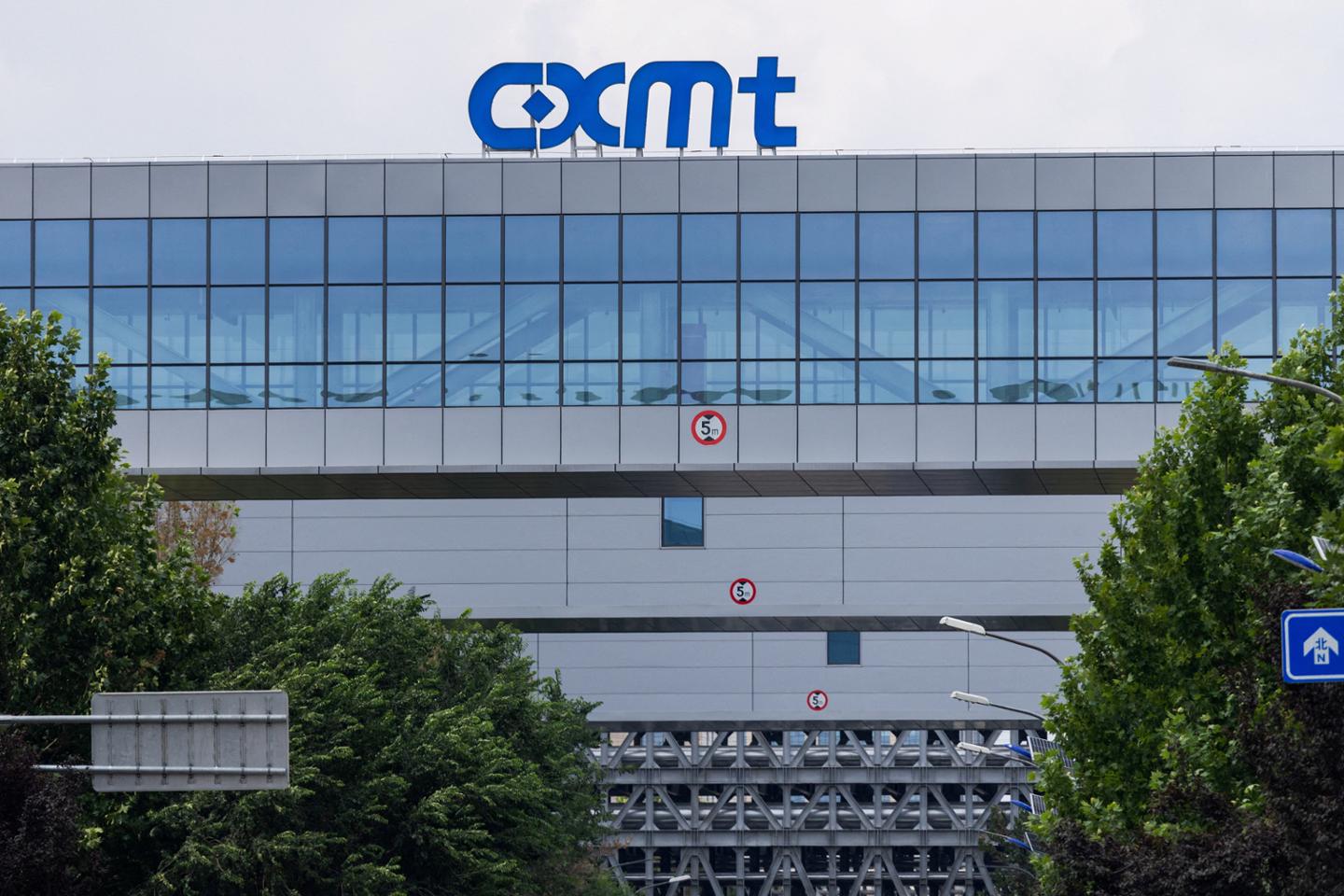
The most immediate concern comes from Changxin Memory Technologies (CXMT), the Chinese firm that has quietly begun small-volume production of HBM3E—the same fifth-generation high-bandwidth memory that SK Hynix first mass-produced in March 2024. That the timeline is this tight, measured in months rather than years, should trouble every executive in Seoul.
CXMT is not stopping there. Last month the company confirmed it is mass-producing LPDDR6, a low-power DRAM aimed at next-generation mobile chips, and it has already secured a placement inside Xiaomi’s latest smartphones. The move signals a deliberate shift: China is no longer content with competing in commodity memory. It wants a foothold in every tier.
YMTC, another Chinese memory maker, is advancing in parallel. Its Wuhan Fab 3 is scheduled to begin operations before year-end, expanding NAND wafer output by roughly 24 percent next year—from 201,000 wafers to nearly 250,000. The scale matters because volume is how Chinese firms are converting cheap memory profits into R&D for advanced products.
This is the pattern analysts fear most: a self-funding loop where near-term market share feeds long-term capability. Break the revenue stream now, or lose the advantage later.
Why Korean Capacity Won’t Simply Expand
Samsung and SK Hynix are not ignoring the threat. SK Hynix is breaking ground on an AI memory packaging facility in Indiana this August and planning to complete a new fab in Yongin, South Korea, by February 2027. Samsung’s Texas fabrication plant is nearing full operation. Both represent significant capital commitments.
But these expansions are not designed to flood the commodity market. They are aimed squarely at high-value segments—HBM, advanced packaging, and specialty memory for AI workloads. The plants exist to defend the margin, not to compete with Chinese price-cutting in generic DRAM where margins are already thin.
That is the structural trap. Expanding generic memory output to undercut Chinese pricing would mean cannibalizing the very high-margin products that fund future R&D. Reducing capacity would cede market share and accelerate the Chinese reinvestment cycle. Either choice carries a cost.
The American Pressure Adds a Third Variable
Washington has made its expectations clear. US officials are publicly urging Samsung and SK Hynix to expand domestic memory production, and there are credible reports that semiconductor tariffs could be used as leverage to extract further investment. The tariff threat is not abstract—it has already been discussed in policy circles and signals that the US sees Korean memory dominance as a national security asset worth protecting through direct intervention.
This creates a second layer of constraint. Every dollar Samsung or SK Hynix commits to US fabs is a dollar not spent on defending against Chinese competitors in Asia. The timeline for returning capital from American facilities is measured in years, not quarters. Meanwhile, CXMT and YMTC are scaling now.
The tension between Washington and Beijing is being absorbed almost entirely by Korean manufacturers. Neither side appears to have fully considered what happens when the company caught in the middle has to choose between geopolitical compliance and competitive survival.
The Patent Front May Be the Only Viable Lever
Experts inside South Korea’s policy community have converged on a narrow but potentially decisive move: a coordinated patent defense against Chinese memory makers.
Hyeon-ik Lee, a senior researcher at the Korea Institute of Science and Technology Policy, has argued that the priority must be interrupting the cycle before Chinese firms fully fund their transition to cutting-edge memory. Short-term tactics—flooding the market with generic DRAM to depress prices—would help but are inherently self-damaging. The more structural solution, he suggests, is a joint legal front among major DRAM producers including Micron, targeting Chinese intellectual property violations.
This is not a theoretical proposal. Chinese memory firms have been accused of importing technology and talent from competitors, and patent enforcement is one of the few tools that does not require Korean companies to sacrifice their own margins. A coordinated strike would impose real costs on CXMT and YMTC precisely where it matters: their ability to reinvest revenue into advanced product development.
Micron’s participation would be critical. The US company is itself a target of Chinese competition and has far more experience navigating patent litigation in American courts. A trilateral effort—Samsung, SK Hynix, Micron—would carry more weight than any single firm acting alone.
What Changes If China Wins the Memory Gap
The stakes extend well beyond corporate balance sheets. Memory chips are the bloodstream of AI infrastructure. Every data center, every autonomous system, every language model depends on them. If Chinese firms achieve cost parity or superiority in HBM and advanced DRAM, they gain leverage over the most important technology sector of the decade.
That leverage would not be confined to China. It would reshape supply chains, pricing, and the competitive position of every country that relies on memory imports. South Korea’s economy, already heavily dependent on semiconductor exports, would face an existential threat. Japan and Taiwan would feel the ripple effects as well.
The window for meaningful response is narrow. CXMT is already in production. YMTC is about to expand. The Chinese government is funding the entire chain from raw materials to final product. The supercycle profits are flowing now, and they will not last forever.
For Samsung and SK Hynix, the task is suddenly much harder than simply making better chips. They must outmaneuver a competitor that treats memory as a strategic weapon and a partner—the United States—that demands production on its terms. A patent defense coalition may be the most realistic instrument available. It is also the one neither company can afford to ignore.