Korea's Record Chip Exports Are the clearest Signal of Where the AI Boom Stands
South Korea's August semiconductor exports hit a record $46.65 billion, up 209% year-over-year. The data reveals the raw intensity of global AI infrastructure demand — and it tells a story US and Japanese figures alone cannot.
The Number That Changes the Story
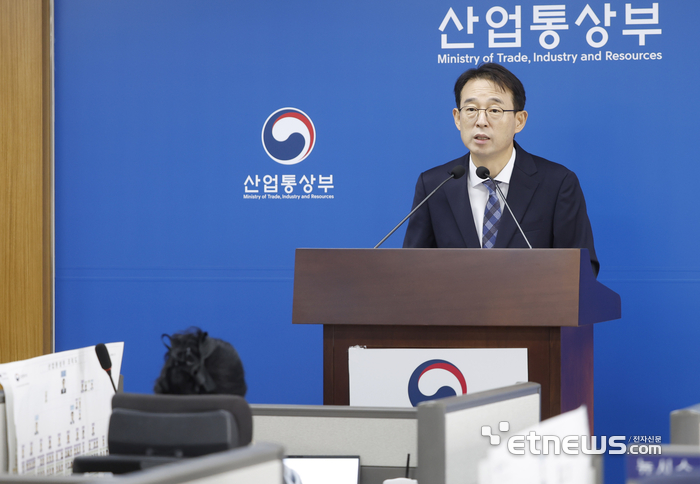
South Korea exported $46.65 billion in semiconductors in August. That figure, released by the Ministry of Trade, Industry and Energy on September 1, was a monthly record that erased the previous high set just two months earlier. It was also the fifth consecutive month in which a Korean monthly semiconductor export record has fallen — and then been broken again.
The year-over-year increase: 209 percent. Semiconductors alone accounted for roughly 47 percent of all Korean exports last month. For a single category to carry nearly half a nation’s export engine is unusual even in a country where chips have long been the dominant sector. What makes this moment noteworthy is not just the magnitude but the pace at which it accumulated.
The data matters because Korea occupies a narrow vantage point. American export statistics filter through dual-use controls and re-exports. Japanese numbers are anchored more heavily in fab equipment and materials than in finished logic and memory. Korean figures — in large part because Samsung Electronics and SK Hynix sell directly into the two biggest demand pools on earth — sit closer to the raw pulse of AI infrastructure spending. When a Korean customs number jumps this far, this fast, it is usually a sign that hyperscaler capital expenditure is doing exactly what it promised.
Five Records in a Year, No Pause
February: $25.1 billion. March: $32.8 billion. May: $37.2 billion. June: $44.8 billion. August: $46.65 billion. (July was skipped in the sequence, likely falling between those two figures.)
That cadence — five records in six months — is the kind of data you do not see during a normal inventory cycle. It is characteristic of a demand shock that is pulling forward purchase decisions and compressing order books.
The primary driver is high-bandwidth memory, specifically the HBM chips that sit beside every major AI accelerator. Training clusters for large language models and inference workloads require more memory bandwidth per dollar than anything else in the data center. The bottleneck is not always the GPU itself; it is how fast that GPU can reach memory. HBM solves that. Samsung and SK Hynix are the two companies that can produce it at scale, and the export figures confirm they are supplying more of it to more buyers than ever before.
Microsoft, Meta, Alphabet, Amazon, and the faster-moving Chinese cloud builders are all competing for the same limited HBM supply. That competition is what pushes Korean memory exports higher with each passing quarter. The numbers do not name the buyer — they cannot — but the pattern is unambiguous.
NAND Flash Is Telling a Second Story
Computer exports surged 419.5 percent to $6.24 billion, also a monthly record. The ministry attributed the spike to NAND flash pricing. This is worth isolating because it points to a different part of the AI infrastructure build-out than HBM does.
Every data center that racks new servers needs storage. Enterprise SSDs — the backbone of cloud object storage, vector databases, training data lakes, and inference caching — rely on multi-level cell NAND. Prices have climbed as the same buyers who need HBM also need terabytes of cost-effective, high-write-endurance storage. The computer export figure is a proxy for that demand that is easier to track than individual SSD shipment data.
Together, the memory numbers paint a picture of a sector running at something closer to full capacity than at any point since the COVID inventory correction of 2023. Supply was constrained for two years. Demand just doubled in eight months. Neither Samsung nor SK Hynix will say how much unsold demand remains on the backlog; the customs data is the closest public window.
Who Wins, Who Loses, and What Shifts
The winners are immediate and concentrated.
Samsung Electronics and SK Hynix are the obvious beneficiaries. Their market capitalizations, their R&D priorities, and their next-generation process nodes are all being calibrated around this demand curve. Both companies have publicly announced capacity expansions for HBM and advanced NAND. The Korean figures confirm those expansions are buying time, not creating slack.
Chinese electronics exporters face a different problem. South Korea’s total exports rose 68.7 percent to $98.25 billion — the third-highest monthly total in the country’s history. China, Korea’s largest trading partner, absorbed $24.1 billion in Korean goods last month, up 119.3 percent year over year. Much of that is either intermediate components feeding Chinese assembly lines or finished Korean products displacing local alternatives in third markets. The data does not parse that distinction, but the directional pressure is visible.
The losers in this particular report are less celebrated but equally telling. South Korea’s auto exports fell 29.8 percent, weighed down by summer holiday disruptions and partial strike activity at certain plants. Shipbuilding exports dropped 45.9 percent as delivery schedules shifted and fewer vessels moved out of port in the reporting window. These are not structural declines — they are noise against a much larger signal — but they remind you that Korea’s trade numbers are aggregate. The AI story is real; the rest of the economy is not uniformly sharing in it.
What US and Japanese Numbers Miss
American semiconductor trade data is dominated by fabless design revenue and foundry output, with a significant re-export component through Taiwan and Southeast Asia. A dollar of AI chip revenue recorded in California often passes through a Taiwanese packaging facility and a Malaysian test house before reaching final destination. Korea’s customs data captures the point of physical departure for manufactured wafers and memory modules moving out of the country. It is blunter, but sometimes bluntness is more honest.
Japanese figures emphasize capital equipment and materials — photoresists, silicon wafers, deposition tools — rather than finished logic and memory. Those are vital inputs to the same supply chain, but they lag end demand by months. Korean finished-chip export numbers tend to move in near-real time with hyperscaler order placement.
This does not make Korean data superior in every dimension. It makes it complementary. Taken together, the three datasets form a triangulation: US demand signals, Japanese input signals, Korean shipment signals. Right now, all three are pointing the same direction.
What Happens Next
Several things are plausible, and none are guaranteed.
If hyperscaler capex sustains its current trajectory through the second half of 2026 — and the five-record sequence argues that it will — Korean semiconductor exports could climb another 20 to 40 percent year over year by year-end. That would imply monthly figures in the $55 billion to $65 billion range. The math is simple; the execution risk is not. Fabric downtime, yield issues on new HBM generations, and geopolitical disruption to Taiwan-bound wafer flows are all real possibilities.
If capex slows — and there are legitimate concerns about when certain Chinese buyers can access the latest memory under evolving export restrictions — the next monthly record may be the last for a while. Inventory cycles have a way of ending abruptly once the backlog clears.
For Korean policy makers, the trade surplus of $34.75 billion in August — the third straight month above $30 billion — provides fiscal room. But the concentration of that surplus in one sector is also a vulnerability. A single-product dependency of this magnitude tends to create boom-bust volatility that complicates macroeconomic management.
What the August numbers make clear is that the AI hardware cycle is not a seasonal blip or a speculative bubble inflating in a single country. It is a global infrastructure build-out measured in terawatts of power, racks of silicon, and exabytes of memory. South Korea is shipping a significant fraction of that memory. The $46.65 billion figure is not just a record. It is a receipt.