Korea's Renewable Energy Overhaul Could Reshape Chip Supply Chains
South Korea is scrapping its 15-year RPS system for a contract market model that guarantees stable revenue for renewable projects. For Samsung and SK Hynix, it could finally make self-built clean energy grids economically viable.
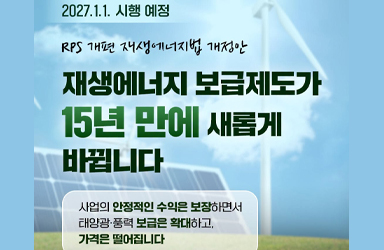
The biggest shift in 15 years isn’t just about solar panels
South Korea is about to dismantle the Renewable Portfolio Standard (RPS), the central pillar of its clean-energy policy since 2012. Starting January 1, 2027, the country replaces it with a centralized contract market—a system that looks far more like what Germany and Japan have built over the past decade than anything that existed before.
The reform passed through 54 rounds of stakeholder consultation. It carries bipartisan backing. And while the government frames it as simply making renewable energy cheaper and more predictable, the implications reach far beyond the energy sector into the two industries that consume the most electricity in Korea: semiconductors.
Samsung Electronics and SK Hynix together account for a significant share of the country’s industrial power demand. Both have publicly committed to decarbonization targets that are increasingly difficult to meet under the current RPS framework. The contract market changes the calculus.
Why the old system broke
The RPS required utilities and large consumers to source a minimum share of their electricity from renewables, using Renewable Energy Certificates (RECs) as tradable compliance instruments. In theory, it worked. In practice, it produced chronic volatility.
REC prices swung unpredictably. A project that looked bankable one year could become uneconomic the next. Developers faced complicated REC weighting systems that varied by technology and scale, creating an administrative burden that disproportionately penalized smaller players. And despite years of subsidies, solar and wind deployment stalled at a pace that fell well short of government targets.
Small-scale residential solar proliferated because the REC premium made it attractive, but utility-scale projects—the kind needed to move the needle on national emissions—stagnated. The levelized cost of renewables was falling globally, yet Korea’s REC-driven pricing structure didn’t pass those savings through to buyers.
It was a system designed for a different era. The new one is designed for scale.
How the contract market works
The mechanics are straightforward and deliberately simple.
First, the government announces capacity targets by technology—so many megawatts of solar, so many of wind—anchored to national deployment goals. Second, developers compete within a price ceiling to win contracts. Third, the winner signs a long-term fixed-price agreement directly with Korea Electric Power Corporation (KEPCO), guaranteeing revenue for the contract duration.
No more REC arbitrage. No more weighting puzzles. No more waiting for spot-market prices to align with your cost structure.
For a developer, the trade-off is clear: you sacrifice upside if renewable power prices spike, but you gain certainty for financing. That certainty is the whole point. Banks lend against predictable cash flows, not lottery tickets.
Who wins, who loses
Winners are easy to identify. Project developers—especially those who have been waiting for a signal—get bankable revenue. KEPCO gains procurement predictability and can plan its grid investments with more confidence. The government hits its targets faster because the system removes the friction that has slowed deployment.
Existing REC holders also get a cushion. They can continue issuing and trading certificates for up to 20 years under the old rules. The spot REC market is deferred for three years, until 2029, giving current participants time to adjust.
Losers are harder to see but real. REC speculators and traders who profited from price volatility lose their edge. Smaller distributors that relied on REC complexity as a competitive moat face a simpler market. And KEPCO, for all its planning advantages, now carries the risk of long-term contracted prices that could prove too generous if technology costs continue falling faster than expected.
But the most consequential question isn’t about energy companies. It’s about the chipmakers.
What this means for Samsung and SK Hynix
Semiconductor fabrication is one of the most electricity-intensive industries on Earth. A single advanced fab consumes enough power to power a small city. Both Samsung and SK Hynix have announced goals to run their Korean operations on clean energy, but under RPS, fulfilling those commitments meant buying RECs—indirect credits that did nothing to ensure that new renewable capacity was actually built near their plants.
The contract market changes the economics of self-supply. If Samsung or SK Hynix can secure a long-term fixed-price contract directly through the government system to build solar or wind capacity near their facilities, they gain two things: verifiable, additonal clean energy for their Scope 2 emissions, and hedge against future electricity price volatility.
Under RPS, building your own renewable capacity was possible but awkward—you were still subject to REC pricing fluctuations and compliance complexity. Under the contract market, a large corporate buyer can participate in the same auction process as any developer and lock in a known cost. That makes capital expenditure on own-grid projects far more justifiable to boards that have spent years watching REC prices ebb and flow.
This matters because the semiconductor supply chain is under intense scrutiny from downstream customers—Apple, Nvidia, AMD, major auto manufacturers—all of whom are demanding verified decarbonization. China-based competitors are not held to the same standards. Korea’s chipmakers need a credible, verifiable green story. The contract market gives them one.
The gradual transition is deliberate—and important
The reform isn’t a hard break. Existing projects keep their REC rights for up to 20 years. The spot market stays open through 2029. Small-scale producers under 1 megawatt—like the “sunshine income villages” the government mentions—get their own dedicated contract track, managed through specialized RESCO companies and virtual power plant aggregation.
That last detail is worth watching. Virtual power plants let dozens of small producers pool their output and bid into the market as a single entity. It’s a way to give distributed generators a seat at the table without requiring each one to navigate the auction process alone. For Korea, where residential rooftop solar is already widespread, this could unlock a new layer of flexibility on the grid.
What happens next
The legislation is expected to be promulgated in September 2026, with public hearings and stakeholder consultations following immediately. Subordinate regulations will be posted for comment through the fall. The system goes live January 1, 2027.
The first auctions will determine who gets contracted capacity and at what price. That price discovery process will be the market’s first real test—and it will set the tone for how aggressively Korea can push deployment costs down.
For Samsung and SK Hynix, the timeline is generous. They have roughly 18 months to position themselves, monitor auction results, and decide whether to bid directly or partner with a developer. The firms that move early will have a structural advantage: first-mover contracts lock in long-term power costs while later entrants compete in a market that may have already cleared its lowest-cost projects.
Korea’s energy policy has always been second-mover strategy—watching Japan, China, and Europe, then adapting what works. This reform is no exception. But by adopting a contract market model that aligns with global best practice, Korea may be setting the stage for something that surprises people: a semiconductor industry that can credibly claim to run on clean energy, not just buy offsets for it.