Korea's Court Defines Martial Law as Treason. What Comes Next?
South Korea's highest court is about to deliver its first-ever ruling classifying the December martial law declaration as rebellion—a decision that will set the legal standard for former President Yoon's trial and reshape how heads of state can be held accountable.
A Landmark Defined in Real Time
South Korea’s Supreme Court is about to issue its first-ever ruling classifying the December 3 martial law declaration as an act of rebellion. The judgment, delivered on January 19 before the court’s full bench presided over by Justice Oh Gyeong-mi, lands not as academic commentary but as the legal cornerstone upon which several high-stakes trials will be built—including the pending case against former President Yoon Suk Yeol.
The stakes go beyond one courtroom. They go beyond Seoul.
What happens next depends on how the court defines the line between emergency executive action and domestic insurrection—and on whether it treats the martial law order as a standalone illegal act or as part of a coordinated plot to overturn democratic institutions.
Who Is on Trial, and Why It Matters
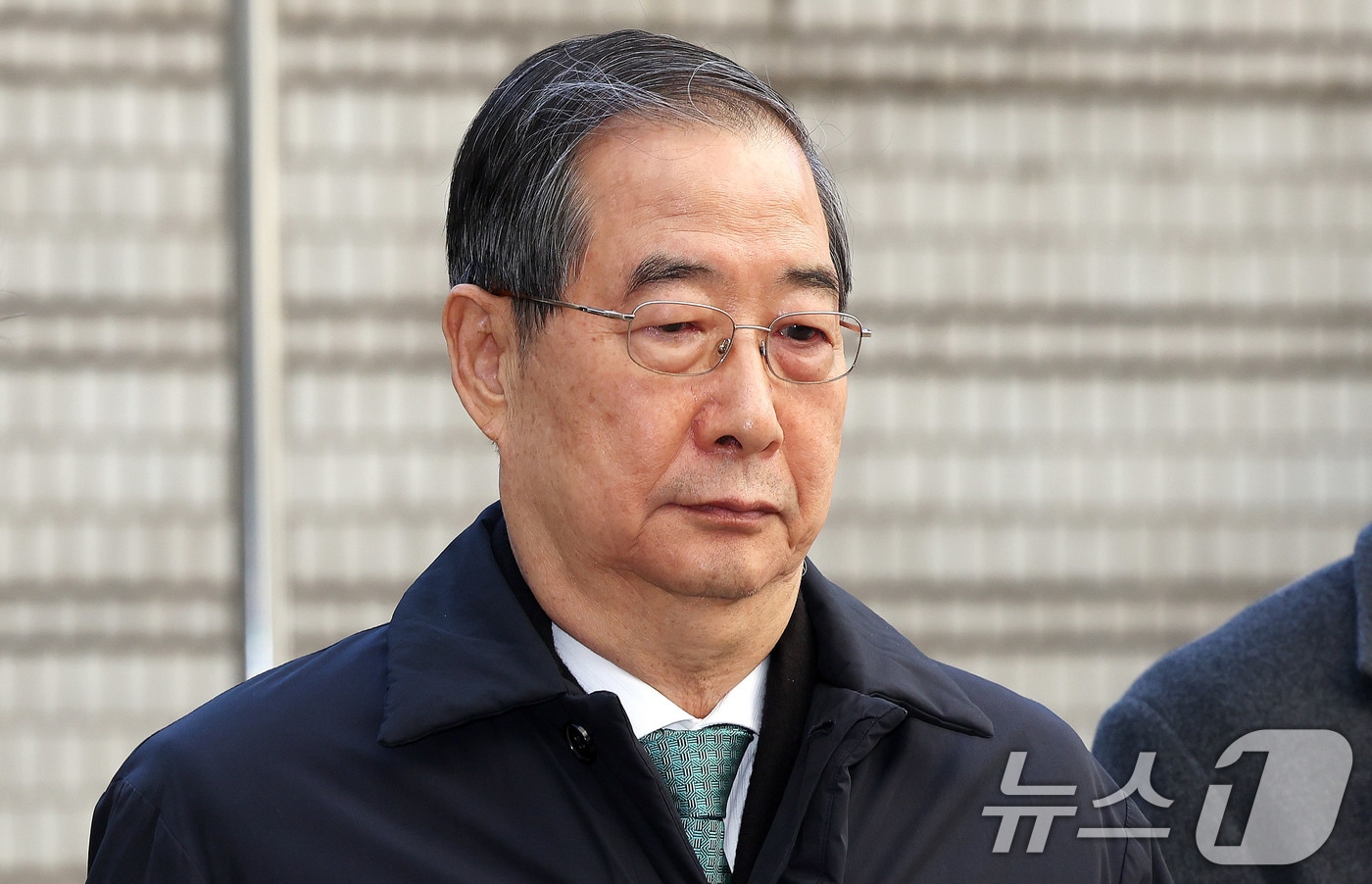
Former Prime Minister Han Duck-soo stands at the center of this particular case. At the appellate level, he was sentenced to 15 years in prison on charges of participating in serious rebel duties during the martial law crisis. The trial court had gone further, handing him 23 years and describing the declaration as a “rebellion from above” and a “self-coup.” The appeals court upheld the rebellion classification but adjusted the sentence.
Han faces three sets of allegations. He is accused of failing to fulfill his constitutional duty as president of the State Council to check and constrain arbitrary executive action. He is accused of signing a falsified martial law proclamation document alongside former Defense Minister Kim Yong-hyun and others, then asking subordinates to destroy it—thereby concealing procedural defects. And he is accused of committing perjury when he testified before the Constitutional Court during Yoon’s impeachment proceedings that he had not been aware of the proclamation.
Each charge rests on a foundational question: was the December 3 martial law order itself an act of rebellion?
So far, both lower courts have answered yes. The Supreme Court’s ruling will either confirm or reject that premise for all future cases.
The Precedent Trap
This is the critical structural tension in Korean jurisprudence right now. Han’s case has become the test bed for a legal definition that no higher court has yet authored. If the Supreme Court affirms that the martial law declaration constitutes rebellion, every subsequent defendant charged in connection with it inherits that characterization automatically. If it narrows or rejects the definition, it opens the door for alternative legal strategies across dozens of pending cases.
The ripple effect is already visible. Former Minister of Administrative Security Lee Sang-min is currently under review at the same full bench, his case intertwined with the same factual record. Former President Yoon Suk Yeol, convicted in the first instance on rebellion-leader charges and sentenced to life imprisonment, awaits his appellate verdict on January 26. His case has not yet reached the Supreme Court, but analysts expect it to—the Han precedent will shape its trajectory either way.
No Supreme Court opinion on this question exists in isolation. It is a keystone ruling.
What the Lower Courts Have Already Said
The appellate court’s reasoning deserves attention because it likely reflects where the judiciary’s consensus already sits. The Seoul High Court’s special rebellion tribunal concluded that Han helped manufacture a facade of constitutional procedure around an unlawful declaration. According to the court’s own language, Han “sought to block challenges to the procedural legitimacy of martial law by creating the appearance that the constitutionally required pre-approval of the State Council had taken place.”
That framing matters because it separates the question of whether the president acted unilaterally from the question of whether cabinet officials enabled it. Even if Yoon issued the order alone, the court found that Han and others participated in making it look legitimate—that participation itself constitutes involvement in rebel duties.
Whether the Supreme Court adopts this broader or narrower reading will determine how many secondary figures face conviction and on what theoretical basis.
The Regional and Global Signal
A ruling that martial law can constitute internal rebellion carries implications well beyond South Korea’s borders. Several democracies in East Asia and elsewhere have wrestled with emergency powers provisions that grant executives sweeping authority during crises. Japan’s Constitution permits martial law but has never invoked it; Taiwan’s recent political turbulence has raised similar questions about emergency declarations; Thailand and Myanmar have longer histories of military-led upheaval.
What South Korea does here becomes reference material. A head of state who declares martial law to dissolve parliament, suspend elections, and target political opponents may find that foreign legal scholars cite the Korean Supreme Court’s reasoning when assessing whether such acts cross into treasonous territory.
The reverse risk is equally significant. If the court narrowly defines rebellion—requiring proof of armed uprising or violent overthrow—it could create a loophole that empowers future executives to exploit legal emergency provisions without triggering criminal liability.
What Happens After the Ruling
Three scenarios dominate the near term. In the first, the Supreme Court upholds the rebellion classification and affirms Han’s conviction, cementing a broad standard that lowers the burden for prosecuting other defendants. In the second, it narrows the definition—perhaps requiring proof of violent intent or coordination with military force—which would complicate prosecutions of civilian participants like Han and Lee. In the third, it remands the case for reconsideration, buying time but leaving the legal question unresolved.
Whichever path the court takes, the January 26 appellate sentencing of Yoon Suk Yeol will occur under whatever framework the Supreme Court establishes. If the high court affirms the rebellion characterization, Yoon’s status as alleged ringleader gains reinforcing legal weight. If the court weakens the definition, his defense gains ammunition.
The ruling will also determine whether prosecutors can pursue conspiracy theories that connect cabinet members, military officials, and presidential staff into a single plotted enterprise—or whether each defendant must be judged on individual conduct.
The Live Broadcast Factor
The Supreme Court has arranged for live streaming of the January 19 decision across television and its official YouTube channel. That visibility is deliberate. A case of this magnitude demands public legitimacy, not just legal correctness. How the court presents its reasoning—to a citizenship still divided over whether the December events constituted a coup, a mistake, or something in between—will influence public acceptance of future verdicts regardless of their technical accuracy.
Democracy does not survive on legal precision alone. It survives when people believe the institutions applying the law are acting consistently, not selectively. The Supreme Court knows this. The timing and format of this ruling suggest it understands the weight it carries.
Whatever the judgment says, the line between emergency power and insurrection has just gotten sharper—in Korea and, likely, farther beyond.