Korea's $100B Surplus: Why Trump Is Forcing an Ally to Fund Alaska LNG
South Korea is closing in on a historic $100 billion trade surplus with the United States, and Washington is responding not with diplomacy but with tariffs and energy demands. The real play: a $15 billion Alaska LNG investment that could redefine Korean business interests in America.
The Surplus Is Real. The Threat Is Realer.
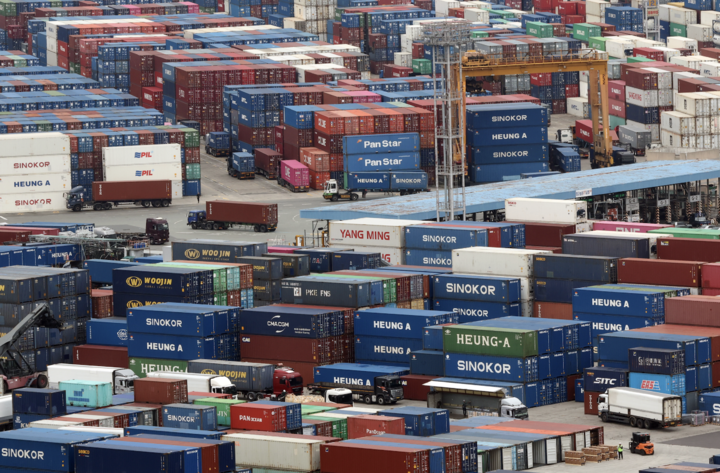
South Korea’s trade surplus with the United States is on track to exceed $100 billion this year for the first time in history. By the end of September, it had already reached $84.7 billion, comfortably passing the full-year record of $55.6 billion set just two years ago. The trajectory is unmistakable: a structural imbalance that Washington is no longer treating as background noise.
What makes this moment sharp is not the surplus itself. It is what the United States is demanding in return. Donald Trump’s administration is pushing Seoul to commit $15 billion to developing liquefied natural gas — LNG — in the Alaska Panhandle. This is not a request dressed in partnership language. It is a bargaining chip pulled directly from a tariff threat. Refuse, and the United States will raise the cost of exporting to its largest single-market customer. Accept, and a Korean energy investment takes root in Alaska, the same way it took root across the country in refineries, power plants and reactor construction.
The arithmetic is brutal and the political logic transparent. A surplus of this scale gives Washington ammunition. Trump has already used it. In April 2025, the administration proposed a 25 percent reciprocal tariff on Korean goods. Six months later, after Seoul pledged $35 billion in broader investments, the rate was reduced to 15 percent. The lesson was clear: investment money moves the needle on tariff policy.
So the question for Seoul is whether a new injection of capital into Alaska will lower the threat again — or merely reset expectations for the next round.
The Timeline Behind the Threat
To understand the current pressure, it helps to trace how we arrived here. From 2017 to 2020, during Trump’s first term, the annual surplus stayed between $11.4 billion and $17.9 billion. Under Joe Biden, it climbed steadily: $22.7 billion in 2021, $28 billion in 2022, $44.4 billion in 2023, and $55.6 billion in 2024. The acceleration coincided with a surge in semiconductor exports, driven partly by the global AI investment boom.
In 2025, the surplus dipped slightly to $49.5 billion. Not because demand fell, but because of the tariff uncertainty that already reshaped corporate planning. This year, the rebound has been sharp and unexpected. China’s semiconductor export restrictions, combined with aggressive AI capital spending in the United States, created a demand gap that Korean chipmakers filled rapidly.
The Trump administration noticed. On April 1, 2025, it publicly announced that the imbalance warranted punitive tariffs. Within three months, South Korea agreed to a $35 billion investment package. The tariffs were halved. But the architecture of the deal matters more than the headline number.
The $35 billion was split into several categories. Shipbuilding received $15 billion. General strategic investment received $20 billion, which included the Ensignal gas combined-cycle power plant in Texas and a framework for eight new US nuclear reactors. That left the Alaska LNG project officially undefined, mentioned in joint fact sheets only as a matter under review.
Trump has spent weeks treating it as a done deal, publicly pressuring Korean officials and media to frame the investment as inevitable. The message is deliberate. This is not energy policy. It is leverage.
Who Wins. Who Loses.
The obvious winner from an American perspective is straightforward: the United States gains a major LNG development project without bearing the upfront capital risk, strengthens its energy export credentials, and extracts a political concession from a treaty ally.
The Korean government faces a narrow corridor. Refusing the Alaska project risks renewed tariff escalation. Accepting it risks domestic criticism that Seoul is subsidizing an American resource extraction venture with public-sector backing, while the actual commercial terms remain vague and untested. There is also the geopolitical complexity: developing LNG in Alaska’s remote Panhandle requires infrastructure that does not currently exist at scale, making the investment far riskier than a simple greenfield plant elsewhere in North America.
For Korean companies, the calculus is even more complicated. Domestic construction firms such as GS Engineering and HD Hyundai have international experience, but the Alaskan environment is hostile to routine execution. Logistics, permitting, and environmental reviews will define the project’s timeline far more than capital commitment. Meanwhile, Japanese firms like Mitsubishi Heavy Industries and IHI Corporation hold existing LNG relationships in Alaska that give them first-mover advantage.
Japan’s own trade surplus with the US has shrunk by roughly 23.4 percent year over year in the first half of 2026, according to available data. That contraction reflects a different structure: Japanese investment in the US is older, deeper, and more embedded in existing supply chains. Korea’s investment footprint is newer and more concentrated. The comparison is uncomfortable for Seoul but useful for Washington as negotiating leverage.
The Numbers Behind the Negotiations
Here is what the data tells us:
- South Korea’s surplus with the US in January through September 2026: $84.7 billion.
- Record full-year surplus before this cycle: $55.6 billion (2024).
- Projected full-year surplus if Q4 repeats recent trends: approximately $100-110 billion.
- Total announced Korean investment in the US: $35 billion, split across shipbuilding ($15B), general strategic investment ($20B), and the undefined Alaska LNG component.
- Tariff rate after the $35 billion deal: 15 percent, down from the proposed 25 percent.
- Japanese surplus reduction in H1 2026: roughly 23.4 percent, cited by US negotiators as evidence that surpluses can be managed through investment commitments.
None of these numbers alone explains the current tension. Together, they reveal a pattern. The United States is not trying to eliminate the Korean surplus. It is trying to convert surplus growth into investment commitments that benefit American energy and industrial sectors.
What Comes Next
The most likely outcome is neither total rejection nor full acceptance of the Alaska LNG project. Seoul will continue the review process, extract whatever political cover it can from the commercial uncertainty, and negotiate for Korean corporate participation guarantees that may or may not materialize. The Trump administration will keep framing the project as a test of alliance reliability, particularly ahead of the November midterms.
If the review concludes that commercial conditions are unfavorable, Korea can point to market logic. If it concludes conditions are acceptable, the government will argue it secured favorable terms for Korean firms. Either path leaves room for political blame if something goes wrong, which is exactly why the pressure persists.
The deeper story is not about LNG. It is about the transformation of trade surplus into geopolitical currency. Korea’s economic competitiveness with the United States is now a direct input into bilateral negotiation strategy. That shifts the relationship in a way that goes beyond tariffs or investment figures.
What happens next will depend on how Seoul frames its surplus to American audiences and how Washington decides whether the leverage is worth the diplomatic cost.