Why a Korean Prison Sentence for the Unification Church Hits Japan Hard
Han Hak-cha's two-year sentence in Seoul may seem contained, but it intersects with Japan's Supreme Court dissolution of the same church. The cross-border legal pressure could unravel decades of financial and political arrangements that English-language coverage has underreported.
A sentence that crosses borders
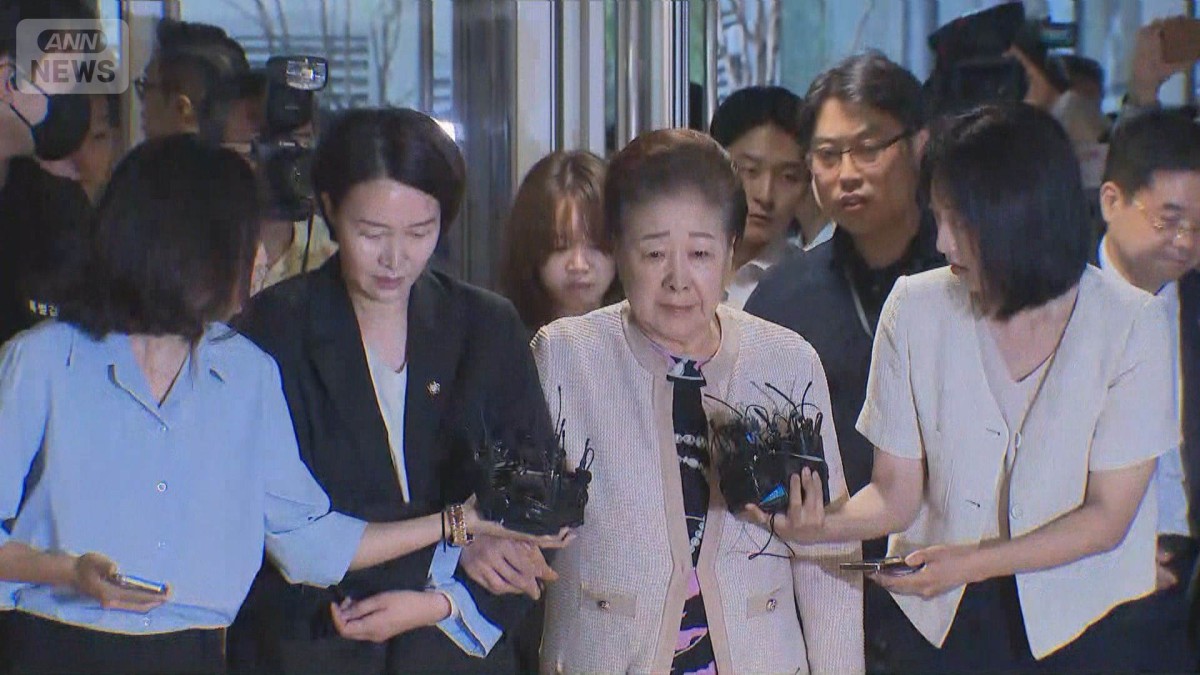
Han Hak-cha walked out of Seoul Central District Court on August 31 with two years behind bars — and a verdict that will echo far beyond South Korea’s judicial system. At 83, the Supreme Leader of the Unification Church was convicted of violating South Korea’s Political Funds Act by allegedly arranging gifts of roughly 10.8 million yen in cash and branded luxury goods to senior figures around former President Yoon Suk Yeol, including his wife, Kim Keon-hee. The special prosecutor had asked for 13 years.
The gap between the prosecution’s request and the sentence tells you something about how Korean courts are calibrating their response. The judge acknowledged the inevitability of a real prison term given Han’s position, but framed her actions as aimed at institutional expansion rather than personal enrichment. The court also noted her lifelong dedication to world peace as a religious figure — language that reveals how deeply South Korea’s judiciary is wrestling with the question of how to treat a global religious movement caught in a political corruption scandal.
Han’s conviction is notable for whom she represents. She took up the mantle of leadership after the death of church founder Sun Myung Moon in 2012, guiding the organization through a turbulent period of succession disputes, international litigation, and declining influence in both Korea and Japan. Her arrest in March 2024 made her the first sitting head of the Unification Church to face criminal prosecution in South Korea — a jurisdiction where the church has deep roots dating to its 1954 founding. The case was built over 18 months by the special prosecution team established to investigate the Yoon administration’s inner circle, and Han became the only religious figure swept into that inquiry.
The church has already signaled it will appeal. It also issued a statement accepting the judgment while denying that Han personally approved illegal political purposes, and pledged to overhaul its internal governance and supervisory structures.
But the more consequential detail is not what happened in Seoul. It is what happened in Tokyo six weeks earlier.
Japan’s dissolution order changes the board state
In June, Japan’s Supreme Court upheld a lower court ruling ordering the dissolution of the Unification Church’s Japanese organization. The decision was a legal earthquake in a country where the church had operated for decades with significant political cover. Members of the Liberal Democratic Party — including several sitting and former ministers — had long been associated with the group, which built its influence through fundraising events, charitable fronts, and sustained lobbying.
The church’s Japanese operations had grown remarkably lucrative. According to parliamentary records and investigative reporting, the organization collected an estimated 20 billion yen annually from members through tithes and event fees during the 2010s. Much of that money circulated through political channels. LDP lawmakers received funding through intermediaries who masked the church’s involvement. Grassroots volunteers turned out for campaign events. Local politicians cultivated relationships with church-affiliated business owners who controlled construction contracts and venue rentals tied to political gatherings.
The Korean conviction of Han Hak-cha does not automatically trigger legal consequences in Japan. But it does alter the political calculations that Japanese officials and LDP lawmakers have been making since the Supreme Court decision. For months after June, the prevailing strategy among allied politicians was to distance themselves publicly while hoping the church’s Japanese arm could survive as a restructured entity. Some LDP figures quietly floated the idea of creating a new foundation or civic group that could absorb the church’s existing networks without the tainted brand. The Seoul verdict makes that strategy noticeably harder to execute.
A sitting church leader convicted of bribery in her home country is an awkward asset to protect. It gives opponents inside and outside the LDP a concrete reference point — a foreign conviction, a judge’s written findings — to argue that the church’s Japanese operations deserve no rehabilitation or legal shielding. The Korean court’s characterization of Han’s actions as institutionally motivated rather than personally greedy could actually work against the church’s defense in Japan. It reinforces the narrative that the organization treated political influence as an operational objective, not an accident. That framing is dangerous for any Japanese politician seeking to maintain ties to former church affiliates.
Second-order effects already visible
The ripple effects are not hypothetical. Within days of the Seoul verdict, Japanese opposition parties called for prosecutors to examine whether the Korean conviction should trigger investigations into the financial relationships between Unification Church-affiliated entities and LDP politicians. A bill introduced in Japan’s Diet earlier this year to regulate religious corporations gained sudden momentum. Several governors and mayors who had accepted church-sponsored donations announced they would return the funds.
Perhaps most significantly, the Korean ruling has emboldened victims’ advocacy groups in Japan. Organizations representing families devastated by the church’s aggressive fundraising practices — cases that had languished for years — now have a foreign judicial precedent to cite. Japanese journalists working on follow-up investigations reported that sources inside the LDP were suddenly more willing to discuss the church’s historical relationships, presumably calculating that the political cost of silence had increased.
The church’s own response has been muddled. Its pledge to restructure while simultaneously denying Han personally approved illegal activities creates a contradiction that Japanese authorities will weigh heavily. If the church truly meant to distance itself from Han’s actions, critics ask, why hasn’t it severed ties with her clearly? If it stands by her decisions, then the institution itself bears responsibility for what the Korean court described as systematic political corruption.
Who wins, who loses
The LDP’s factional networking arm loses the most. For years, the church’s Japanese fundraising network operated as a quiet engine of political support — donations flowing to lawmakers, grassroots mobilization during elections, and informal channels connecting religious members to policy circles. The Supreme Court dissolution order severed the legal entity. The Korean conviction weakens the moral and political argument for any workaround.
Han Hak-cha herself is the clearest loser in immediate terms. Two years is a fraction of what prosecutors sought, but at 83 it is not a short sentence. More importantly, the conviction establishes a judicial record that Japanese prosecutors and journalists can cite. The special prosecutor’s framing — that political power was privatized and public trust eroded — has already entered the factual record in both countries.
The church’s Japanese affiliates stand to lose credibility with moderate allies who had hoped for a clean break. Hardline believers may double down, but the institution’s broader political utility has declined sharply in both capitals within the same month. Even sympathetic politicians who wanted to preserve some relationship with former church networks now face an unacceptable reputational risk.
What happens next
The appeal process in South Korea will stretch over at least the next year. Han’s legal team is expected to argue that the evidence of personal direction is insufficient and that the court’s finding of institutional motivation should mitigate her liability. Meanwhile, the church’s pledge to restructure its operations — as it simultaneously denies the core finding against Han — creates an ambiguous posture that Japanese authorities will need to read carefully.
In Japan, the Supreme Court’s dissolution order is already enforced. But the practical question is whether former members, sympathetic politicians, or parallel organizations will attempt to recreate the church’s fundraising and political infrastructure under a new name. The Korean conviction makes that effort visibly riskier. Any reorganized group will face the same scrutiny that brought Han to court, and Japanese prosecutors now have a sentencing comparison that undercuts the “religious leader acting in error” defense.
There is also the matter of extraterritorial reach. The Political Funds Act violation centers on transactions involving Japanese currency and Japanese beneficiaries. If the Korean prosecution’s findings are upheld on appeal, they could feed directly into a Japanese prosecution of intermediaries who facilitated the donations — individuals who may have assumed the church’s dissolution in Japan insulated them from consequence.
For English-language readers, the lesson is simple: the Unification Church’s legal troubles are no longer a Korean story or a Japanese story. They are a transnational regulatory event. The church built its modern political influence by moving fluidly across borders — capital, members, and lobbying strategies. Now the courts are moving with it.
The two-year sentence is a moment. The real test is what the Japanese political establishment does when the Korean verdict lands on its desk — whether it treats the conviction as an unfortunate complication to manage or as evidence that the entire architecture of church-politician relations requires rebuilding from scratch.