Trump Calls Zelenskyy 'Disgraceful' Over Oil Strike — A Fracture No
Trump's public rebuke of Zelenskyy over Ukraine's resumed strikes on Russian refineries exposes the deepest rift in US-Ukraine relations since the war began. What was a tacit energy truce has shattered, and with it, a fragile Western consensus on how to wage this war.
The Energy Truce Is Dead
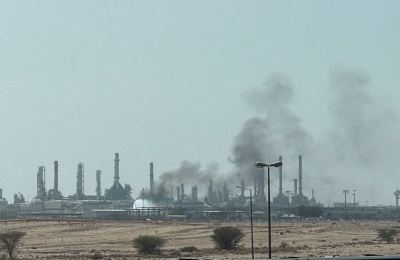
On October 15, Ukraine struck a Russian oil refinery 700 kilometers southeast of Moscow. Sixty-nine drones and four Flamingo cruise missiles hit the Rosneft facility in Ryazan, setting fires and knocking out roughly five percent of Russia’s total refining capacity — the refinery supplies most of Moscow’s fuel. It was the first Ukrainian strike on Russian energy infrastructure in three days.
Three days earlier, Volodymyr Zelenskyy had announced he was honoring an informal agreement to halt attacks on Russian oil and gas facilities. The deal, pushed by Donald Trump as part of what he called an energy ceasefire, was announced by Washington without Moscow’s formal confirmation — a detail that has since become a loaded question mark in Kyiv.
Zelenskyy told the Financial Times that Russia continued to launch hundreds of missiles and drones at Ukraine’s power grid during those three days, making the one-sided pause indefensible. On October 16, he declared the attack ban over. Then Trump responded.
A Public Break at the Worst Possible Moment
Trump’s reply came in a Newsmax interview and it was sharper than anything exchanged between Washington and Kyiv since Russia’s full-scale invasion began in February 2022.
What Zelenskyy is doing is only driving up global oil prices, Trump said. It is disgraceful. He went further, saying he does not particularly like Zelenskyy and that the Ukrainian president is harder to deal with than Vladimir Putin.
Those are not stray remarks. They are a calibrated message to multiple audiences — to American voters who want the war to end, to European allies who have been carrying the heavier burden of military aid, and to Kyiv itself, which now faces the prospect of a donor talking about his personal frustrations with its leader on a right-wing American network.
The timing magnifies the damage. Ukraine’s military situation remains precarious. Russia has made incremental gains in the east. Western ammunition stocks are stretched. And now the public language between Washington and Kyiv has taken a turn that echoes nothing since the 2019 phone call that triggered Trump’s first impeachment.
What the Energy War Was Always About
Ukraine’s campaign against Russian refineries is not new. It began in mid-2024, when Kyiv launched long-range strikes that forced Russia to divert fuel shipments and temporarily cut diesel exports. The campaign squeezed Moscow’s war economy and sent ripples through global diesel markets. For a brief window, Russian refined product exports fell sharply.
The energy truce — if it can be called that — interrupted that pressure at a moment when Ukraine’s own energy grid was being systematically dismantled by Russian missile and drone attacks. Zelenskyy’s framing in the FT interview was precise: Ukraine showed restraint. Russia did not reciprocate. The logical conclusion was that restraint was a one-way street, and that was unacceptable.
His condition for potentially resuming the ban was stark — the United States must supply at least Patriot air defense systems. It is a bargaining chip wrapped in a grievance. Ukraine is saying: you ask us to hold back our only effective strategic weapon, then you do not hold back yours, and you still will not give us the shields we need.
Who Wins and Who Loses
Trump wins nothing from this exchange except the appearance of toughness on oil prices — a domestic political concern that matters far more in Pennsylvania and Texas than in Donetsk or Kharkiv. He has framed the war through the lens of commodity markets, which means every Ukrainian drone that hits a refinery is, in his calculus, an attack on American gas pumps. That is a worldview, not a strategy.
Zelenskyy wins nothing immediate either. Resuming strikes on Russian refineries is tactically useful but strategically risky when air defense coverage is thin. Russia’s energy infrastructure is vast and increasingly dispersed. Each strike provokes retaliation against Ukrainian cities. The calculus is brutal and familiar.
Europe loses. The transatlantic fracture over how to prosecute this war has always existed beneath the surface — between those who see energy strikes as legitimate leverage and those who fear escalation into broader conflict — but now it is public. Germany and France have been cautious about authorizing deep strikes into Russia. The United States, under Trump, is openly questioning Ukraine’s right to conduct them at all. That inconsistency weakens every argument Kyiv makes for more weapons, more range, more air defense.
Putin wins. Not because of a single interview, but because the rupture confirms what Moscow has always bet on: that Western support for Ukraine is conditional, transactional, and ultimately fragile. A divided alliance is a weakened one. Every public disagreement between Washington and Kyiv is ammunition for the Kremlin’s narrative that the West is tired, that Europe will not hold, that America will eventually walk away.
What Comes Next
The immediate question is whether Ukraine will sustain the renewed strikes or pause again under pressure from Washington. Zelenskyy has signaled willingness to talk about resuming the ban if Patriot systems arrive. That conditional language suggests Kyiv is still trying to keep the door open to an agreement — even as it pounds Russian refineries.
Washington’s response will determine the trajectory. If Trump’s administration treats the Ryazan strike as a breach of trust and slows military aid, Ukraine’s ability to fight — and to strike back — degrades. If the administration absorbs the row and continues deliveries, the rupture becomes a recurring pattern rather than a crisis point.
There is also the unanswered question of whether the energy truce was ever real. Moscow never formally agreed to it. Russia never stopped attacking Ukrainian energy infrastructure. If the deal existed only in American press releases, then Zelenskyy’s decision to end it was less a betrayal than a correction — and Trump’s anger is misdirected at the wrong party.
That distinction matters. It shapes whether this moment reads as a breakdown in alliance discipline or as the first visible crack in a transactional relationship that was always vulnerable. The language Trump used — disgraceful, difficult, harder than Putin — suggests he sees it as the former. Kyiv and much of Europe may see it as the latter.
The war in Ukraine was never going to be decided by oil prices. But the politics around it increasingly are.