Korea Warns US On Operational Control Stalemate
Seoul's defense ministry warned that continued US shifting of conditions on wartime command transfer could push Korea toward its own nuclear arsenal—a scenario with seismic implications for Asian security.
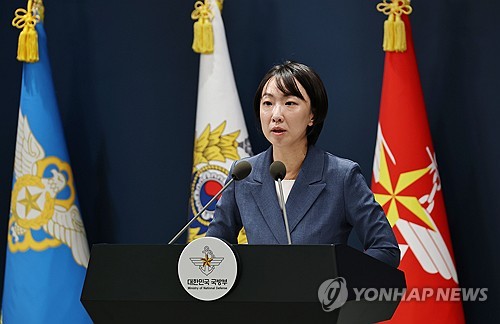
The Day South Korea Started Talking About Nuclear Independence
The warning came on a routine Tuesday, delivered by a defense ministry spokesperson in her individual capacity rather than on official record. That distinction matters. It signaled that even within the Korean government, frustration with the United States had reached a point where someone felt comfortable saying what many in Seoul have been thinking for months: if Washington refuses to honor the conditions both sides already agreed to, South Korea may simply stop waiting.
Jeong Bit-na, the defense ministry spokesperson, was responding to a question about General Xavier Brunson, commander of US Forces Korea, who the previous day had told a think tank seminar that the conditions for transferring wartime operational control had changed. “Even just skimming the newspapers,” Brunson had said, “you can see the conditions have clearly shifted. There was another missile launch from North Korea this week. The conditions have changed, we have adjusted our plans, and new criteria now exist.”
Jeong’s reply was blunt. “If they keep moving the goalposts,” she said, “I believe the transfer of wartime operational control will never be possible.”
On the surface, this is a familiar dispute between allies. Washington says the security environment has evolved; Seoul says the rules were set. But the subtext of Jeong’s comment carries a weight that English-language coverage has largely missed: it is the clearest signal yet that South Korea is approaching a strategic inflection point, one that could redraw the architecture of nonproliferation in Northeast Asia.
How We Got Here
The timeline begins in 2015, when the ROK-US Security Consultative Meeting agreed on a Combined Operational Planning Transfer framework. Three conditions were established for transferring wartime command from the United States to South Korea:
First, allied defense leadership capability—Seoul needed to demonstrate it could direct combined military operations independently. Second, a comprehensive capability to counter North Korea’s nuclear and missile threat. Third, a stable security environment on the peninsula and in the region that would support a smooth transition.
These were not aspirational targets. They were negotiated benchmarks, mutually agreed, documented in official records. Seoul has spent nearly a decade building toward them—investing in command-and-control infrastructure, expanding its missile range, developing its own theater strike capabilities, and hosting rotating exercises designed to prove readiness.
The problem is that the benchmark posts have been moving.
Each time Seoul checks a box, Washington points to a new variable. North Korea tests another missile. China builds more aircraft carriers in the Western Pacific. The threat landscape shifts, and with it, the threshold for what counts as “ready”.
This is not necessarily bad faith. General Brunson’s point has merit: North Korea has conducted over 200 ballistic missile tests since 2015, including intercontinental missiles capable of reaching the continental United States. The threat environment has objectively worsened. But from Seoul’s perspective, the practical effect is indistinguishable from goalpost movement—a nation working diligently toward agreed conditions that refuse to stay fixed.
What Seoul Is Hearing—and What It Means
The most consequential part of this story is not the public disagreement itself. It is what happens inside South Korea when an ally repeatedly signals that your progress does not meet their bar.
For decades, South Korea’s security strategy rested on a simple exchange: the United States guarantees its defense, and South Korea forgoes nuclear weapons. The Non-Proliferation Treaty framework depends on this bargain holding. But bargains require trust on both sides.
When the USFK commander tells a public audience that conditions have changed, he is not merely describing a technical assessment. He is communicating to Seoul that Washington does not believe the current conditions are sufficient. That message lands differently than a quiet diplomatic note. It reaches Seoul’s political class, its media, and ultimately its public—and it reinforces a growing sentiment that the American guarantee may not be as binding as Seoul was told it was.
This is not fringe thinking. Polling in South Korea has shown sustained support for reconsidering nuclear options, particularly among younger voters who do not share their parents’ urgency about Korean unification and who see a North Korea that has become more dangerous, not less, during their lifetimes.
The Nuclear Question South Korea Does Not Want to Ask Out Loud
South Korea does not need nuclear weapons to survive. It has the second-largest military in Asia, a world-class defense industry, and the United States nuclear umbrella. What it needs is certainty—that the United States will honor its commitments when it matters. Every shift in the conditions for OPCON transfer erodes that certainty.
If the transfer never happens, or happens only after the criteria keep moving, Seoul faces a stark choice: accept perpetual dependence on American timelines, or develop the capacity to decide its own fate.
The latter path is not straightforward. South Korea lacks the fissile material infrastructure, the delivery systems, and the political consensus for nuclear weapons. But it has the technical foundation. Its uranium enrichment research program, its missile technology base, its advanced semiconductor industry—these are the building blocks. What separates a civilian energy program from a weapons program is a political decision, not a technical one.
China and North Korea would react furiously. Japan would face intense pressure to follow. The Non-Proliferation Treaty would suffer a blow from which it might not recover. The United States would face its own crisis—how to respond to a treaty partner choosing nuclear weapons over the alliance.
These are not outcomes Seoul welcomes. But they are the logical endpoint of a process where one side of a bargain feels the other side keeps changing the terms.
What Comes Next
The immediate path forward is narrow. Both governments have an incentive to de-escalate the public disagreement and return to private diplomacy. Jeong Bit-na’s clarification that she was speaking in a personal capacity, not representing the official position, was a deliberate signal that Seoul is still seeking a negotiated resolution.
But the underlying tension remains unresolved. Until Washington and Seoul agree on what “ready” actually means—and commit to not changing that definition unilaterally—the cycle will continue. Each new North Korean test will be cited as proof that conditions have shifted. Each Korean capability build will be evaluated against a moving target.
The risk is not that South Korea will suddenly detonate a bomb. The risk is slower and more insidious: a gradual erosion of alliance credibility that makes future crises harder to manage, makes nuclear thinking seem less radical to more Koreans, and leaves the entire nonproliferation regime in Northeast Asia more fragile than it has ever been.
The goalposts were supposed to be fixed. That is the point of an agreement. If they are not, the alliance was never really an agreement at all—it was just a temporary arrangement waiting for the next reason to pause.