Leaked Emails Expose Germany-Mossad Intelligence Network
Leaked correspondence between former BND chief August Hanning and ex-Mossad director Danny Yatom reveals a commercial relationship built on access to German state secrets and political circles — raising urgent questions about European intelligence vulnerabilities.
A €10,000 Briefing for a Former Enemy
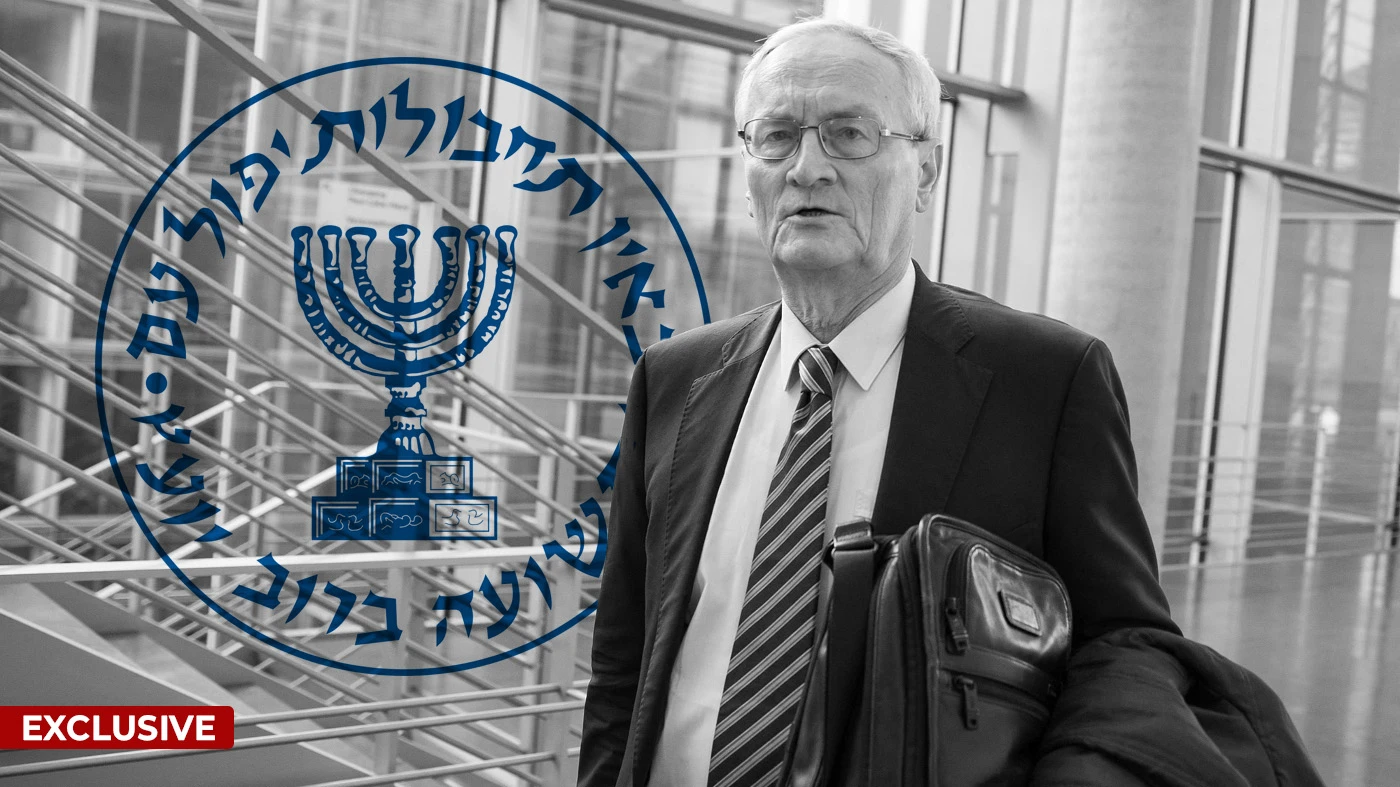
The email came in 2018. August Hanning, who had run Germany’s foreign intelligence service — the BND — from 1998 to 2005, wrote to Danny Yatom, Israel’s former intelligence chief, offering to deliver an overview of senior German and intelligence agency figures for a fee. Ten thousand euros. He proposed completing the report by July 13.
The name of the candidate was never revealed. But the transaction itself is staggering: a former head of the BND monetizing access to Germany’s political-intelligence elite for a man who once commanded the Mossad, an organization whose historical mandate has included operations against Germany.
Hanning was arrested on October 6 on suspicion of espionage-related offenses. Prosecutors allege he obtained roughly 2,000 classified BND documents from Manfred D., a former colleague, and passed them to intelligence officials from an unnamed foreign country. Berlin has not identified that country. But the leaked correspondence — obtained by The Cradle — paints a picture of an ongoing commercial relationship between two former spies, one German and one Israeli, who turned their contacts into revenue long after leaving public service.
The Commercialization of Access
Three years after that 2018 email, Yatom approached Hanning again. This time he wanted meetings with senior candidates ahead of Germany’s September 2021 federal election. Yatom’s company, CIY Global — described as a political-campaign firm — wanted to demonstrate its capabilities to those candidates. In the same message, Yatom referenced cybersecurity material he planned to send along.
The two emails, taken together, map out a relationship. Hanning provided access to German intelligence and political circles. Yatom built businesses — in political consulting, in cybersecurity — that depended on that access. These were not retired officials keeping in touch over old times. Their correspondence reveals an architecture of influence, one in which the borders between state secrets and commercial opportunity had dissolved entirely.
That architecture extended beyond campaign work. Yatom was linked to World Health Energy Holdings, a cybersecurity firm where Hanning reportedly held an advisory role. The connection tied a former BND chief and a former Mossad director through enterprises where inside information and political access carried real price tags.
Israel’s Export Market
Israel has built a global industry around surveillance, cyber-intelligence, and political influence — staffed by veterans who understand exactly how these systems work because they helped build them. Companies like NSO Group, whose Pegasus spyware has drawn international condemnation, and Intellexa, founded by former Israeli intelligence operative Tal Dilian, operate at the intersection of technology and state power. Their products are sold to governments worldwide, often with little oversight.
The consequences of that trade have rippled across Europe. In Poland, prosecutors announced on October 12 that data harvested by Pegasus had been transmitted abroad and that NSO Group retained technical access to portions of the system. Under the previous Polish government, Pegasus was deployed against political opponents, exposing the danger of allowing a private Israeli firm unfettered access to infrastructure capable of collecting deeply sensitive personal and political data.
Spain’s CatalanGate investigation, published in 2022, documented at least 65 people connected to Catalan politics and civil society who were targeted or infected with Pegasus or Candiru spyware. The list included politicians, lawyers, and activists. Researchers at the University of Toronto’s Citizen Lab found strong circumstantial evidence linking the campaign to Spanish authorities.
Greece experienced its own surveillance scandal. Journalist Thanasis Koukakis and European Parliament member Nikos Androulakis were among those targeted using Predator spyware linked to Intellexa. In each case, the common thread was clear: Israeli-developed surveillance technology, operated by companies founded or staffed by former intelligence officers, deployed against individuals whose work or politics challenged those in power.
Why Germany Matters
Hanning’s case is different from Pegasus or Intellexa precisely because it involves the direct transfer of German state secrets — not just the use of commercial spyware. If investigators can establish that the documents Hanning took were ultimately shared with interests linked to Israeli intelligence, the implications extend far beyond a single espionage prosecution.
The leaked emails give German authorities a concrete line of inquiry. Hanning was not merely selling documents to a faceless buyer. He was maintaining a relationship with a former Mossad director, a relationship that spanned political consulting, cybersecurity advisory roles, and the exchange of intelligence-sensitive briefings for cash. None of this proves that Israeli intelligence was the recipient of the 2,000 documents. But it establishes a pattern of commercial collaboration between two men whose expertise was precisely the kind of asset that foreign intelligence services would seek to exploit.
The Reform Imperative
What makes Hanning’s case quietly explosive is that it reflects a structural vulnerability, not an isolated lapse. Germany’s intelligence community, like those of many Western nations, relies on personnel who maintain deep personal networks long after they leave office. Those networks can be leveraged — legally or illegally — by foreign actors seeking access. The Hanning-Yatom correspondence demonstrates how easily that leverage can be commercialized.
European intelligence reform is no longer optional. The scale of surveillance exports from Israel, the documented targeting of journalists and politicians across multiple EU member states, and now evidence of a former German spymaster trading on his contacts for profit — all of it points to a system that is porous, under-regulated, and increasingly dependent on the very capabilities it claims to guard against.
Germany’s prosecutors will need to answer a simple question: who received those 2,000 documents, and why? The leaked emails provide a roadmap for that investigation. Whether Berlin has the political will to follow it — and to confront the broader implications for European intelligence security — remains to be seen.