Korea Will Build Nuclear Reactors in the US. Then Pay Westinghouse to Do It.
Seoul is negotiating to build up to eight reactors on US soil, but the APR1400 design comes with a steep price: roughly $2 billion per unit in royalties to Westinghouse. The deal reveals who really owns the future of nuclear IP.
The Reversal No One Saw Coming
South Korea, long celebrated as the builder of the Barakah nuclear plant in the UAE and a serious competitor in Middle Eastern and Southeast Asian reactor markets, is now preparing to sell its own nuclear technology — to the United States. At least, that is the surface reading of a framework currently under negotiation between Seoul and Washington.
But read the fine print and the story flips again. Korea will not be exporting APR1400 reactors free and clear. For every Korean-designed unit built on US soil, Seoul will pay Westinghouse roughly $2 billion in technology licensing fees and nuclear fuel costs. Eight reactors. That is up to $16 billion flowing south — from a country that spent two decades perfecting a competitive, lower-cost reactor design, back into the lap of the American firm that has been trying to survive bankruptcy since 2017.
The numbers alone make this one of the most asymmetric energy deals in recent memory. What makes it stranger is what it reveals about the real architecture of nuclear power: who controls the intellectual property, and who gets to call themselves an exporter.
The Framework on the Table
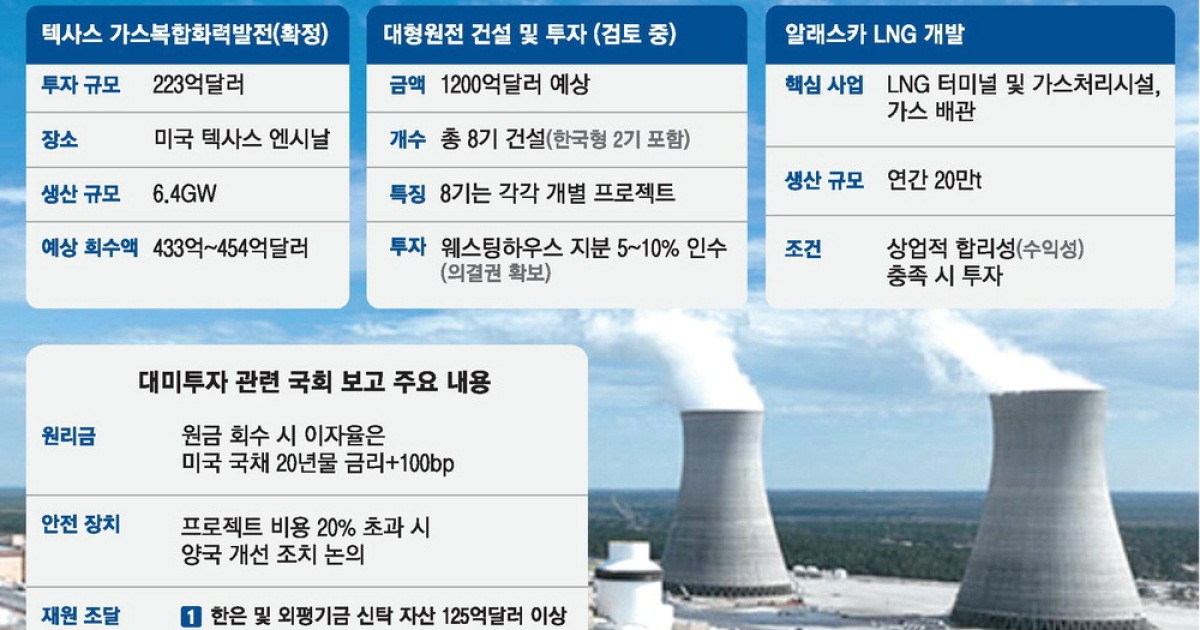
According to reports from Korea’s Edaily and Maeil Business Newspaper, the so-called Korea-US nuclear framework envisions a US investment fund that would finance the construction of at least eight large reactors on American soil. Two of those would be APR1400 units — Korea’s signature pressurized water reactor, the same design deployed at Shin Kori and Shin Hanul in South Korea and successfully delivered to the UAE.
In exchange for access to the US market, Korea would acquire a 5 to 10 percent stake in Westinghouse, with 7 percent cited as a likely compromise point. The Korean side — likely led by Korea Electric Power Corporation (KEPCO) and Korea Hydro & Nuclear Power (KHNP), the state-backed giants that have driven Korea’s nuclear expansion — would also be recommended as a participating contractor on individual projects.
Each reactor would be evaluated separately on commercial viability. That is not a minor detail. US nuclear projects are state-by-state undertakings with wildly different regulatory environments, electricity markets, and political climates. Treating them as separate investment decisions means each one faces its own hurdle rate — and the 6 percent minimum return benchmark the Korean government has reportedly set for its overseas energy investments will apply to every single one.
The framework is separate from, but apparently linked to, a much larger Korean investment already confirmed: a $22.3 billion gas combined-cycle power plant project in Texas, projected to return up to $45.4 billion over 20 years. That deal was designated the government’s number-one overseas investment project. The Texas off-taker — the entity that will buy the electricity under a long-term fixed-price contract — has not yet been identified, which has led some energy analysts to view the revenue projections as optimistic.
An Alaska LNG project is also being considered as a future investment candidate, though industry participants widely expect cost overruns given the extreme conditions on the North Slope and the 1,300 kilometers of pipeline required to reach processing facilities near Anchorage.
The Westinghouse Stranglehold
To understand why the royalty clause exists, you have to go back to January 2024, when KHNP and KEPCO signed an agreement with Westinghouse that effectively carved up the global nuclear market.
Under that deal, Korean firms agreed not to compete for new reactor orders on the US mainland. In return, Westinghouse granted them access to certain advanced reactor technologies for use in third markets — primarily Europe and parts of Asia where Westinghouse itself had limited presence. The arrangement was widely interpreted as a territorial partition: Korea keeps non-US markets, Westinghouse keeps the US.
The APR1400 royalty clause appears to be the price of entrance into that formerly closed market. Korea gets to build — but it pays Westinghouse for the privilege of using designs that sit at the intersection of Westinghouse-derived PWR technology and Korea’s own engineering improvements. The line between what is “Korean” and what is licensed Westinghouse IP in an APR1400 is, intentionally or not, blurry enough to justify the royalty demand.
This matters because nuclear reactor design is not a commodity. The intellectual property surrounding reactor cores, containment structures, fuel assembly geometry, and digital control systems represents decades — often half a century — of accumulated engineering knowledge. Whoever controls that IP controls the market. Westinghouse, despite its financial troubles and Chapter 11 filing, still sits on a mountain of foundational PWR patents that every modern light-water reactor designer, Korean included, ultimately traces back to.
Who Wins, Who Loses
The winners are obvious. Westinghouse gets $2 billion per unit in royalty revenue from a deal that brings construction activity to US soil without requiring any capital outlay from the company itself. It also potentially gains a 7 percent equity stake held by Korean state-linked entities — a quiet but meaningful alignment of interests that could shield Westinghouse from future hostile moves or financial distress.
South Korea wins access to a market it has been denied for decades. The US nuclear industry is essentially nonexistent in terms of new build capacity — only Vogtle Units 3 and 4 in Georgia have broken ground in the 21st century, and they were built by Korean contractors under a separate arrangement. An eight-reactor program, even with royalties, gives Korean engineering firms — Hyundai Engineering, Samsung Engineering, Doosan Enerbility — a foothold in the world’s largest electricity market and a reference project that could be leveraged elsewhere.
The loser is the principle of Korean nuclear sovereignty. The deal confirms that Korea’s reactor design, for all its commercial success abroad, still depends on a US firm for permission to operate in the United States. It is the nuclear equivalent of a software company having to pay a license fee to use its own code in its own product.
American consumers and utilities may also lose in the medium term. The royalty cost is unlikely to be absorbed by Westinghouse — it will be baked into the per-unit price of each reactor, raising the cost of the very clean energy that both governments claim to want. A reactor that might have cost $6 billion as a straight Korean export could cost $8 billion with the royalty layer added. That gap matters in a US market where nuclear already struggles to compete with gas and renewables on levelized cost.
What Comes Next
The framework is still being negotiated. None of these numbers are final. Westinghouse has reportedly pushed back on the equity component — a 7 percent stake with voting rights would give Korean investors a meaningful voice in a company that has spent years reorganizing away from creditor and shareholder scrutiny. Whether that resistance softens as the US administration prioritizes nuclear revival remains unclear.
What is clearer is the geopolitical signal. South Korea has become a nuclear-exporting nation not by challenging Westinghouse’s dominance head-on, but by negotiating a seat at the table — and paying an entry fee. The APR1400 is real technology. Korean contractors delivered Barakah on time and under budget when Western firms could not. But the royalty clause reminds everyone that in the nuclear industry, the map of who exports to whom is drawn not by engineering merit alone, but by who holds the patents.
If the eight-reactor deal closes, it will stand as the largest Korean overseas energy investment in history and the first time a Korean nuclear design has been deployed at scale in the United States. It will also stand as proof that the US nuclear IP establishment remains the gatekeeper — even when the gatekeeper is bankrupt, even when the challenger has a better track record, and even when the challenger is writing a check.