Who Won the Door to Precision Drug Design
A century-old chemistry mystery cracked by a French-Korean scientist and a Japanese researcher — what the Nobel win reveals about who gets to claim science milestones and why it matters for precision medicine.
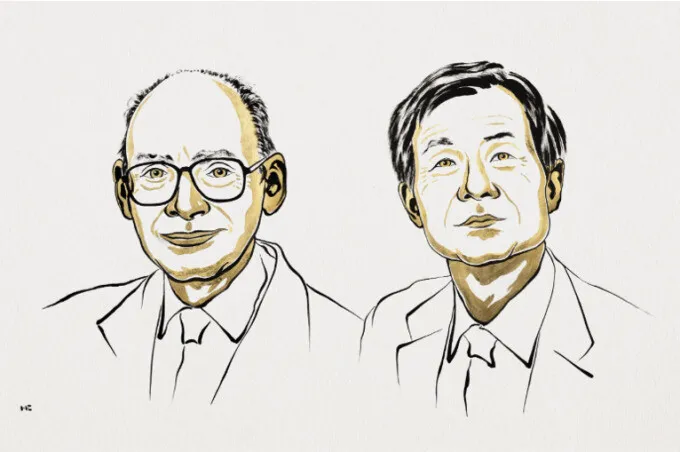
Who Won the Door to Precision Drug Design
In October 2026, the Nobel Prize in Chemistry went to Henri Kagan, a French chemist of Korean descent based at Paris-Sorbonne, and Kenso Soai, a Japanese chemist at Tokyo University of Science — for solving a puzzle that had haunted chemistry for over a hundred years. The citation honored them for “providing chemists with new tools for daily research and contributing to solving one of chemistry’s greatest mysteries: how single-handedness arises in all living systems.” But the story behind the prize reveals something deeper: who gets to claim breakthrough science, and how a century-old problem about mirror molecules finally cracked open the door to precision drug design.
The Mirror Molecule Problem
Life uses handedness. Every amino acid in your body, every sugar in your DNA, leans to the same side — like a left hand that can never match a right. This single-handedness, called homochirality, is as mysterious as the origin of life itself. And it has plagued chemists for over a century.
The problem is starkly simple. Most chemical reactions produce both left-handed and right-handed versions of a molecule — equally, like a pair of gloves. But living systems use only one. In drug design, this distinction is not academic: one version might cure, the other might harm, deform, or kill. For decades, chemists could not make just one side selectively. They mixed both and hoped for the best, or spent enormous resources separating them after the fact.
Henri Kagan discovered in 1986 that when you mix mirror isomers in different ratios, one side can dominate — the non-linear effect, as it came to be known. This was a subtle but transformative insight. It showed that asymmetry could amplify itself in chemical reactions, rather than remaining locked at equilibrium. Kenso Soai built on this in 2003, discovering self-catalytic amplification: a reaction product can catalyze its own production, creating only one side of the molecule. This became known as the Soai reaction — a reaction that produces more of itself, biased toward one handedness. In the laboratory, this meant chemists could start with a tiny imbalance and end with a pure product. The implications rippled across every field that depended on molecular precision.
What a Century of Symmetry Cost
Before this discovery, pharmaceutical companies spent billions developing drugs that were mixtures of both mirror isomers — hoping the good side would dominate and the bad side would be tolerable. Thalidomide, the notorious tragedy of the 1960s, remains the darkest example: one version cured morning sickness, the other caused severe birth defects. The disaster killed or severely disabled thousands of infants and left a permanent scar on pharmacology.
For decades after Thalidomide, regulators required both sides to be tested separately — even when researchers already knew which side would work. The cost was enormous. Every new drug had to go through dual testing pipelines, doubling research time and cost. Many promising molecules were abandoned because both sides could not be separated cleanly. Some drugs worked half as well as they could have, with side effects that were never minimized. Generic versions of chiral drugs flooded markets with mixed isomers, and generic manufacturers faced no pressure to separate them.
The economic toll extended beyond pharma. Chemical companies building industrial catalysts and fine chemicals also paid the price of imprecision — wasted reagents, lower yields, and products that fell short of specifications. Across the broader scientific enterprise, the inability to control molecular handedness was a ceiling on what was possible.
This is why Kagan and Soai’s work matters far beyond pure science. For the first time, chemists could make only one side selectively — like a key that fits only one lock. The implications for drug design are enormous. Drugs can now be designed with a single active isomer, reducing dosage, cutting side effects, and improving efficacy. The Soai reaction, in particular, has opened pathways to synthesize complex molecules that were previously inaccessible or prohibitively expensive.
Second-Order Effects: Who Benefits, Who Changes
The ripple effects of this breakthrough extend well past the laboratory. First, regulatory frameworks are shifting. Several pharmacopoeias have begun updating standards to require single-isomer approval for new chiral drugs, moving away from the racemic mixtures that dominated the previous era. This creates a new compliance barrier — older drugs that were approved as mixtures now face scrutiny, and manufacturers must demonstrate the safety and efficacy of each individual isomer.
Second, the economics of drug development are changing. Single-isomer drugs command premium pricing and longer market exclusivity in some jurisdictions, reshaping the generic drug landscape. Companies that invested in chiral separation technology before the Nobel were well-positioned; those that did not are scrambling to retrofit their pipelines. The pharmaceutical industry is currently in a transitional phase, with many major companies restructuring their R&D divisions around asymmetric synthesis capabilities.
Third, there is a quiet but significant shift in where the next generation of chiral chemistry research is being conducted. Japanese and Korean institutions have become central hubs for this work, partly because the Nobel winners are embedded in those systems. Funding bodies in East Asia are investing heavily in asymmetric catalysis programs, and several universities report surging enrollment in related graduate programs. This may accelerate a broader geographic diversification of chemistry research that has long been centered in Western Europe and North America.
Who Gets to Claim the Breakthrough
But the Nobel Prize reveals something else: who gets to claim breakthrough science. Henri Kagan and Kenso Soai — a French chemist of Korean heritage and a Japanese researcher — solved a puzzle that had eluded Western chemists for over a century. The Nobel Committee’s language was careful and measured, but the subtext was clear: the problem of molecular handedness, once thought to be purely a theoretical curiosity, had been resolved by scientists working outside the traditional Western center of gravity.
In Korea and Japan, the press emphasized the East Asian leadership angle. The Korean newspaper HanGyeore highlighted the French-Korean and Japanese pairing, framing it as evidence that Asian scientists were no longer peripheral to the discipline but central to its most fundamental advances. Japanese outlets celebrated their domestic researcher and noted the decades of patient, incremental work that the Nobel moment made visible. In Western wire services, the story was simpler: two chemists won the Nobel Prize. The depth was missed. The narrative defaulted to the familiar template.
This is the real puzzle hidden inside the chemistry. For centuries, science milestones have been claimed by Western institutions. Even when the researchers are from Asia, Africa, or Latin America, the credit often flows to Western universities where the work was formally completed. This time, the narrative is different — or at least, the raw facts resist the old framing. Kagan’s work was done in France, but his Korean heritage and the public recognition it received in Korea added a dimension that Western media struggled to integrate. Soai’s work was done entirely in Japan, at an institution that does not carry the global prestige of a Harvard or Oxford. Neither of these factors usually features in Nobel coverage, but this time they could not be ignored.
The Bigger Picture: A Shift in the Center of Gravity
The Nobel Prize in Chemistry 2026 is about more than a century-old problem. It is about who gets to claim breakthrough science, and why a French-Korean and Japanese pairing winning it says something important about the future of global science. The prize marks a quiet inflection point. For over a century, Western institutions have dominated Chemistry Nobel Prizes. Even when researchers hailed from other continents, the credit typically went to Western universities where they held positions. This time, the narrative does not collapse into that pattern. Soai won while working at Tokyo University of Science — an institution known for rigorous training but not for the global branding that characterizes elite Western universities. Kagan won while based in France, but his Korean identity was woven into how the prize was received in East Asia.
The implications stretch across multiple dimensions. For drug design, the ability to produce single-isomer compounds selectively is now a practical reality rather than a theoretical goal. For understanding the origin of life, the Soai reaction offers the first credible laboratory model for how homochirality could emerge from a symmetric starting point — a question that has occupied scientists since Louis Pasteur first separated crystalline tartaric acid in 1848. And for the sociology of science, the prize suggests that the geography of discovery is changing in ways that institutional histories have not yet caught up to describe.
The story is not just about a breakthrough. It is about a shift in who gets credit for scientific discovery — and why a French-Korean and Japanese pairing winning it matters for the future of global science. The door to precision drug design has been opened. Who walks through it, and who gets to describe the opening, will shape the next century of chemistry.