Why Foreign Investors Are Dumping Korean Chips Despite Record Profits
Foreign investors have sold trillions in Korean chip stocks even as Samsung and SK Hynix post record earnings. The exodus points to structural fears — geopolitical risk, AI caution, and China's CXMT — that earnings alone can't soothe.
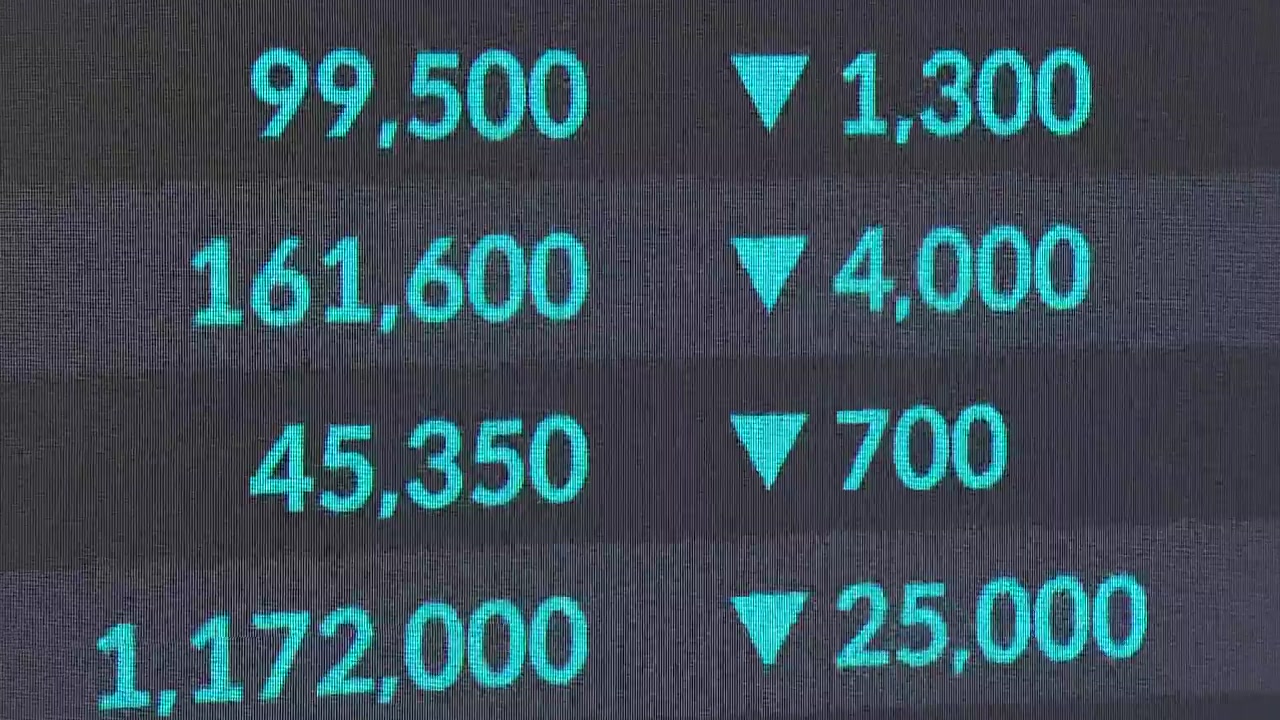
Record profits. Missing foreigners.
Samsung Electronics and SK Hynix just delivered the kind of earnings reports that make semiconductor bulls sit up and take notice. The numbers were historic — revenue surges, margin expansions, and free cash flow figures that would have silenced any skeptic from as recently as twelve months ago. The stocks? They cratered.
In a span of barely five trading days, the KOSPI fell from 7,000 to below 5,000 — a collapse driven almost entirely by a foreign investor stampede that trading desks are still calling an anomaly. Since June, foreign holdings of Korean equities on the main exchange have shrunk to roughly two-thirds of their peak. During that same window, foreign investors sold Samsung stock worth 22.2 trillion won and SK Hynix stock worth 45.2 trillion won. That is not trimming a position. That is exit behavior — the kind you see when an investor class has reached a decision, not when it is merely hedging.
The headline paradox is simple enough: the companies making the most money ever in their respective histories are being dumped by the very buyers who usually cheer those results. But the story beneath the numbers is where the real warning lives, and it extends well beyond the semiconductor sector itself.
It is not one fear. It is a stack of them.
The selling has multiple drivers, and they compound each other in ways that make a simple narrative impossible. Every reason to sell has a reason behind it, and the reasons keep stacking.
Geopolitical tension is the loudest. Escalation in the Middle East has pushed oil prices higher and rattled commodity-sensitive portfolios across Asian exchanges. Major economies are raising bond yields, which makes emerging-market assets look less attractive by comparison. Capital that once flowed confidently into Korean chips now has a reason to sit on the sidelines — or flee further east or north toward markets that appear safer. The won has weakened against the dollar as a result, which adds another layer of pain for foreign investors holding Korean assets denominated in a depreciating currency. Earnings in won are only as good as the exchange rate at conversion time.
Then there is the AI question, and it is more complicated than the market originally assumed. Every year since 23, the market has treated artificial intelligence as an unqualified win for memory makers. Servers need memory. Training runs need more memory. Inference pipelines need memory. The thesis was seductive because it was simple: more AI means more DRAM, and more DRAM means higher prices for Samsung and SK Hynix. Now, some investors are recalibrating with uncomfortable slowness. The concern is not that demand will vanish — it is that the earnings tailwind from AI may be shorter, more volatile, or concentrated among fewer winners than the market assumed. Some analysts are flagging the possibility that HBM saturation could arrive sooner than expected, compressing margins just as volumes peak. That uncertainty changes position sizing in a hurry.
And then there is CXMT.
ChangXin Memory Technologies, a Chinese memory chipmaker backed heavily by state capital and shielded from the profit pressures that govern Samsung and SK Hynix, announced plans to enter the server-grade product market. The news landed like a grenade in a bull portfolio. China’s semiconductor push is not new — it has been pursuing self-sufficiency in memory since at least 2014 through its Big Fund programs — but its focus on server memory, the segment where Samsung and SK Hynix generate their steepest margins, is a fresh vector of threat. Analysts at Hyundai Investment & Securities noted the dynamic plainly: when you are already pricing in doubt about future earnings, any news of a new supplier becomes another excuse to sell. CXMT gave investors that excuse. What makes it dangerous is that Beijing does not need CXMT to beat Samsung on performance. It only needs CXMT to be good enough to capture incremental demand and squeeze margins at the margin. That is how you erode pricing power without overtaking it.
The buyback tap is turning off — and the market feels it.
For months, Samsung and SK Hynix bought their own shares, propping up demand and signaling confidence when confidence was in shortest supply. Samsung completed its program on June 6. SK Hynix has bought roughly 85 percent of its target and is nearing the end. Those programs masked supply pressure in a market that was already feeling thin. Without them, the market faces a supply-demand shift it did not want to see — especially when the broader macro environment is already hostile to its sentiment.
That is why the next shareholder return announcement matters more than usual. LS Securities analyst Yeom Seung-hwan pointed out that a large share of what these companies earn is already being funneled back to investors through dividends and repurchases. Both firms are expected to lay out additional return plans at their earnings briefings later this month. The question is whether those plans move the needle or merely slow the bleeding. History suggests the latter. Buybacks create a floor, not a ceiling. They absorb selling pressure but do not generate the kind of momentum that brings buyers back to a market.
The second-order effects nobody is discussing yet.
The selloff has ripple effects that extend far beyond the two mega-caps. Korean foundry orders are already softening, and Samsung’s foundry division has been struggling for years — a prolonged weakness in chip stock prices makes it harder to justify further capital expenditure in a sector where Taiwan Semiconductor and Intel are racing ahead. The Korean government has signaled that semiconductor self-reliance is a national security priority. If foreign capital exits in volume, the policy response could include capital controls, tax incentives, or direct sovereign backing — all of which carry their own market risks.
The Korean won’s depreciation adds another dimension. A weaker won makes imported energy and raw materials more expensive for Samsung and SK Hynix, subtly compressing margins even as average selling prices for memory rise. It also makes Korea less attractive as a portfolio allocation for global institutional investors who face currency translation losses on every report. That creates a feedback loop: selling drives the won lower, which damages fundamentals, which justifies more selling.
On the supply side, the exit of foreign capital could accelerate a consolidation that has been building quietly. Smaller Korean chip suppliers and equipment makers — companies like SEMIKRON Korea divisions and local lithography suppliers — feel the chill first. When the motherships move, the tendril-sized vendors move faster. That contraction in the supply chain is exactly what China’s industrial policy aims to achieve: starve the ecosystem of demand until domestic alternatives become viable.
Who wins. Who loses.
In the near term, Korean chip stocks lose. The selloff is sharp enough that KB Securities’ research chief Kim Dong-won called premature to write off the sector, noting that profit forecasts for both Samsung and SK Hynix have been revised upward. Fundamentals are not collapsing. But market mechanics dominate in the short run, and the mechanical driver here is supply drying up from buyback ends, demand dropping from foreign outflows, and sentiment deteriorating from macro noise.
Chinese memory makers, particularly CXMT, gain credibility from the panic. Every week foreign capital exits Korean chips and redirects elsewhere, Beijing’s argument that its domestic industry can capture global demand grows louder — even if the technology gap remains wide. The narrative alone is worth something to a state-backed firm. It makes recruitment easier. It makes procurement easier. It makes policy justification easier. That is how industrial policy compounds.
U.S. and Japanese investors managing portfolio risk lose too, but perhaps less painfully. Rebalancing away from Korean semiconductors reduces exposure to a supply chain node that carries concentrated geopolitical and competitive risk. That is not a verdict on the companies. It is a verdict on the risk profile. And risk profiles are easier to change than factories.
Taiwan’s TSMC gains by default. As Korean memory makers face margin compression from CXMT and capital flight from global investors, TSMC’s foundry moat appears wider by comparison. The shift is marginal but directional, and in semiconductor investing, direction matters more than magnitude in the short run.
What happens next.
The earnings themselves will likely hold up. Samsung and SK Hynix have the pricing power, the scale, and the customer relationships to deliver strong results for the foreseeable future. The market, however, is pricing in things beyond quarterly reports. Oil, rates, China’s industrial policy, AI demand durability — those are multi-year variables. They do not resolve at earnings season. They resolve in policy meetings, budget debates, and trade negotiations that operate on timelines completely unrelated to financial reporting cycles.
If CXMT’s server entry accelerates and foreign selling persists, expect the KOSPI to remain range-bound to lower. The won could slip further. Government intervention is possible but unlikely to be decisive — Seoul has limited tools that do not themselves carry market-distorting costs. If shareholder return commitments from Samsung and SK Hynix exceed expectations and macro conditions stabilize, the selloff could pause. A pause is not a reversal. There is a meaningful difference.
But the structural disconnect between corporate profitability and investor confidence will not close overnight. It may not close at all in the way investors expect. The old logic — strong earnings equal rising stock price — no longer applies when the macro and geopolitical backdrop turns hostile. Capital is no longer price-agnostic. It has preferences, and those preferences have shifted.
The lesson for global investors tracking Korea’s tech-driven growth model is blunt: earnings surprises no longer guarantee price appreciation when the world around those earnings looks uncertain. The market is not questioning whether Samsung and SK Hynix can make money. It is questioning whether the world wants to own them right now. That is a different problem entirely — one that balance sheets cannot solve and that no buyback program can outrun. The question is not whether Korean semiconductors are competitive. It is whether competitiveness matters when the risk premium has moved on.