Koreans Are Rewatching Troy — And It Says Something About Hollywood
Christopher Nolan's new Korean film The Odyssey has triggered a 40x surge in purchases of the 2004 blockbuster Troy on Korean IPTV platforms — and it reveals a global appetite shift away from franchise filmmaking.
The Number That Should Unsettle Every Studio Executive
Twenty-three thousand six hundred and fifty-three. That is how many Koreans bought or rented the 2004 film Troy on IPTV platforms this month, according to data from the Korean Film Council. Last month, the number was 574.
That is not a bump. That is a 4,020 percent surge — roughly 40 times the prior month — with the film jumping 103 positions on purchase rankings to land at number seven. A film that had largely vanished from active conversation since its theatrical release a quarter-century ago is suddenly one of the most-transacted titles in the Korean market.
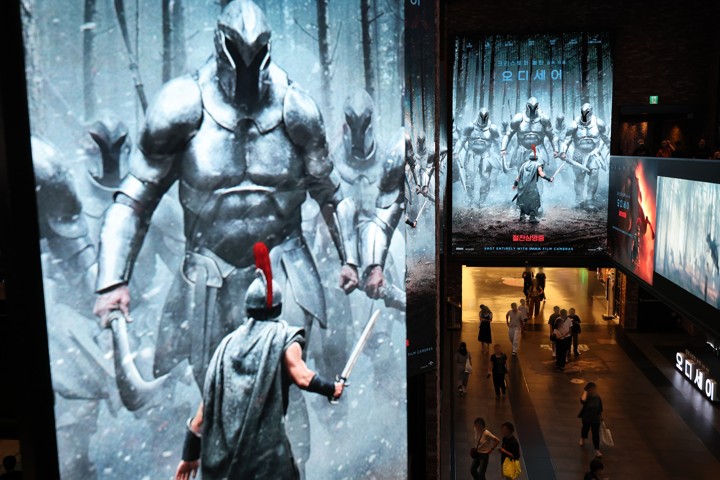
The cause is not nostalgia in any simple sense. It is a specific new film: The Odyssey, a Korean-language production directed by Christopher Nolan. And the phenomenon it has unleashed tells you more about where global cinema audiences are heading than any earnings report could.
How a Korean Film Revived a 22-Year-Old Movie
The Odyssey and Troy are connected by narrative lineage. Troy depicts the Trojan War, the conflict between Greek coalition forces and the city of Troy, and The Odyssey moves forward to explore what follows that war. The relationship between the two stories is structural — Homer’s epics have always been read as a sequence — but in cinematic terms they existed in separate universes until now.
When Troy opened in South Korea in 2004, it drew approximately 3.85 million viewers. That was solid for a war epic of its era, though not record-breaking. It sat in the crowded field alongside Kingdom of Heaven and Alexander and faded the way those films tend to fade: remembered fondly by a subset of viewers, largely ignored by everyone else.
This month, Troy is being discovered again by an audience that may have been ten years old when it first screened. That audience is now in its late twenties and early thirties — precisely the demographic that drives streaming purchasing behavior. They are watching The Odyssey, recognizing that it references events and characters from Troy, and going back to fill in the gaps.
It is a reverse-engineered cultural moment: a new film creating demand for older ones. Hollywood treats IP as a one-way pipeline. A sequel drives interest in nothing but its predecessor’s marketing materials. What is happening in Korea suggests a more organic and more profitable model.
The Nolan Effect Is Real — And It Is Measured
The data does not stop at Troy. Oppenheimer, Nolan’s 2023 biopic about J. Robert Oppenheimer, recorded 4,366 purchases this month, up 1,421 percent from last month. Interstellar, the 2014 film that became a cultural touchstone and helped bring roughly 10 million Korean viewers into theaters, has also climbed back into the purchase rankings’ top 50.
These are not fringe numbers. We are talking about a director whose previous work has become a living library that audiences are actively mining. This is remarkable in an era when most filmmakers’ back catalogs gather digital dust after their theatrical run ends.
Nolan’s career trajectory in Korea is particularly striking. Inception (2010), Interstellar (2014), and Oppenheimer (2023) each arrived as major events. Each one built a different kind of audience. The Odyssey is now connecting those audiences in a feedback loop that benefits every film in the sequence.
This is what happens when a director builds a recognizable body of work rather than chasing franchise assignments. The capital accumulates. It does not get diluted by spin-offs and reboots.
What This Says About Franchise Fatigue
The implications extend well beyond Korea. The Korean box office has been dominated by local productions throughout 2026, with Hollywood studio releases struggling to gain traction. The Odyssey is not a Hollywood production — it is a Korean film with a globally recognized director attached. That distinction matters.
Audiences are not rejecting big-budget filmmaking. They are rejecting formulaic big-budget filmmaking. The 40-fold increase in Troy purchases is not about escaping into spectacle. It is about engaging with a film that asks questions, takes risks with structure, and trusts its audience to sit with ambiguity.
The contrast with the current state of franchise cinema is stark. Marvel’s Phase Five has been described by industry analysts as a period of diminishing returns, with multiple projects delayed, rebooted, or quietly shelved. DC’s new universe is two films into a planned slate and already requiring course corrections. Star Wars continues to cycle through showrunners and creative directions without finding a stable footing. Even established franchises like Fast & Furious have seen enthusiasm wane.
Meanwhile, a film about ancient Greek mythology — not a new franchise entry, not a superhero origin story, not an extension of a media empire — is driving Korean audiences to revisit 22-year-old cinema.
Who Wins, Who Loses, and What Happens Next
Nolan wins, obviously. His next project will open to whatever audience density he can command, and his back catalog will continue to generate revenue for years to come. Distributors of legacy titles win — Troy’s numbers this month are likely to translate into sustained streaming availability and renewed theatrical curiosity for anyone still screening it.
Hollywood studios that have built their 2026 lineups on four-quadrant IP properties lose. Not dramatically — these films will still find their audiences — but the gap between what Korean audiences are choosing and what American studios assume Korean audiences will accept is widening.
The global angle here is critical. Korea is not an isolated market. Its theatrical habits, streaming preferences, and cultural conversations are increasingly influential worldwide. When Korean audiences demonstrate that they will fill theaters for a Nolan film about Greek mythology and then mine his entire filmography for context, that behavior signals something to every major studio about where audience investment actually lives.
It lives in originality. It lives in director-driven projects. It lives in stories that treat their audiences as intelligent participants rather than customers in a content pipeline.
The Odyssey is generating its own success, but its most interesting side effect may be the ripple it is creating through two decades of cinema history. A film about ancient Greece is making people care about a 2004 war epic and a 2014 space drama. That is not franchise mechanics. That is storytelling momentum — the rare kind that compounds rather than dissipates.
If this pattern holds, and if it spreads beyond Korea, the lesson for Hollywood should be uncomfortable: the audiences are still there. They have simply stopped waiting for permission to be excited.