GTA VI's Launch Trailer Reveals Rockstar's Cultural Play
Rockstar's GTA VI launch trailer pairs a Justice collaboration with a new podcast format — signaling the studio is building a cultural ecosystem, not just a game. What those choices reveal about Rockstar's ambition.
The Trailer Is the Product Now
Rockstar Games dropped the GTA VI launch trailer this week, and if you’re only counting in-game frames, you’re missing the point. The trailer is doing exactly what every Rockstar campaign has done since 2008: it’s less about showing you the game and more about proving the game is unavoidable.
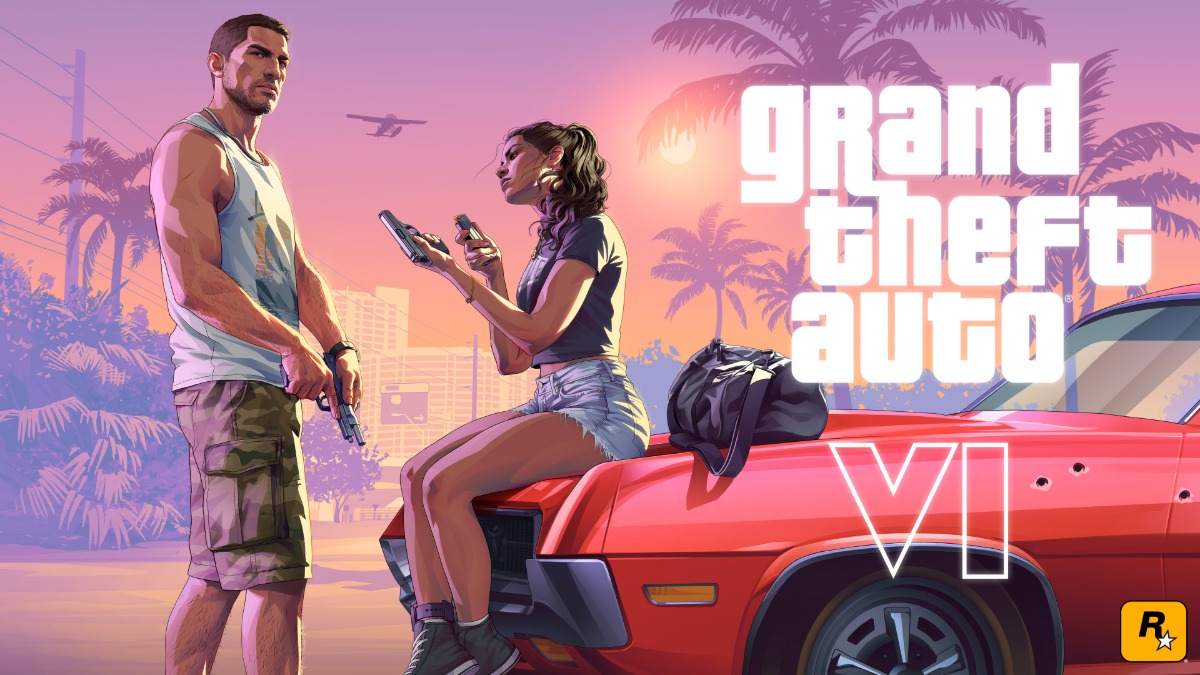
The stakes this time feel genuinely higher. Vice City is the setting — a return to sun-bleached corruption after the grit of Liberty City and Los Santos — and the protagonists are Jason and Lucia, a duo navigating a world where every surface-level job goes sideways and the only way out is each other. That narrative arc, a partnership forged against a city that never stops spinning, echoes the tone of the franchise’s best entries while pushing the relationship dynamic further than Rockstar has before.
But the real story in this launch moment isn’t the open world. It’s what Rockstar is building around it.
The Justice Move
The trailer features a new track by Justice — the French electronic duo behind Cross, Audio, Video, Disco — titled “Flower in a Hurricane.” The single also includes collaborations with Tame Impala, SZA, and King Gizzard & the Lizard Wizard. All four names carry enormous cultural weight across different audiences, and together they form a roster no other game publisher could casually assemble.
This is not a case of Rockstar licensing a popular song and calling it a day. This is an original score commission built like a mini-album, with artists who could each headline Coachella and instead show up on a video game soundtrack. The fact that the full album, titled Grand Theft Auto VI: The Album, is already available for pre-order across every major streaming platform — plus vinyl and CD through gtavi-thealbum.com — means Rockstar is treating this release with the rollout infrastructure normally reserved for a major label headliner.
Western gaming press is covering the trailer itself. What they haven’t quite caught up to is what the music strategy reveals: Rockstar understands that in 2025, a game’s cultural footprint is determined as much by its soundtrack as by its gameplay. GTA V’s radio was always a talking point. GTA VI’s is an event.
The Podcast Shift
There’s a second detail buried in Rockstar’s announcement that matters more than it sounds. For the first time in the series, GTA VI is introducing an on-demand podcast format within its in-game radio ecosystem. Six radio stations have been confirmed so far, and the addition of podcasts means the auditory landscape of Vice City won’t be limited to music and talk shows broadcast on a schedule. Players will be able to consume content when they want it — a design choice that mirrors how real audiences actually consume media now.
This is a small change in isolation. But consider what it means for the world-building project Rockstar has spent two decades refining. Radio has always been one of GTA’s signature immersion tools. Adding on-demand podcasts transforms that system from a background texture into an interactive narrative layer. You can listen to a story that unfolds outside the mission structure. You can absorb the world’s culture on your own terms.
It also signals something about Rockstar’s relationship with its audience. The studio knows its players will dissect every frame, every line of dialogue, every passing billboard. Giving them persistent, self-directed content to lose themselves in — content that exists purely to deepen the world rather than advance the plot — is a remarkably confident move.
The Launch Window
GTA VI ships November 19 on PS5 and Xbox Series X|S. That date is now locked, and with it comes the usual Rockstar phenomenon: months of speculation, theory-crafting, and cultural anticipation that builds whether the game is ready or not. The franchise has conditioned the industry to treat every Rockstar announcement as a cultural inflection point.
What’s different this cycle is the sheer breadth of the surrounding ecosystem. A Justice original track. Four high-profile featured artists. A full soundtrack album with physical releases. Six radio stations. An on-demand podcast system. None of these are strictly necessary to sell a game. They exist for a different reason: to make sure that when GTA VI launches, the conversation has already been happening for months in music magazines, podcast feeds, and late-night talk shows — not just on gaming websites.
The NPC production studio in Los Angeles — Rockstar’s investment in scripting thousands of background lives with unprecedented detail — gets the technical credit in most coverage. But the cultural architecture behind this launch is equally remarkable. Rockstar isn’t just building a game. It’s building a world that already has a soundtrack, a radio station, and a podcast network before a single mission is completed.
That’s the unsung story here. The open world is the product. Everything else is the ecosystem.
What Happens Next
The question now is whether the game can sustain the cultural momentum Rockstar has carefully assembled. GTA V’s longevity came from a combination of relentless updates, a live-service mode that didn’t feel alive-servicey, and a community that found reasons to keep playing after the story ended. Rockstar has spent five years preparing GTA VI for that same trajectory.
The music is ready. The podcast infrastructure is in place. Vice City is waiting. What remains to be seen is whether the gameplay underneath matches the ambition of everything Rockstar has built around it.