Korea's $1 Trillion Export Milestone Is a Semiconductor Gamble
South Korea is on track for its first $1 trillion in annual exports, powered by a chip boom that accounts for over 40% of the total. The milestone is historic but exposes a dangerous concentration — and a cycle that could reverse fast.
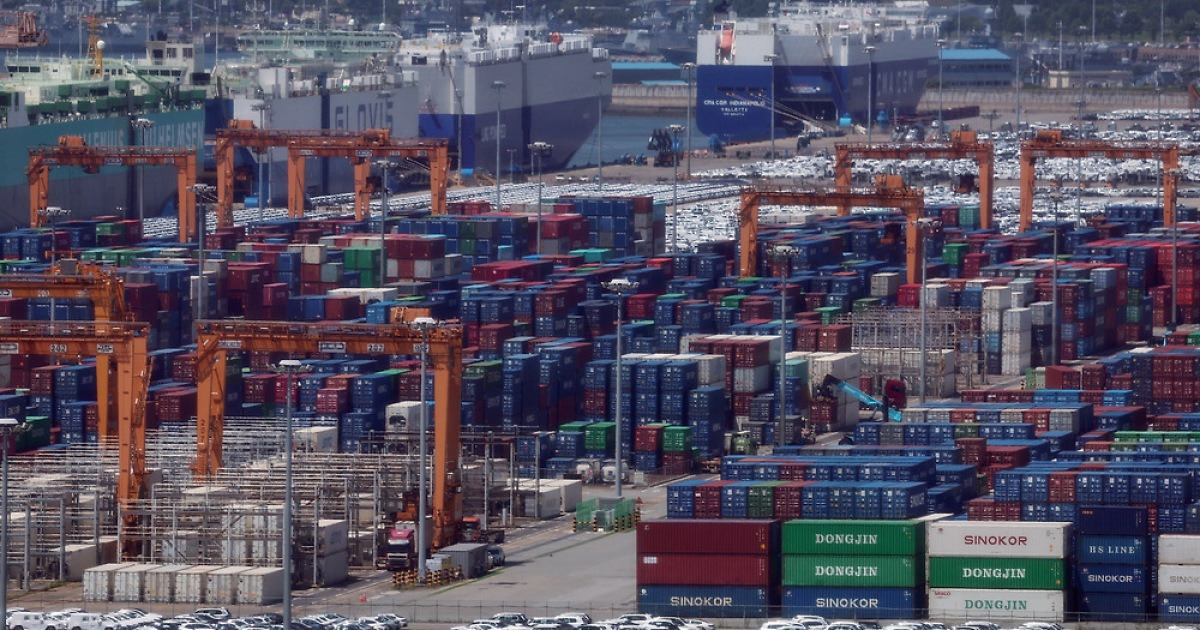
The number is historic. The structure behind it is not.
South Korea passed $709.4 billion in cumulative exports by early September, already breaking last year’s full-year record of $709.3 billion — and it did so 117 days earlier. At this pace, Korea will become the fourth country in history to post a trillion-dollar export year, trailing only the United States, China, and Germany. The milestone is real. But the architecture holding it up is narrower than anyone admitting.
Semiconductors are doing the heavy lifting. Between January and August, chip exports hit $281.2 billion — up 169.6% from the same period last year. That single category now accounts for 40.6% of Korea’s entire export basket. The June monthly peak of $44.9 billion shattered the previous all-time record by nearly $30 billion. This is not a broad-based trade renaissance. It is a one-sector surge with outsized consequences.
Why the chip boom matters beyond Seoul
The timing is everything. The current semiconductor upcycle is driven by surging demand for high-bandwidth memory (HBM) used in AI training and inference chips. Samsung and SK Hynix, Korea’s two export giants, are essentially the only suppliers at scale meeting that demand. When Korea reports a record export month, a significant chunk of that number is global AI infrastructure spending funneled through a single country’s port gates.
That creates leverage — and vulnerability. On the leverage side, Korea now sits at a chokepoint in the most strategically important material input of the 2020s. Every data center buildout in Texas, every GPU cluster in Shanghai, every cloud expansion in Frankfurt has a line item that flows through Busan or Pyeongtaek. That is geopolitical weight no country of Korea’s size typically wields.
On the vulnerability side: the cycle does not last forever. Memory chip pricing is notoriously cyclical. The last downcycle, 2023, saw Korea’s exports drop to $632.2 billion — an 7.5% decline from 2022. The difference this time is that the peak is higher and the dependency deeper. When the cycle turns, Korea has less cushion than it did in 2023 because a larger share of its trade surplus depends on a narrower set of buyers and a single product class.
Who is buying, and what happens if they stop
Geographic concentration tells its own story. China took 21% of Korea’s exports in the first eight months — a 76.1% jump year over year. The United States accounted for 18.4%, up 57%. Together, those two markets represent roughly 39% of Korean exports and are also the two countries most actively pursuing semiconductor self-sufficiency. The US CHIPS Act is subsidizing fab construction on American soil. China is pouring capital into SMIC and Huawei’s semiconductor push. The buyers are simultaneously becoming competitors.
The Middle East told a different story — exports there fell 9.8% due to the regional conflict. Small in absolute terms ($11.5 billion), but telling in direction. It is a reminder that Korea’s export engine runs through regions that are increasingly unstable.
Vietnam (up 57.7%) and Malaysia (up 95.4%) are notable as re-export hubs rather than end markets, but they also signal how deeply Korea is embedded in Southeast Asian supply chain networks that could fragment under trade policy shifts.
The non-chip exports are real — but not enough to replace chips
It would be lazy to say everything rests on semiconductors. Non-chip exports grew 18% to $412.1 billion in the first eight months. Automobiles delivered $43.6 billion, petroleum products $42.6 billion, computer peripherals surged 266.2% to $33.6 billion, and ships rose 12.4% to $20.7 billion. Steel held steady at $33.3 billion with 7.4% growth.
These numbers matter. They show a broader industrial base that is functioning. But they also reveal the scale problem: even combined, all non-semiconductor exports equal roughly 60% of semiconductor exports. No single category comes close to replacing chip revenue if demand softens. Automobiles, Korea’s second-largest export, are growing but face intensifying competition from Chinese EV makers who are undercutting on price and expanding globally.
What happens next if the cycle bends
Korea’s Ministry of Trade expressed confidence in reaching the $1 trillion mark, citing resilient export momentum despite protectionist headwinds. Trade Minister Kim Jeong-gwan, tweeting from a US trip, explicitly called for diversifying into K-food and K-beauty as new export engines. Those sectors have cultural reach but economic scale that is a fraction of semiconductors. K-beauty exports sit in the low billions. They will not fill a chip-led gap.
The more realistic stress test lies ahead. Memory chip prices have risen sharply but are not immune to oversupply. Samsung and SK Hynix have been expanding HBM capacity aggressively. If AI demand plateaus or if IBM, Google, or other chip designers succeed in reducing memory bandwidth requirements, the price floor drops fast. In 2023, Korea felt the pain of a 30% memory price collapse. The machinery for pain is still there — it just ran in reverse this year.
For global supply chains, Korea’s $1 trillion milestone is a signal that the AI hardware buildout is real and deeply concentrated. But it is also a warning: the world’s fourth-largest export economy is running on a single fuel, and the tank is visible to anyone watching inventory levels at data center builders and memory pricing on spot markets.
The milestone will likely be hit. The question is what Korea looks like when the next downcycle arrives — and whether the diversification rhetoric translates into anything bigger than K-food festivals and beauty samplers.