Koreas Data-Center War Is Americas War in Miniature
Trump turned local NIMBYism into a national security issue by blaming China. But the real story is how the same friction is building in Seoul—and how Southeast Asian bets are being reshaped by it.
The fight over data centers is no longer about zoning.
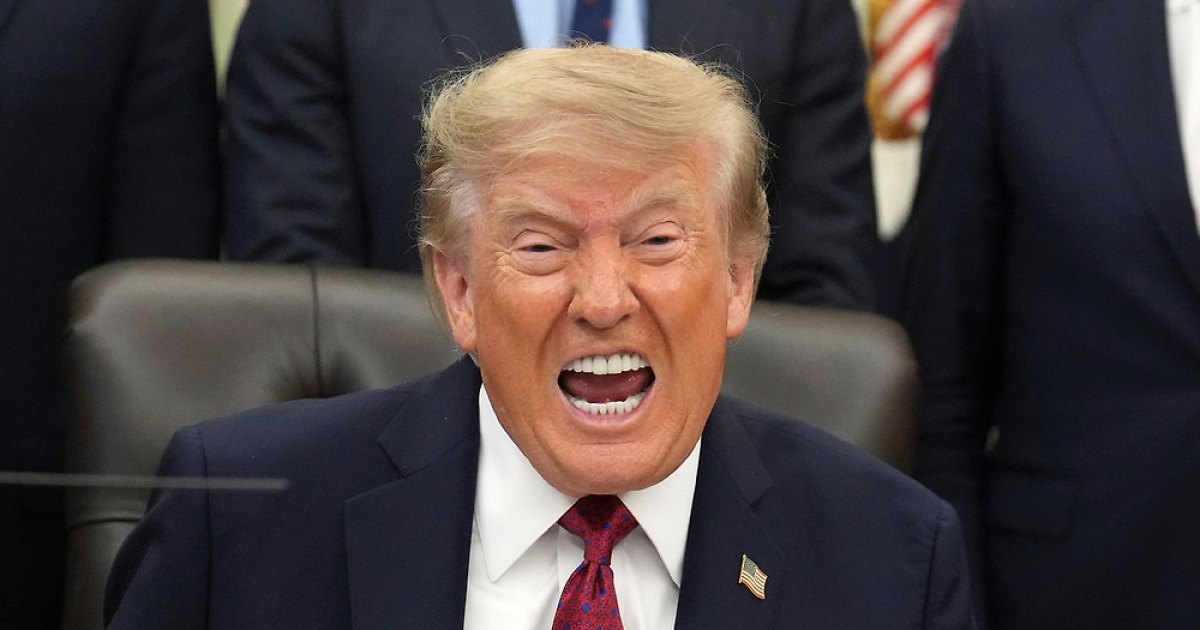
Donald Trump did something unusual last month: he turned a local grievance into a national security argument. Writing on Truth Social, he told communities resisting new AI data centers to choose between progress and poverty — and warned that China would celebrate their defiance. The subtext was unmistakable. What began as a dispute over electricity bills and grid strain in places like Ashburn, Virginia had become, in the president’s framing, a frontline in the AI arms race.
The numbers behind the conflict are stark. There are more than 4,000 data centers in the United States now. Virginia alone hosts over 670, earning its nickname as the data-center capital of the world. But growth has bred resistance. A Pew Research survey found 52% of Americans say they worry more than they look forward to the everyday spread of AI. Online forums echo a simpler grievance: why should residents absorb higher utility bills and grid congestion for technology that does not visibly improve their lives?
The opposition crosses party lines. Senator Bernie Sanders called for a halt to new data-center construction nationwide. Texas Governor Greg Abbott paused permitting while the state investigated power and water usage. The AI industry has responded with its own mobilization. Build America AI, a nonprofit backed largely by Big Tech money, raised $50 million to run pro-data-center campaigns in Kansas, Ohio, and Wisconsin. It is linked to the pro-AI super PAC Leading the Future. The message is direct: every community that says no is handing China a victory it did not earn.
China, to be fair, has a structural advantage here. The government’s Eastern Data Western Computing initiative directs computing demand from the coast to the interior, where power and land are abundant. Construction approvals move through a single chain of command. There is no homeowner association vetoing a 500-megawatt facility in central Guizhou.
Beijing has also been quietly active on American soil. Elon Musk’s platform X recently identified a network of roughly 200,000 accounts linked to China that infiltrated US debates on AI and energy policy. About 200 of those accounts specifically amplified claims that data centers raise electricity rates and strain the grid. OpenAI reported a similar pattern in June, detecting and blocking chat accounts believed to originate in China that posted anti-data-center commentary.
Whether Beijing orchestrated these campaigns or simply exploited existing sentiment is hard to verify. But the effect is the same: wherever friction exists in the American data-center pipeline, there are actors happy to widen it.
The bottleneck is not chips. It is permission.
The most useful way to think about this moment is not as a trade dispute but as a competition in regulatory velocity. AI capability today depends less on who designs the best chip and more on who can break ground on a data center fastest. Land acquisition, environmental review, power-connection applications, community meetings — each step is a potential delay. China compresses that timeline through top-down authority. The United States expands it through decentralized governance. That gap is what Trump was pointing at, however clumsily.
Wall Street Journal editors have warned explicitly about this dynamic. They noted that bipartisan data-center regulations risk weakening American AI competitiveness and creating spillover benefits for China. The observation matters because it reframes the debate. This is not a libertarian versus regulator story. It is a geopolitical one.
Seoul is watching — and resisting.
The pattern playing out in America is already repeating in Korea, and the timing is consequential. Multiple large-scale data-center projects are scheduled near Seoul, including sites in Geumcheon-gu and Yeongdeungpo-gu. Residents have already organized against them. Power demand, water use, and environmental impact are the familiar complaints. If the Lee Jae-myung administration moves forward with its promised mega AI data-center project, those conflicts will intensify.
Hyun Jeong-gon, a senior researcher at the Korea Institute for International Economic Policy, put it plainly: a data center is only sustainable as national infrastructure if it does not offload costs onto nearby residents. He recommended transparent environmental disclosure from the site-selection phase and mandatory benefit-sharing from operators. In other words, the American playbook is available in Korean, and the lessons are already being ignored.
The Southeast Asian hedge is real — and accelerating.
Here is what English-language coverage typically misses: the same friction driving Trump’s rhetoric is reshaping where global tech companies choose to build their next wave of infrastructure, and Southeast Asia is absorbing the shift.
Google, Meta, Microsoft, and Amazon have all announced or expanded data-center programs in Singapore, Malaysia, and Indonesia over the past two years. Singapore remains the default anchor — politically stable, fiber-connected, and home to major submarine cable landing stations. But it is running out of land and power. That is pushing the next layer of investment into Johor in southern Malaysia and the industrial corridors of Java in Indonesia.
For Korea, this is both a signal and a risk. Korean hyperscalers and cloud providers need data-center capacity too. When Western firms are bidding for power and land in Southeast Asia, prices rise and permits become scarcer. Korea is competing with the same companies that fund the pro-data-center lobbying machine in Washington.
The geographic logic is clear. Proximity to undersea cables matters less when you can lease capacity from a partner with landing rights. Proximity to cheap, abundant power matters more. That is why Vietnam and Thailand are also moving into the frame. The region is becoming a substitute corridor for compute capacity that the United States is struggling to permit at home.
What happens next
Three outcomes are plausible over the next eighteen months.
First, the United States could double down on Trump’s framing and push federal siting authority for data centers deemed critical to national security. That would override local opposition but face immediate legal challenges and congressional resistance from both parties.
Second, the current stalemate persists and construction timelines stretch further. American AI developers would continue leasing capacity abroad or investing in Southeast Asian facilities. China would close the infrastructure gap at a faster rate, not because its chips are better but because its permits are faster.
Third, a negotiated path emerges in which the industry offers community benefit agreements — grid upgrades paid for by operators, equity stakes for local municipalities, water-recycling mandates — in exchange for expedited permitting. This is the model the White House has floated privately. Whether it holds at scale is unproven.
For Korea, the watchpoint is simple. If Seoul repeats the American mistake of treating data-center opposition as a local nuisance rather than a strategic liability, it will face the same bottleneck. The difference is that Korea has less room to hedge overseas. Its compute needs are concentrated. Its alternatives are narrower.
Trump was right about one thing, even if his reasoning was theatrical: communities that block data centers today may find themselves excluded from the AI economy tomorrow. The question is whether that exclusion is caused by China — or by the inability to build at home.
The answer will determine who wins the next round of the AI race. Not the chip designers. The ones who can actually turn silicon into compute.