Sony Kills Physical Discs in 2028 — The PS6 Is Already Here
Sony has confirmed disc production ends permanently in January 2028, locking in a full digital pivot ahead of the PS6. Here is who wins, who loses, and what the hardware transition means for the next console generation.
The January 2028 Cut-off
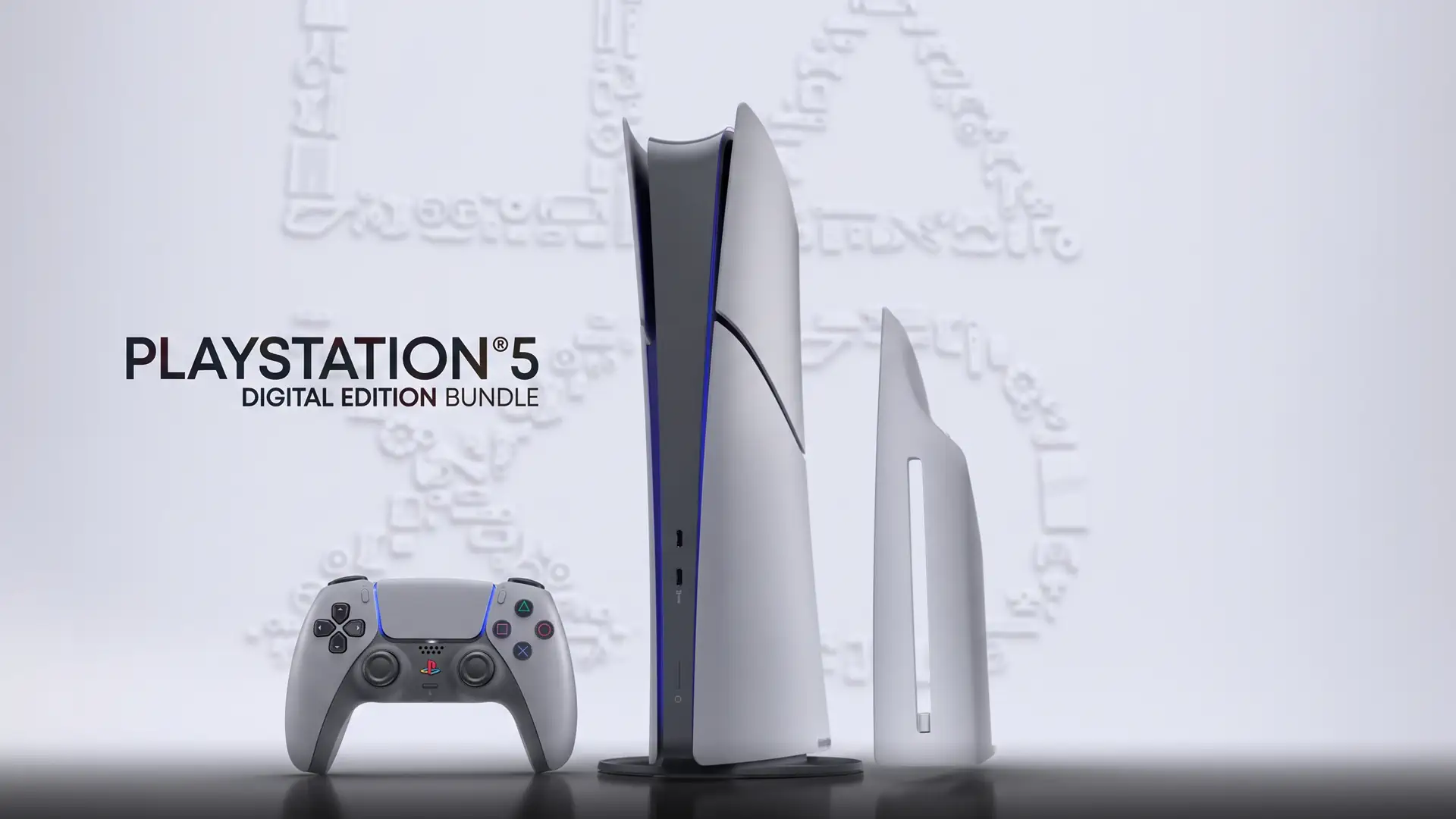
Sony has drawn a line in the sand. At an event unveiling the Japan-market PS5 Midnight Black edition, the company confirmed that disc-based video game production for the entire PlayStation ecosystem will cease in January 2028. After that date, every new release — first-party and third-party alike — ships exclusively through the PlayStation Store and certified digital platforms. No disc. No optical drive required.
This is not a gradual phase-out. It is a permanent stop. Sony framed it as final even as a player-led campaign called “NoDisc NoBuy” amassed signatures and protests for over three months. The answer from corporate came through clearly: the decision is locked.
The announcement itself was remarkably terse. Sony distributed a one-page notice to manufacturers and publishers detailing the cutoff, with no public relations push or celebratory keynote. That deliberate silence spoke louder than any marketing campaign could have. The company was not asking for permission. It was informing.
Backward Compatibility Holds — For Now
The one reassurance Sony offered is that existing physical libraries will continue to work. Games you bought on disc before the cutoff can still be installed and played on any console with an optical drive. PS4 and PS5 disc titles face no system-level blocking. The hardware will support them until the hardware itself is retired.
That is a significant distinction. Sony is not revoking ownership rights or bricking used games. But it is ending the creation of new physical product. Every title released after January 2028 will be digital-only, and that shift begins before the next console even ships.
Industry watchers noted that Sony’s legal team likely prepared for exactly this kind of backlash. The company’s public statements carefully avoided language that could be interpreted as retroactive — they are stopping future production, not voiding past transactions. Still, the practical effect is the same for anyone buying a brand-new game.
The PS6 Timing Is Not a Coincidence
Industry analysts reading between the lines see this as preparation work for the next PlayStation. The current generation is approaching its natural lifecycle end. A PS6 launch is widely expected in late 2027 or early 2028 — right around the same window when disc production stops.
Here is why the timing matters. Building a new console is expensive. Retooling factories, financing inventory, managing disc pressing, printing sleeves, and shipping retail copies across global supply chains all carry real costs. Eliminating that overhead frees up capital and floor space at a moment when Sony needs every advantage for the next platform launch.
Publishers benefit too. Physical distribution eats into margins through manufacturing, warehousing, freight, and retail cut. Selling direct through digital storefronts routes more revenue to the publisher and to Sony’s own platform fees. The economics shift meaningfully when there is no middleman holding a barcode scanner.
Second-order effects are already rippling outward. Several mid-tier publishers have quietly accelerated their digital-first strategies, restructuring distribution teams and phasing out physical logistics contracts ahead of the mandated cutoff. A few third-party studios are reporting that Sony has begun withholding certain manufacturing subsidies that previously offset disc production costs — effectively incentivizing the very transition Sony is mandating.
Who Wins and Who Loses
Winners: Sony and the major publishers, primarily. Platform revenue from digital sales is higher-margin. Inventory risk disappears. Release dates stop depending on whether a pressing plant in Europe had capacity. Retailers who rely on game sales as foot traffic face erosion, but they are not the primary audience here.
Losers: Consumers who do not have reliable broadband. Collectors and resellers lose the scarcity model that physical media supports. Secondary markets for limited editions, sealed copies, and vintage PlayStation games shrink as new releases abandon the format entirely. And anyone relying on lending, sharing, or reselling games will find the ecosystem progressively hostile to those habits.
The NoDisc NoBuy movement understood this last point acutely. Their slogan was blunt because the policy was blunt. Three months of campaigning did not change Sony’s posture, which suggests the company viewed consumer pushback as secondary to the strategic pivot.
Rural and developing-market gamers face a particularly sharp disadvantage. In regions where high-speed broadband remains inconsistent or prohibitively expensive, the forced migration to digital creates a de facto barrier to entry. A single 100-gigabyte PS6 title download can consume an entire month’s data allowance in parts of Southeast Asia and rural America. Sony has not publicly addressed these disparities, and the lack of comment is itself a statement.
What This Means for Game Ownership
There is a philosophical difference between owning a disc and licensing a download. A disc can be stored, resold, lent, or preserved without permission. A digital license lives and dies on Sony’s servers. The PS6 will almost certainly be designed around that assumption from day one.
Sony’s current guarantee that existing disc libraries remain functional is a bridge, not a permanent structure. Optical drives exist today because of backward compatibility obligations. The next console may not include one at all. If that happens, the transition from PS5 to PS6 becomes a transition from physical ownership to digital access — and there is no going back.
The implications extend beyond individual consumers. Libraries that circulate PlayStation games will lose their ability to add new titles. Community game archives that rely on physical media for preservation will face growing gaps in their collections. And indie developers who previously used physical copies as a tangibility differentiator will need to find new ways to establish presence on store shelves that are now purely virtual.
Subscription Services Become the Default
Perhaps the most consequential shift is how this accelerates the subscription economy. Sony already pushes players toward PS Plus tiers, and a discless future makes those subscriptions the only viable path to playing new releases. The margin compression that once made subscriptions a competing model to ownership now makes them the primary model.
Microsoft’s Xbox Game Pass has demonstrated the gravitational pull of subscription ecosystems. Sony’s January 2028 decision forces PlayStation players into the same dependency, whether they want to be there or not. The PS6 launch lineup will likely emphasize what subscribers get versus what owners get — and in a discless world, there is no owners’ pathway.
The Broader Industry Signal
Sony is the largest console manufacturer by revenue in the current generation. When it moves, competitors watch. Microsoft and Nintendo have already reduced physical emphasis, but Sony’s hard January 2028 deadline is the most definitive statement yet from any major platform holder. It signals that the industry’s cost structure for physical media is no longer sustainable at the scale these companies operate.
The PS6 will launch into a world where new games exist only as code you download. The shelf space in your living room becomes a router. That is not a minor shift. It is the architectural redesign of a $200-billion ecosystem.
Third-party platform holders will face pressure to align. Any remaining hesitation about digital transition evaporates when the market leader removes the alternative entirely. We should expect Microsoft to follow with its own timeline, and Nintendo — long the stubborn defender of cartridges — to quietly begin its own phased exit.
What Happens Next
The immediate impact is limited — games released before January 2028 will still ship on disc, and the PS5 will continue selling through retail channels. But the signal is irreversible. Every developer pitching a PS6 title is now building for a digital-only environment. Every retailer adjusting their order quantities knows the writing is on the wall.
Sony’s next hardware announcement will likely confirm that the PS6 drops with no disc drive option. The disc era of PlayStation ends not with a bang but with a calendar date and a manufacturing shutdown notice. The question is no longer whether physical media dies — it is how quickly the industry stops pretending it still matters.
For consumers, the transition will feel incremental at first. A few more digital-only releases each quarter. A slowly thinning presence of discs on retail shelves. Then, come January 2028, the tap shuts off completely. By the time the PS6 arrives, there will be nothing to compare it to — no hybrid generation, no nostalgic fallback, no argument left to make.