Koreas Prosecutor General Showdown: Can Jeong Step Out of Lees Shadow
South Koreas acting prosecutor general faces his first major test: can he navigate the politically charged landscape of the prosecutorial overhaul while maintaining independence? Jeong Hyeon's上任 comes amid growing speculation about his relationship with President Lee Jae-myung and the future of the restructured justice system.
The Weight of the Prosecutors Hat
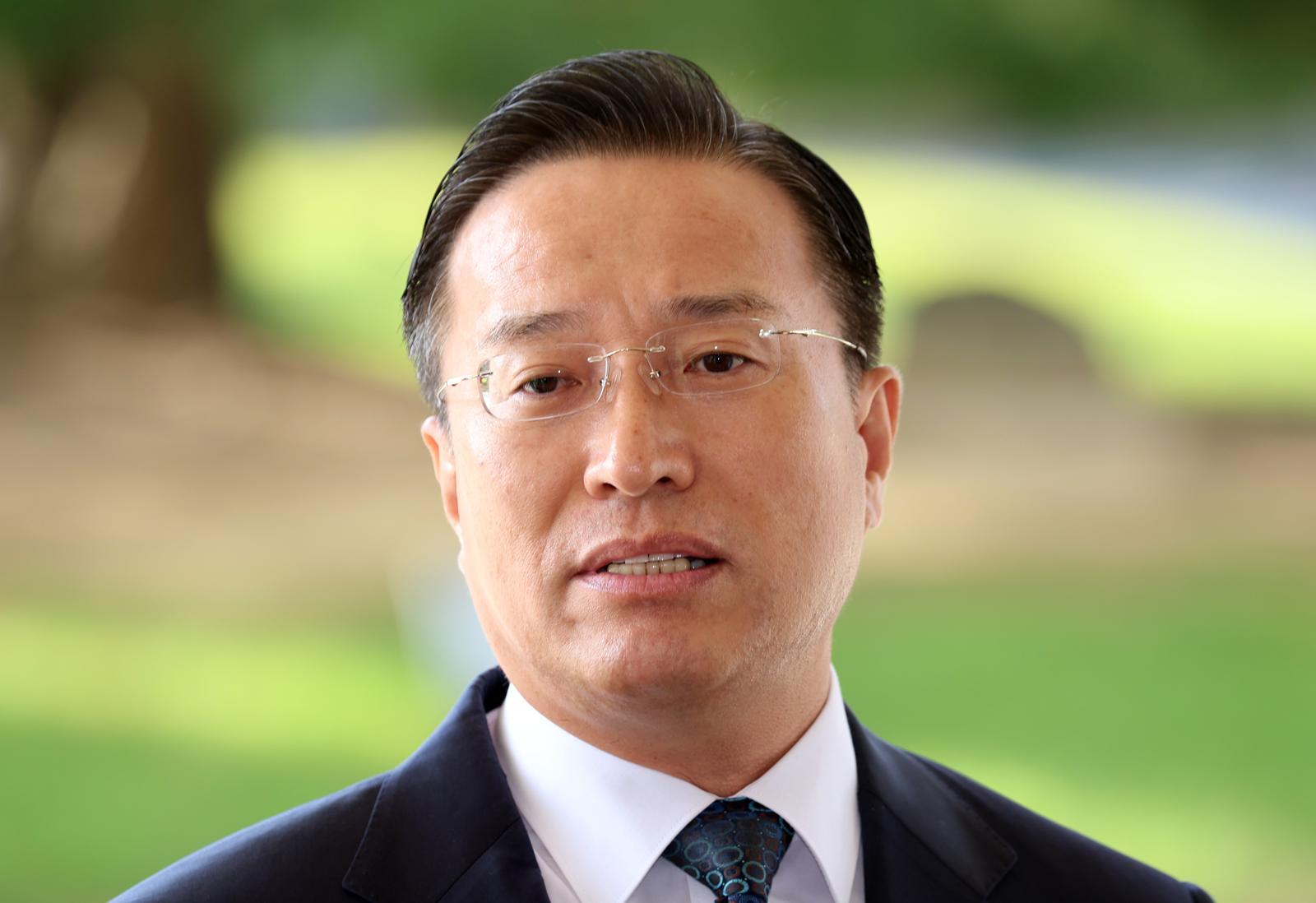
Jeong Hyeon arrived at the Supreme Prosecutors Office in Seocho-gu, Seoul on September 23rd with more than just paperwork to carry. As acting prosecutor general following the resignation of former chief Goo Ja-hyeon two months prior, he now holds the fate of some of South Koreas most politically charged cases in his hands. The building itself — a brutalist complex overlooking the Han River — has become something of a symbol in this moment, its reinforced concrete walls seeming to house a judiciary perpetually on the defensive.
The timing couldn’t be worse for institutional credibility. With President Lee Jae-myung facing multiple investigations spanning land deals, campaign finance, and what some call political persecution, every move by the top prosecutor is being read through a partisan lens. Senior officials within the prosecution service have reportedly been fielding calls from opposition researchers looking for angles, while presidential aide offices circulate internal memos about “managing public perception” — language that prosecutors have learned to recognize as a warning shot.
A Pattern of Controversy
Jeong hasn’t exactly been shy about his opinions. In April, during a National Assembly hearing on alleged political prosecution during the Yoon Suk-yeol administration, he publicly criticized the investigation into the Ssangbangwool north Korea remittance case as “seriously flawed.” His language was precise and damning. Behind the scenes, colleagues said he’d rehearsed his remarks, knowing the hearing would be televised and that his words would be parsed for months.
Now, as acting chief, he’s repeating similar concerns about the investigation’s scope. “There are aspects that don’t align with our standards,” he told reporters on Monday morning, calling for “restrained investigation” and “dignified return of evidence.” Reporters noted he avoided eye contact with cameras positioned near the Blue House liaison office — a detail opposition commentators seized on as evidence he was being coached.
Opposition lawmakers immediately branded this a setup for dismissing charges against President Lee. Yoon So-hi, a prominent Democratic Party strategist, called the comments “a roadmap for evasion” in a widely shared statement. The Prosecutorial Human Rights Future Committee, which Jeong referenced when discussing ongoing reviews, is examining 19 cases for human rights violations during previous investigations. Eight involve President Lee directly, including the Ssangbangwool, Daejang-dong, and Wirae New Town cases.
What makes these committee reviews significant is their potential precedent value. If the committee establishes that evidence was obtained through coercive interrogation or that search warrants were improperly executed in these high-profile cases, the precedent could extend beyond President Lee’s cases to affect dozens of investigations conducted under the previous administration. Defense attorneys across the country have already begun citing Jeong’s public statements in motions to suppress evidence.
The Independence Question
This isn’t about one prosecutor or one president. It’s about whether South Koreas investigative institutions can survive political transitions without becoming weapons — or prey.
When Jeong mentioned the overwhelming caseloads at Suwon High Prosecutors Office — 240 to 270 cases per room with severely understaffed personnel — he was describing an institution under stress. But the deeper problem is political pressure, not workload. Three senior prosecutors at Suwon reportedly requested transfers last month, citing “unmanageable external interference” in case assignments. Two have since been reassigned to regional offices in less politically sensitive provinces.
Critics argue that the committee review process, now under Jeongs oversight, could become a mechanism to invalidate legitimate investigations through procedural technicalities rather than substantive findings. Legal scholar Park Min-ji at Seoul National University has warned that “procedural review without clear standards risks becoming a backdoor appeal process” — effectively allowing politically connected defendants to escape scrutiny through administrative maneuvering.
Supporters counter that past investigations were indeed conducted with political motives, not legal rigor. Former prosecutor Kim Byung-rok, who oversaw the initial Ssangbangwool investigation, testified before the committee last week that witnesses were “approached with implicit threats regarding career advancement” — allegations that, if proven, would suggest systemic abuse rather than isolated incidents.
The October Transition
Here’s what makes this moment critical for Korea’s judicial architecture: Jeong is now positioned as a leading candidate for permanent prosecutor general when the new Prosecutorial Prosecution Office launches October 2nd. This isn’t a ceremonial appointment. The transition involves merging three separate investigative bodies — the Supreme Prosecutors Office, the Korea Intelligence Service’s criminal division, and portions of the Police Organization — into a single authority with unprecedented reach over corruption, organized crime, and crimes against state security.
The restructured office will have expanded authority over major criminal cases but also faces intense political scrutiny. Every decision Jeong makes during this transition period will shape how that institution is perceived — as independent or as an extension of presidential power. Sources within the Ministry of Justice indicate that White House advisors have privately suggested Jeong should “demonstrate neutrality” before the October appointment, language that many within the prosecution service interpreted as coded direction to ease investigations into the president.
The Ministry of Justice recently announced a reduction in prosecutor positions, a move Jeong has privately questioned given current staffing crises. Internal documents obtained by media outlets show that the proposed cuts would eliminate approximately 120 prosecution roles over the next fiscal year — positions that Jeong’s own staff has flagged as essential for maintaining case processing capacity. If he becomes permanent chief, he’ll need to reconcile his public criticism of the cuts with operational realities, or risk appearing inconsistent to both reform advocates and bureaucratic traditionalists.
A second-order consequence of these cuts is already visible: junior prosecutors are beginning to hoard case files rather than delegate, creating bottlenecks that slow even routine proceedings. One senior investigator at the Seoul Central District Prosecutors Office described a file-sharing system that has become “so congested that we’re losing track of evidence chain documentation” — a problem that compounds the political exposure each case carries.
What Wins and Loses
If Jeong pushes for dismissals based on the committee review, he’ll consolidate support from President Lees political allies but destroy remaining bipartisan trust in prosecutorial neutrality. The opposition will frame it as successful political prosecution through reverse optics — the same accusations leveled against Yoon Suk-yeol’s prosecution of Lee’s allies will be turned back on him. Exit polls from the National Assembly hearing in April showed that 68 percent of citizens viewed the prosecution service as “politically compromised” regardless of party affiliation, a figure that would likely worsen.
If he maintains the investigations, he risks appearing subservient to the president he’s accused of being close to. Jeong’s proximity to Lee has been a running subject of press speculation since before his acting appointment — they attended the same university, and Jeong served as legal counsel for Lee’s 2022 presidential campaign. That relationship, whether or not it influenced his recent statements, has become a liability regardless of how he acts.
The real question isn’t whether Jeong can stay independent — it’s whether the system allows him to try. With the new Prosecutorial Prosecution Office reshaping accountability structures, we may soon learn whether South Koreas judiciary can escape the cycle of political retribution that has defined it for decades. The institution stands at a threshold: pass through it with integrity, and it may emerge as a genuine check on power; stumble, and the next administration will inherit a tool refined for its own purposes. Jeong’s decisions in the coming weeks will determine which path Korea’s prosecutorial system follows — and whether the office that has made and unmade presidencies for generations can finally become something other than a political weapon.
For now, the prosecutors at Suwon keep processing cases, the committee keeps reviewing precedents, and Seoul keeps watching to see which way the wind blows.