Koreas Prosecutorial Purge and What It Means for East Asia
South Korea is cutting its special prosecution investigative staff by half and renaming oversight bodies, a sweeping power shift that could reshape how corruption cases are pursued across the region.
The Numbers Behind the Rebrand
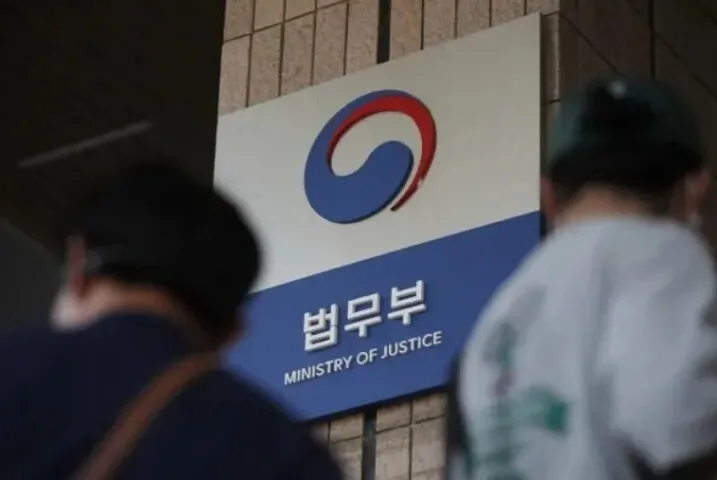
South Korea’s Justice Ministry is moving to slash the number of investigators attached to its special prosecution offices by more than half — from 4,284 down to 2,133. Prosecutors and drug enforcement officers, currently classified separately, will be folded into a new “criminal justice officer” category, and their authorized headcount will drop from 2,986 to 1,471, a cut of 50.7 percent.
That is not a trimming exercise. It is a structural demolition of the investigatory capacity that has, for decades, made Korea’s special prosecution offices among the most feared investigative bodies in East Asia.
The ministry says each prosecutor’s office will retain at least one criminal justice officer, tasked with guiding police, reviewing case files, and filling the gap left by the abolition of the supplementary investigation right that prosecutors previously held. In practice, that means the special prosecution offices will shift from being frontline investigators to being supervisory overseers — a role that sounds powerful on paper and operates very differently in practice.
About 130 current prosecutors are expected to be cut, including roughly 90 incoming special investigation department appointees. The ministry maintains a roughly 10 percent vacancy buffer for administrative flexibility, but halving the investigative staff overnight will test whether that cushion holds.
Legal scholars and former prosecutors have flagged a particular concern: the transition will leave many offices operating with skeleton crews during a period when high-profile corruption cases are already underway. The special investigation departments have been responsible for prosecuting some of the most consequential cases in recent Korean history — including the downfall of former President Park Geun-hye — and their abrupt downsizing raises the question of whether active cases will be left unstaffed or reassigned to general prosecutors who lack the specialized expertise to handle them.
Renaming as Strategy
Perhaps more telling than the headcount cuts is what the government is doing with names. President Lee Jae-myung directed the ministry to rebrand the “Judicial Control Department” (강원통제부) to the “Non-Indictment Case Review Department” (빌속치 사건 신사부).
The ministry’s explanation is procedural: the department reviews cases where police have declined to prosecute, checking for procedural flaws or investigative negligence. But the old name carried weight. “Judicial Control” sounded like a check on judicial power — or, depending on who you asked, a weapon against it. The new name narrows the mandate to a single function: reviewing non-indictment decisions.
Lee had reportedly called the old name “looking like a remnant of the investigation department,” signaling his intent to drain the bureaucracy of its prosecutorial identity. Renaming is never just about semantics in Korean politics. It is about drawing lines around what an institution is allowed to see and investigate.
The rebranding effort extends beyond this single department. Justice Ministry insiders report that additional units are being quietly reassigned or dissolved under the new organizational framework — though the ministry has not published a comprehensive list of which offices fall outside the revised structure. Analysts at the Korea Institute for Criminal Justice and Policing have noted that the renaming campaign mirrors a broader administrative strategy to reduce the visibility and self-perception of prosecutorial authority, making it easier for future executives to ignore institutional pushback.
Who Wins, Who Loses
The clear winner is the executive branch. By reducing the special prosecution offices to supervisory roles and stripping their investigative teeth, the presidency gains a structural advantage in any future corruption case involving political figures. The supplementary investigation right — once the mechanism that allowed prosecutors to dig deeper when police stalled — is gone. Without it, the special prosecution offices can only guide and advise, not compel.
The losers are easier to identify but harder to quantify. Criminal justice officers now report to a system that has explicitly shrunk their mandate. Senior prosecutors who built careers in the special investigation departments face early exits or reassignment. And citizens who relied on Korea’s prosecutorial apparatus as a check on corporate and political misconduct — a role that produced some of East Asia’s most high-profile convictions — now inherit an institution that has been deliberately hollowed out.
There is also a regional dimension. Korea’s special prosecution offices have long been cited as model institutions in the region precisely because they operated with a degree of independence from both the police and the executive. Taiwan’s anti-corruption framework, Japan’s Public Prosecutors Office reforms, and even Hong Kong’s former Independent Commission Against Corruption all drew inspiration from Korea’s prosecutorial tradition. Shrinking that model sends a signal that the region’s most potent anti-corruption mechanism is no longer a reference point.
Former special prosecutors who spoke on condition of anonymity described the mood within the investigative departments as demoralized. “We spent years building institutional knowledge — forensic accounting teams, witness protection protocols, covert surveillance capabilities — and now we’re being told those functions no longer exist,” said one senior investigator with fifteen years of service. “The question is whether the remaining staff can compensate for what we’ve lost, or whether cases will simply go nowhere.”
Second-Order Effects
The structural changes will produce consequences that extend well beyond the immediate reorganization. One notable effect is likely to appear in the policing sector: with the special prosecution offices no longer able to conduct independent investigations, police forces will face fewer external checks on their investigative discretion. Prosecutorial reviewers can flag procedural errors or request file revisions, but they cannot compel independent evidence-gathering. Legal observers warn this could create a low-level permissiveness that compounds over time — officers who learn that their decisions face review rather than reinvestigation may adjust their behavior accordingly.
A second effect concerns the pipeline of political accountability. Korea’s special prosecution offices have historically served as a de facto check on executive ambition. Former presidents and senior cabinet members have been investigated and prosecuted through these channels, creating a deterrent effect that has shaped Korean political culture since the democratic transition. With that mechanism diminished, political actors who previously calibrated their behavior around the risk of prosecutorial scrutiny may recalibrate — potentially leading to bolder exercises of executive power in areas that were previously kept in check.
A third effect is reputational. International anti-corruption organizations, including Transparency International and the OECD Anti-Bribery Convention monitoring process, have praised Korea’s prosecutorial independence as a regional benchmark. The reforms risk placing Korea under increased scrutiny from those bodies, particularly if high-profile cases of non-prosecution begin to accumulate without independent challenge.
What Happens Next
The immediate concern is operational. With investigative staff halved and the supplementary investigation right abolished, the special prosecution offices will need to demonstrate that oversight without investigation is enough to deter police misconduct or prosecutorial laziness. Early evidence will matter. If high-profile cases of police non-prosecution go unchallenged, the new system will look like cover. If it produces results, it will look like reform.
The timing is also significant. The reforms were initiated under the previous administration but are now being refined under President Lee’s direction. That continuity between administrations suggests the power shift is not a partisan project but a structural one — a deliberate reordering of the balance between Korea’s executive and its prosecutorial establishment. Whatever party holds the Blue House, the special prosecution offices will enter this cycle weaker than they left the last one.
Legislative opposition has been minimal but not absent. Some lawmakers from opposition parties have raised concerns about the pace of implementation and the lack of detailed transition plans, but no successful legislative challenge has emerged. The ruling coalition’s parliamentary majority has ensured that the reforms proceed through administrative channels rather than requiring new legislation — a procedural choice that has drawn criticism from constitutional law scholars who argue that structural changes of this magnitude deserve legislative debate.
For the rest of East Asia, the implications extend beyond Korea’s borders. The region lacks robust institutional mechanisms for holding political and corporate elites accountable. Korea’s prosecutorial tradition was one of the few counterweights. Watching it shrink is not just a domestic story. It is a regional one.
The longer-term test will come within the next two to three years, when the first major corruption case involving a sitting or former government official reaches the investigative stage under the new system. How that case is handled — whether it results in meaningful scrutiny or stalls in procedural limbo — will define whether South Korea’s prosecutorial overhaul is remembered as a necessary modernization or a calculated weakening of institutional accountability.