Trump's Casual Threat to Let Iran Strike US Cities Rewrites Deterrence
Donald Trump's suggestion that Iran could 'take out' Los Angeles and San Diego isn't just a gaffe — it's a fundamental rewriting of American deterrence doctrine. California leaders are calling it dangerous; defense experts see something stranger.
The Rhetoric That Changes the Rules
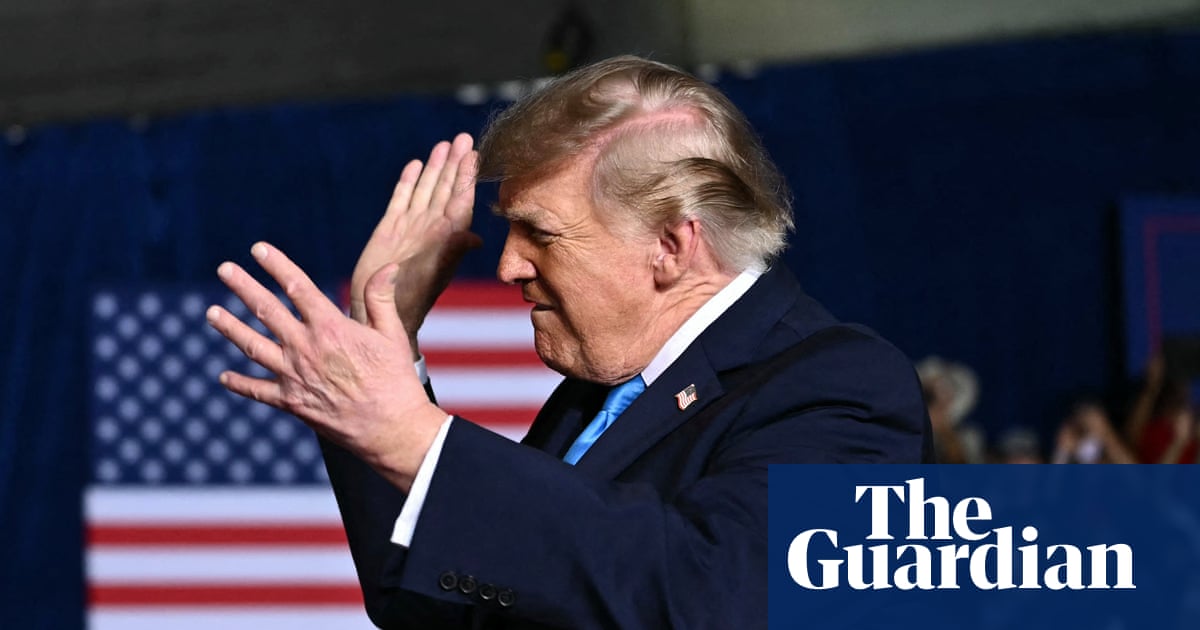
Donald Trump stood in Grand Island, Nebraska, on a Monday night in October 2026, surrounded by a ruby-red crowd, and said something that had no business coming from the office of the President of the United States: Iran could take out Los Angeles. They could also take out San Diego. He called it a small price to pay.
The applause was immediate. The condemnation, equally immediate — but Trump’s comments crossed a line that has no precedent in modern American presidential history. This wasn’t a veiled threat against an adversary. This was a sitting president casually suggesting that a foreign power could strike American cities and framing civilian casualties as acceptable collateral.
The implications extend far beyond the political shockwaves rippling through California. They reach into the architecture of nuclear deterrence itself — an architecture that has held, however tenuously, for over eight decades.
What Trump Actually Said
During what The Guardian describes as a nearly hour-and-a-half rambling speech, Trump was ostensibly discussing the war with Iran and its economic consequences. High gas prices, he acknowledged, were painful. Then he pivoted.
“They can take out a city,” Trump said. “Let them take out Los Angeles. Let them take out San Diego.” He added: “It’ll be over very soon.”
The phrase “small price to pay” was used earlier in the same speech to describe the economic costs of the conflict. Conservative activists later argued Trump was referring to gas prices when he used that language — not the capacity of Iran to strike US soil. But the White House offered no clarification, no correction, no damage control.
That silence is itself significant. A normal White House response would have been an immediate rebuke. The fact that there was none suggests either the comments were deliberate or the apparatus around Trump is too fractured to respond.
The California Response
The reaction from California was swift and fierce. Governor Gavin Newsom called Trump “deranged and dangerous” on X, framing the comments as an advocacy for attack on more than 10 million residents. Los Angeles Mayor Karen Bass called the remarks “irresponsible threats” that could “compromise” the safety of America’s second-largest city. San Diego Mayor Todd Gloria delivered the sharpest line: “We are not collateral damage. We are not expendable.”
Gloria’s response cut to the core of what made Trump’s comments so destabilizing. By suggesting San Diego — home to critical US military infrastructure and the nation’s eighth-largest city — was a potential target, Trump effectively reduced 1.4 million residents to bargaining chips in a war he insisted would be “over very soon.”
Xavier Becerra, the Democratic gubernatorial nominee, put the numbers in blunt terms: “Thirteen million Californians call LA and San Diego counties home. Their lives are not a small price to pay or a punchline.”
The political calculus here is layered. Newsom, who has feuded with Trump across two presidential terms, sees a direct threat to his national ambitions. Becerra is looking to build on that conflict. Steve Hilton, Trump’s endorsed Republican candidate for governor, is polling far behind in a state Trump has treated as hostile territory throughout his presidency. The comments may well cost Hilton more votes than they gain in Nebraska.
The Deterrence Problem
Here is what the political outrage misses: Trump’s comments represent something structurally new in American strategic communication.
Deterrence theory rests on a simple logic — you convince an adversary that the cost of an attack will exceed any possible benefit. That conviction depends on credible signals. When a president suggests that American cities are acceptable targets, he doesn’t just weaken deterrence against the United States. He weakens the foundational logic that has kept major powers from launching existential strikes on each other since 1945.
US defense officials have publicly stated that Iran currently lacks the capability to launch a direct missile attack on the US mainland. That assessment hasn’t changed because of Trump’s rhetoric. But rhetoric shapes perception, and perception shapes behavior. If Iran’s leadership hears its president’s stated adversary casually endorsing attacks on American cities, the calculation shifts — not necessarily toward immediate action, but toward accelerated investment in exactly the capabilities Trump claims don’t exist.
NATO allies will hear this too. Article 5’s collective defense guarantee rests on the assumption that an attack on one is an attack on all — an assumption that becomes harder to sustain when the American president appears to treat American soil as negotiable. European capitals are already watching Trump’s Iran policy with discomfort. This comment makes that discomfort structural.
The Intelligence Question
There is a darker layer to these remarks that few have addressed publicly. Trump’s comments raise the possibility that he disclosed or alluded to specific intelligence about Iranian targeting capabilities — information that, if real, would be a breach of the highest order. If Iran does possess the latent capacity to strike US cities through intermediate means (proxy networks, maritime routes, covert delivery systems), then public acknowledgment of that capability by the US president is effectively a briefing to the Iranian government.
Whether Trump knew what he was referencing is impossible to determine from the available record. His speaking style — elliptical, improvisational, often associative — makes it difficult to parse whether he was making a crude joke, referencing classified assessment, or something else entirely. But the ambiguity itself is the danger. In an era where strategic ambiguity has been a feature of nuclear deterrence, Trump’s explicit casualness removes the ambiguity without adding clarity.
What Comes Next
The midterms are six weeks away. Trump is framing the Iran conflict as a political asset — a demonstration of strength that he believes will drive turnout in red states. In Nebraska, where an unexpectedly close Senate race has rattled Republicans, he urged supporters to pretend his name was on the ballot. The strategy assumes that voters outside California will read these comments as strength rather than recklessness.
That assumption may be right for some voters. But it cannot be right for everyone — particularly not for the 13 million Californians Trump effectively designated as expendable. The political cost in California alone could reshape the Senate balance if it mobilizes suburban voters who have stayed home in midterms past.
On the strategic side, the question is whether allies begin treating Trump’s rhetoric as the actual position or as noise to be filtered out. The latter option preserves short-term cohesion but creates long-term unpredictability. The former creates a new doctrine in which American security guarantees are conditional on a president’s即兴 moment rather than institutional commitment.
Neither outcome serves American interests. The first erodes alliance trust. The second replaces institutional deterrence with personality-based gamble. Both are risks Trump seems willing to accept — or perhaps both are risks he doesn’t fully comprehend.
What is clear is that the norm against presidential rhetoric of this character has been broken. Whether it can be reconstituted — and whether the consequences of its absence will materialize in conflict or in collapse — remains to be seen. What is certain is that the world now has a sitting American president who has publicly suggested that Los Angeles and San Diego are fair game.
No amount of conservative reinterpretation about gas prices will undo that.