KOSPI Trading Volumes Collapse as Volatility Fades, Leaving Market Starved for Direction
KOSPI daily trading volume has shrunk to a quarter of its March peak as extreme volatility subsides, raising questions about whether the market has found stability or simply lost its speculative engine.
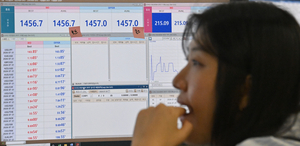
The Calm After the Storm Is Its Own Problem
The Korean stock market is quiet. Not the hopeful kind of quiet that precedes a breakout, but the hollow quiet of a crowd that has散去, left standing on an empty trading floor wondering where everyone went.
Daily trading value on the KOSPI has collapsed to roughly 26 trillion won as of late August, less than half the 50 trillion won pace that defined May and June. Trading volume tells an even starker story: daily averages have shrunk from 1.1 billion shares in March to around 300 million shares this month — a quarter of what they were five months ago.
The market that roared through history this year has simply stopped having reasons to roar again.
A Market That Lived on Panic
To understand why the numbers matter, you have to remember what just happened. The KOSPI surged to an all-time intraday high of 9,385.59 on June 19, catching investors off guard and fuelling speculation that the index would breach 10,000 — the so-called “man spi” — within weeks.
That fantasy unraveled fast. A combination of a global semiconductor selloff and exhaustion after the parabolic climb sent the KOSPI plunging to 5,262.77 on July 29. In a little over a month, the index wiped out more than 40 percent of its gains. Fear became the dominant asset class.
And fear, as it turns out, is a fantastic driver of trading volume. When stocks move violently in either direction, leverage products attract desperate capital. Short-term speculators flood in chasing the next 10 percent swing. Circuit breakers fire, panic sells trigger, and volume surges as a result.
It worked in reverse too. The sidecar mechanism — a temporary trading halt triggered when a single stock drops sharply — fired 10 times in June and 15 times in July. Of the 49 sidecar activations recorded so far this year, 25 landed in those two months alone. The nationwide circuit breaker, which halts trading across the entire KOSPI when it drops 8 percent or more in a minute, fired three times in June and four times in July.
August has seen only five sidecar activations and zero nationwide circuit breakers. The panic has effectively evaporated.
The Comfort Problem
Volatility and trading volume are not just correlated — they are structurally linked in Korea’s market ecosystem. The country’s popular single-stock leverage products concentrate buying power into individual names, amplifying moves and drawing in retail traders chasing asymmetric returns. When regulation tightened on those products, the volume evaporated with them, according to one industry source.
What this means in practice is simple: the market had been running on a speculative fuel mix of leverage, panic, and momentum. Those fuels are gone. The KOSPI bounced from its July lows and briefly reclaimed the 7,000 level on August 18, but it has not been able to hold above that threshold on a closing basis since August 23, when it closed at 7,096.89.
The index is range-bound, directionless, and critically, uninteresting to the kind of traders who generate liquidity.
This is the uncomfortable truth behind the market’s apparent stabilization. Lower volatility should be a good thing — it means less risk, more predictability, a healthier environment for long-term investors. But Korea’s market has not transitioned to a mature, fundamentals-driven equilibrium. It has transitioned to a wait-and-see limbo.
Who Wins, Who Loses
Long-term institutional investors quietly prefer calm markets. Pension funds, insurance companies, and foreign portfolios that allocate on valuation metrics rather than technical triggers benefit when stocks do not swing wildly from session to session. For them, the August numbers are a relief.
Brokerages and day-trading platforms are feeling the opposite pressure. Commission revenue tracks activity, not just assets under management. When daily turnover falls by 70 percent from its peak, the intermediaries who profit from churn see their margins compress immediately.
Retail speculators are the hardest group to categorize. Some have exited entirely, burned by the violent whipsaw of June through August. Others remain but have shifted to quieter strategies — dividend plays, ETF accumulation, or simply watching from the sidelines. The leveraged-product crowd has been largely squeezed out by regulatory changes and the disappearance of the volatility they relied on.
Foreign investors occupy a middle ground. Many are patient enough to endure low-volume periods, but the lack of directional clarity makes it difficult to justify adding positions. Korea remains a small share of global emerging-market allocations, and without a compelling narrative — earnings acceleration, currency tailwinds, policy catalysts — there is little incentive to commit meaningful capital.
What Comes Next
The market needs a new catalyst. Without one, the current equilibrium is fragile: not volatile enough to excite speculators, but not stable enough to convince patient capital to commit at scale.
Several paths are possible. A sustained recovery in global semiconductor demand could reignite the KOSPI’s largest-weighted sector and draw foreign money back in. Corporate earnings reports over the coming quarters will be closely watched for signs of margin recovery. Policy intervention — whether through tax incentives, trading-rule adjustments, or direct market support — could also shift the calculus.
But none of these are guaranteed. The source cited by market participants is blunt: the market needs new money to gain traction again.
The collapse in trading volume is not a crisis. It is a signal. The speculative fever that drove the KOSPI to its June high and then to its July low has broken. What replaces it — whether a durable recovery built on fundamentals or a prolonged period of stagnation — will depend on factors far beyond the trading floor.
For now, the market is breathing easier. But breathing alone does not win a race.