The Last Walk Through Shibuya Seibu Before It Vanishes
Shibuya Seibu closes its doors after 62 years, marking the end of an era for one of Tokyo's most iconic department stores. What the farewell visit reveals about Japan's retail transformation.
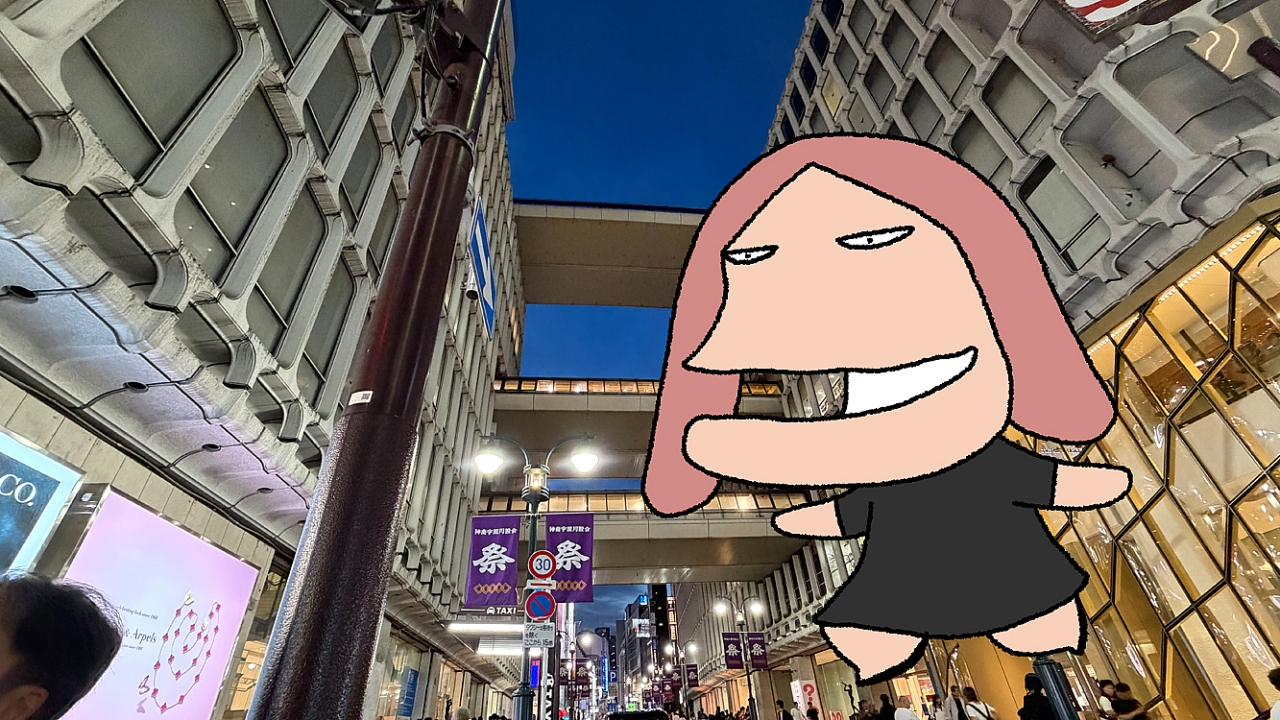
A Goodbye That Hurts
On September 30, 2026, Shibuya Seibu will close its doors for the last time. The department store has been a fixture in one of Tokyo’s most recognizable intersections since 1964, surviving economic bubbles, shifting consumer habits, and the relentless redevelopment that has redrawn Shibuya’s skyline around it. When illustrator Betsuyaku Rei decided to pay one final visit, the gesture was almost ritualistic — going to a place before it disappears, crossing the sky bridge that once connected it to the station, and remembering what made it matter.
The article, published as the first part of a two-part series, is deceptively simple. There are no grand economic statistics or policy analysis here. Just a person walking through a building that is about to cease existing, buying a few things, and trying to capture something before it’s gone. But this is precisely where the story lives.
What makes the visit noteworthy is not merely the subject but the sensibility behind it. Betsuyaku is known for his particular interests — skulls, hairless animals, the quietly macabre corners of Japanese pop culture — and yet here he is, moving through a department store with a tenderness that might surprise those who only know his work from a distance. The contrast is telling. It suggests that even the most idiosyncratic observers in Japanese culture feel the weight of these closures, that the erosion of physical retail space registers on people regardless of their aesthetic inclinations.
The store has been marking its departure with a series of sale events that draw crowds not only from bargain hunters but from people who simply want to be inside the building one more time. Staff members have been quietly preparing for the end, some of them having worked there for decades. The atmosphere, as described by visitors, carries a peculiar quality — a mix of commercial urgency and communal mourning, the two emotions feeding off each other in ways that are difficult to articulate until you are standing in the middle of it.
The Department Store as Cultural Artifact
Japanese department stores, or depachika, have always been more than retail spaces. They are cultural institutions — curated environments where food, fashion, and craft converge under one roof. The basement food halls alone are considered must-visit experiences, each floor organized by category with the precision of a museum exhibition. For decades, Shibuya Seibu occupied a particular niche: slightly less polished than its counterparts in Ginza, more approachable, rooted in the everyday rhythm of a neighborhood that was itself becoming one of the world’s most visited urban destinations.
Its closure is not an isolated event. It is part of a broader restructuring of Japanese retail that has been accelerating for years. Major department store groups — Mitsukoshi, Isetan, Takashimaya — have been consolidating, closing underperforming locations, and repositioning themselves as luxury destinations rather than general merchandise providers. The rise of e-commerce, changing generational attitudes toward consumption, and the sheer cost of maintaining historic buildings in central Tokyo have made many older department stores economically unviable.
But the numbers only tell part of the story. The deeper effect is cultural. Department stores in Japan have functioned as informal community centers, as reference points for the rhythms of the year — the spring sales, the midsummer cooling goods promotions, the autumn gift season, the year-end clearance. They were places where families went to browse without the pressure to buy, where young people on their first dates might stroll the upper floors, where elderly residents took the train from distant neighborhoods specifically to window-shop in climate-controlled comfort. Their disappearance leaves a social vacuum that shopping malls and online retailers do not easily fill.
What makes Shibuya Seibu notable is its longevity. Sixty-two years is a considerable lifespan for a retail establishment in a city that reinvents itself with alarming speed. The building stood through the bubble economy’s collapse, the rise of convenience store culture, and the gradual hollowing out of downtown shopping streets (shotengai) across Japan. Its closure marks the end of a specific chapter in Tokyo’s commercial history — one where a single department store could serve as the anchor of a neighborhood’s identity.
The building itself, designed by the architect Kenzō Tange’s office, was a product of its era — functionalist modernism adapted to the Japanese urban context. Its concrete façade, once celebrated for its boldness, now reads to many as a relic of a different aesthetic sensibility. Whether the structure will be demolished or preserved as part of a larger development remains uncertain, adding another layer of ambiguity to an already unresolved story.
The Sky Bridge as Symbol
Betsuyaku’s mention of crossing the connecting passage to the station is telling. These sky bridges are a peculiarly Japanese urban feature — enclosed walkways that link department stores to transit hubs, creating climate-controlled corridors through which shoppers can flow directly from train to store to home. They represent a specific era of urban planning, one that prioritized the car-free, rain-proof consumer journey. As department stores close or transform, these bridges often become redundant, their purpose defeated by the very closures they were designed to serve.
For an international audience accustomed to open-air shopping districts or mall-based retail, the sky bridge is an unfamiliar concept that reveals something about Japanese urban design: the importance of weather-resistant pedestrian infrastructure, the integration of transit and commerce, and the particular way Japanese cities have absorbed the department store into the daily commute. The bridge was not merely a convenience; it was a statement about the department store’s role as a civic infrastructure, woven into the skeleton of the city itself.
Those who used the bridge daily likely never stopped to consider what they were walking through. Now, with the store’s closure imminent, the passage takes on a new meaning — it becomes a threshold, a liminal space between what was and what will be. Visitors have reported a strange sense of solemnity when crossing it for the last time, as though the act of traversal itself is a form of farewell.
What the Farewell Visit Reveals
The fact that Betsuyaku, a creator known for his interests in skulls and hairless animals, felt compelled to visit before it closed speaks to something larger. This is not merely nostalgia for a retail chain. It is a recognition that certain physical places carry communal memory — that when they disappear, something irrecoverable is lost.
The second part of the article, promised but not yet published at the time of this writing, will reportedly detail what he bought. In the tradition of the farewell visit, the purchases themselves become artifacts — small physical remnants of a place that will soon be either demolished or repurposed. What people choose to take with them when a landmark closes reveals as much as the building itself.
There is also the question of how these visits get mediated and shared. Betsuyaku’s article exists within a ecosystem of social media posts, photographic essays, and personal reflections that together form a kind of unofficial archive. When a department store like Shibuya Seibu closes, the digital record often outlasts the physical structure. Images circulated on Twitter and Instagram, videos uploaded to YouTube, personal blogs documenting the final weeks — these fragments constitute a grassroots preservation effort that operates alongside, and sometimes ahead of, any official documentation.
The emotional resonance of the closure extends beyond Japan’s borders as well. International visitors who had come to rely on Shibuya Seibu as a waypoint in their own understanding of Tokyo have expressed genuine distress at its disappearance. For some, the store represented a version of Japan that felt authentic and accessible — less curated than the tourist corridors of Aoyama or Omotesando, more honest in its quotidian character. Its loss feels, to them, like the erosion of a cultural touchstone they depended on to navigate a foreign city.
The Bigger Picture
Shibuya Seibu’s closure is a reminder that Japan’s retail landscape is in transition. The department store model, built in the postwar era and refined through the bubble years, is being squeezed from both sides — by modern retail formats on one end and by economic pressures on the other. For foreign visitors and expatriates who have come to rely on these stores as touchstones of familiarity in a rapidly changing city, their disappearance can feel personal.
But it is also worth noting that new retail forms are emerging in their place. Shibuya itself continues to evolve, with new developments like the Shibuya Sakura Stage and other mixed-use projects replacing older structures. These projects promise greater density, improved accessibility, and integrated mixed-use environments that combine retail, residential, and cultural spaces. The question is whether these new spaces can fulfill the same cultural and social functions that department stores have historically served — or whether something essential is being traded away in the name of progress.
The answer may depend on what we consider essential. Department stores were never neutral spaces. They encoded hierarchies of taste, reinforced class distinctions through their pricing and curation, and operated within a commercial logic that always prioritized the bottom line. Their decline is not solely a loss; it is also an opening. The question is whether the replacements will be more inclusive, more adaptable, and more genuinely responsive to the needs of the communities they serve.
There is also the practical consideration of what happens to the buildings themselves. Tokyo has a long history of demolishing functional structures to make way for new development, and Shibuya Seibu’s fate will likely follow that pattern. But demolition is not the end of a building’s story. Architectural salvage, museum acquisitions, and photographic documentation ensure that fragments of these structures persist in various forms. The concrete, the fixtures, the signage — each can find new life in unexpected contexts.
Closing the Loop
The farewell visit is an act of preservation, however imperfect. By going, by buying, by writing about it, Betsuyaku is ensuring that Shibuya Seibu is not simply erased. Whether that is enough remains to be seen.
What is clear is that the impulse behind these visits — the need to witness, to document, to remember — reflects something fundamental about how humans relate to place. We are drawn to boundaries, to edges, to moments of transition. A closing department store concentrates all of these impulses into a single point. It asks us to pay attention, to slow down, to notice what we might otherwise take for granted.
In the weeks leading up to the September 30 closure, the crowds will grow. The sale prices will drop. The staff will work their final shifts with a professionalism that masks whatever they are feeling. And then the doors will close, the lights will go out, and the building will wait — perhaps for demolition, perhaps for renovation, perhaps for nothing at all.
The sky bridge will fall silent. The intersection will continue to pulse with its familiar chaos. And Tokyo, as it has done for over a century, will absorb another loss and move forward.
Part two of this visit is forthcoming.