Lee's 50% Approval Masks a Deep Trust Deficit in Korean Governance
President Lee Jae-myung's approval rate rebounded to 50%, but his governance trust rating hit a post-inauguration low of 48%. The gap reveals a public that likes the president but doubts his direction — with serious implications for Korea's policy agenda.
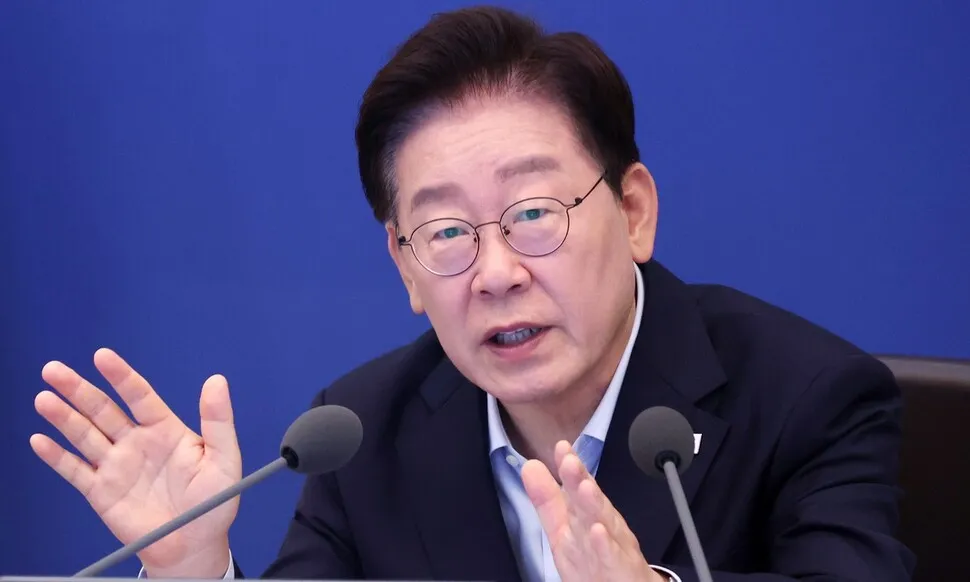
The Numbers That Matter Are Barely Connected
President Lee Jae-myung’s approval rating climbed back to 50% this week, according to a national survey by NBS released Friday morning. The rebound looks like recovery. It isn’t.
What the data actually shows is a widening split between how Koreans feel about Lee as a person and how they feel about his administration’s direction. The governance trust rating — the question that asks whether the government is moving in the right direction — fell 4 percentage points from the previous survey to 48%, the lowest since his inauguration. The negative counterpart rose 5 points to 45%. Both figures sit inside the survey’s margin of error of ±3.1 percentage points, which means the real movement is subtler than the headline numbers suggest. But the direction is unmistakable.
The approval rating recovered from a low of 49% recorded just two weeks earlier — the first time Lee’s support had dipped into the 40s since taking office. The negative approval figure held steady at 43%. So the public is becoming more favorable toward Lee while simultaneously losing confidence in where his government is heading. That is not a contradiction. It is a warning sign.
This divergence is not unique to Lee. Scholars of Korean public opinion have documented similar patterns in past administrations where personal charisma outpaced institutional credibility. But the speed of the split is notable. In previous cycles, governance trust typically lagged approval by three to six months as the initial goodwill faded. Here, the gap opened within the first year of the administration, suggesting a sharper erosion of confidence in the policy pipeline rather than in the man himself.
Who Is Happier, Who Isn’t, and Why It Won’t Stay Balanced
The NBS survey, conducted August 24–26 across 1,001 adults by telephone, was carried out by a consortium of four polling firms — MbRAIN Public, CaseStat Research, Korea Research, and Korea Research — and reviewed by the National Election Commission’s polling oversight body. The methodology is standard, the sample is adequate, and the results are consistent with recent trends in other surveys.
What makes this particular polling cycle notable is the timing. Korea is in the thick of a housing policy dispute that cuts directly at the heart of Lee’s governance credibility. The same NBS release included a separate finding on Yongsan Park public housing: only 29% of respondents support the government’s plan, while 59% favor easing redevelopment restrictions. That is a lopsided rejection of a signature urban policy initiative — and it is the kind of policy friction that turns a trust deficit into a governing crisis.
Beyond the Yongsan Park data, the survey captured subtle but important signals about economic anxiety. Respondents were asked to rank their primary concern, and “cost of living” topped the list at 34%, followed by “jobs and employment” at 22% and “housing affordability” at 18%. These are not abstract worries. They are the exact pressures that the Yongsan Park compromise was supposed to address, and the public’s dissatisfaction with that compromise signals a belief that the government is offering solutions that miss the mark.
Lee’s political base — younger voters, progressive urbanites, those who backed his candidacy on promises of institutional reform — is likely driving the approval recovery. These are people who appreciate his energy, his anti-establishment posture, his willingness to confront entrenched interests. They like the messenger even when they doubt the map.
But the broader electorate, including swing voters and pragmatic independents who are not yet convinced that Lee’s reforms will deliver tangible results, is watching the policy execution. And so far, the execution is not inspiring confidence. The Yongsan Park numbers are evidence of that. So is the governance trust rating, which has been sliding ever since the initial honeymoon evaporated.
The Regional Dimension: Why This Matters Beyond Seoul
This is not just a domestic political story. Korea’s regional dynamics are shifting under the weight of the same trust gap.
Lee has publicly stated that South Korea supports the resumption of North Korea–US dialogue and described Korea itself as a party to peninsula peace. Those are significant rhetorical moves — and they come at a moment when Washington is reassessing its diplomatic posture toward Pyongyang. But if Lee cannot convince his own citizens that his government is steering in the right direction, his credibility as a regional actor erodes in tandem.
Allies monitor Korean domestic politics the way rivals exploit them. Japan’s conservative establishment, for instance, is already watching the trust gap with quiet interest. A president whose approval recovers but whose governance credibility languishes is harder to negotiate with on trilateral security coordination. China reads the same signals differently: a divided Korean public is a distracted Korean government, and distraction is leverage.
The United States faces its own calculus. Washington needs Seoul to be a reliable partner on trade, technology containment, and peninsula security. But reliability requires domestic legitimacy, and Lee’s legitimacy is fracturing along the approval–trust axis. American officials privately expressed concern in recent weeks about Korea’s ability to sustain its commitment to semiconductor export controls and defense burden-sharing arrangements if the president’s domestic standing continues to weaken in this particular pattern.
Second-Order Effects: What the Gap Unlocks
The trust deficit carries consequences beyond polling. Lawmakers from both the ruling and opposition blocs are reportedly growing more cautious about advancing Lee’s legislative priorities, sensing that the political tailwinds are fading. Cabinet appointments that required Senate-style confirmation have moved more slowly than early in the term. Bureaucratic agencies, traditionally the engines of Korean governance, are showing signs of friction — officials in the Ministry of Economy and Finance have been described as pushing back on timelines for the industrial competitiveness package, arguing that the political environment does not yet support bold moves.
The media landscape is also shifting. Editorials that once focused on Lee’s reform vision have increasingly turned critical, with major outlets questioning whether the administration’s policy rollout is outpacing its political capital. Business newspapers, which previously praised Lee’s willingness to challenge chaebol reform resistance, have run pieces highlighting the gap between rhetoric and legislative output.
Even within Lee’s own party, there are murmurs about restructuring the messaging strategy. Some advisors are reportedly pushing for a pivot away from broad institutional reform language toward narrower, more concrete policy announcements that can reverse the trust trend before the next local election cycle begins.
What Comes Next
The next few weeks will determine whether this gap closes or widens further. If Lee can deliver a visible policy win — a housing compromise, a diplomatic breakthrough, a legislative victory that changes the narrative — the trust rating may recover alongside the approval rating. If not, the divergence could harden into a permanent feature of his presidency.
History offers cautionary precedents. Korean presidents who have seen governance trust fall below 50% while approval hovered near or above 50% — Roh Moo-hyun in 2004, Park Geun-hye in her final year — did not immediately lose power, but their ability to shape the agenda diminished steadily until a triggering event accelerated the decline. The current pattern does not guarantee any particular outcome, but it does establish a trajectory that rewards decisive action and punishes delay.
The 50% approval number is real, but it is not the number that matters most. The 48% governance trust figure is the one that will shape Lee’s ability to govern. And right now, it is telling a story that the headline number hides.
The question is whether the administration hears it soon enough to change the ending.