Lee Jae-myung's Chief Policy Aide Resigns Over ETF Fallout
Kim Yong-beom's sudden departure from the Blue House signals deep fractures in President Lee's economic team and a government scrambling to contain damage from a controversial leveraged ETF scandal.
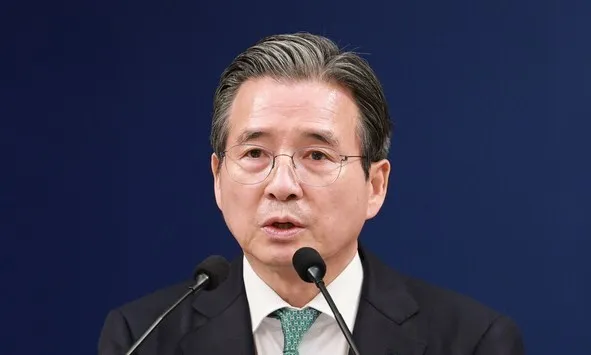
A Chief Step Down, a President Testimonied
Kim Yong-beom left the Blue House on September 1, 2026, after 15 months as President Lee Jae-myung’s senior policy chief — a tenure shorter than expected and far more stormy than the quiet technocrat profile he was meant to project. Lee accepted the resignation the same morning, confirmed by Blue House senior spokesperson Kang Yu-jeong.
The exit came one day after Lee announced a cabinet shuffle that kept Kim in place. The opposition immediately seized on the decision, calling it a flat refusal of governance reform. By morning, the political arithmetic had shifted.
What Actually Brought Him Down
The official trigger is the single-stock leverage ETF controversy. Since mid-August, South Korean retail investors have been hit with steep losses on leveraged products tied to individual equities — financial instruments that amplify both gains and losses. One viral anecdote did more damage than any press release: a trader who put 100 million won into a simulated leveraged position blinked for a moment and woke up to an account wiped out. It became shorthand for a broader panic.
Government data tells the scale: within a week of official intervention, trading volume in single-stock leverage products dropped by 93 percent. The market didn’t just slow — it fled.
Kim had defended the policy framework earlier, arguing there was no reason to reverse the growth strategy and that the benefits of the government’s approach simply needed to spread faster. That framing now looks like a timing error rather than a miscalculation. In a country where retail investors hold outsized political sway, missing the mood is not a survival skill.
The Real Story: A President’s Inner Circle Is Already Strained
Western coverage of South Korea has largely been preoccupied with Lee’s foreign policy posture — his July trip to Central and South America and the optics of engaging the Global South. But the harder story is unfolding inside the Blue House.
Kim’s departure exposes a fault line that predates the ETF crisis: Lee’s reluctance to purge underperformers. The August reshuffle retained Kim precisely because Lee was signaling continuity, not rupture. The opposition understood that signal and weaponized it. Within 24 hours, the political cost of continuity outweighed whatever value Kim brought.
This is a pattern worth watching. Lee built his political identity on reinvention — he styled himself a reformer after surviving impeachment and multiple legal challenges. Now, in office, he is facing the same tension every Korean president confronts: the gap between campaign renewal and governing conservatism. His first move toward change in August was to keep the man responsible for the most damaging economic policy blunder of his term. That contradiction is what made Kim’s position untenable.
Who Wins, Who Loses
The immediate winner is the People Power Party, which had been circling Kim since before the reshuffle. Forced resignation looks like admission of failure — exactly the frame opposition wants. The party can point to 15 months of a struggling economy, a policy chief who stayed too long, and a president who resisted accountability until forced.
Lee himself loses credibility on two fronts. First, the economy — where housing prices remain a political landmine and the ETF fallout has renewed fears of a retail investor exodus from markets. Second, managerial judgment — keeping Kim past the reshuffle will be cited by critics as proof that the president does not rotate talent aggressively enough for the mandate he claims.
Kim loses his position but preserves some political capital. He had publicly insisted the growth strategy was sound. Whether he can articulate that argument without the burden of the ETF backlash is an open question.
What Comes Next
The vacancy creates an immediate practical problem. Kim’s office handles the administration’s core economic messaging — the narrative around growth strategy, market regulation, and industrial policy. Filling it quickly matters, especially with Lee’s approval rating reportedly dependent on rebounding economic sentiment.
There is also a structural question. The so-called early lame-duck clock started ticking the moment Lee took office. Analysts had identified three decisive actions needed to stall that momentum. Replacing Kim was one of them — or should have been. The fact that it took public pressure to force the move suggests the administration’s instinct is to absorb criticism rather than preempt it. That instinct will be tested repeatedly over the next year.
The leverage ETF numbers tell the rest. A 93 percent collapse in volume is not a temporary dip — it is a structural shift in how retail participants engage with these products. Regulators will face renewed pressure to rethink the framework. Any new policy chief inheriting this portfolio will start with a wounded market and a skeptical public.
Why This Matters Beyond Seoul
South Korea’s leveraged ETF market is one of the largest retail-accessible derivatives ecosystems in Asia. What happens here influences how other markets — particularly in Southeast Asia — approach similar products. A regulatory reversal in Korea sends signals about risk tolerance across the region.
On the political side, the episode confirms a broader pattern: Lee’s administration is wrestling with the same tension that has plagued every Korean government since democracy — the gap between a reform mandate and the conservative machinery of the state. The ETF crisis is not the first symptom. It will not be the last.
What Western readers miss is that this is not a routine personnel change. It is a preview of how Lee governs under pressure: slowly, defensively, and only when the political math forces his hand. That pattern will define the rest of his term.